
Neon Tetra FAQ: Schooling Disease and Tank Mates
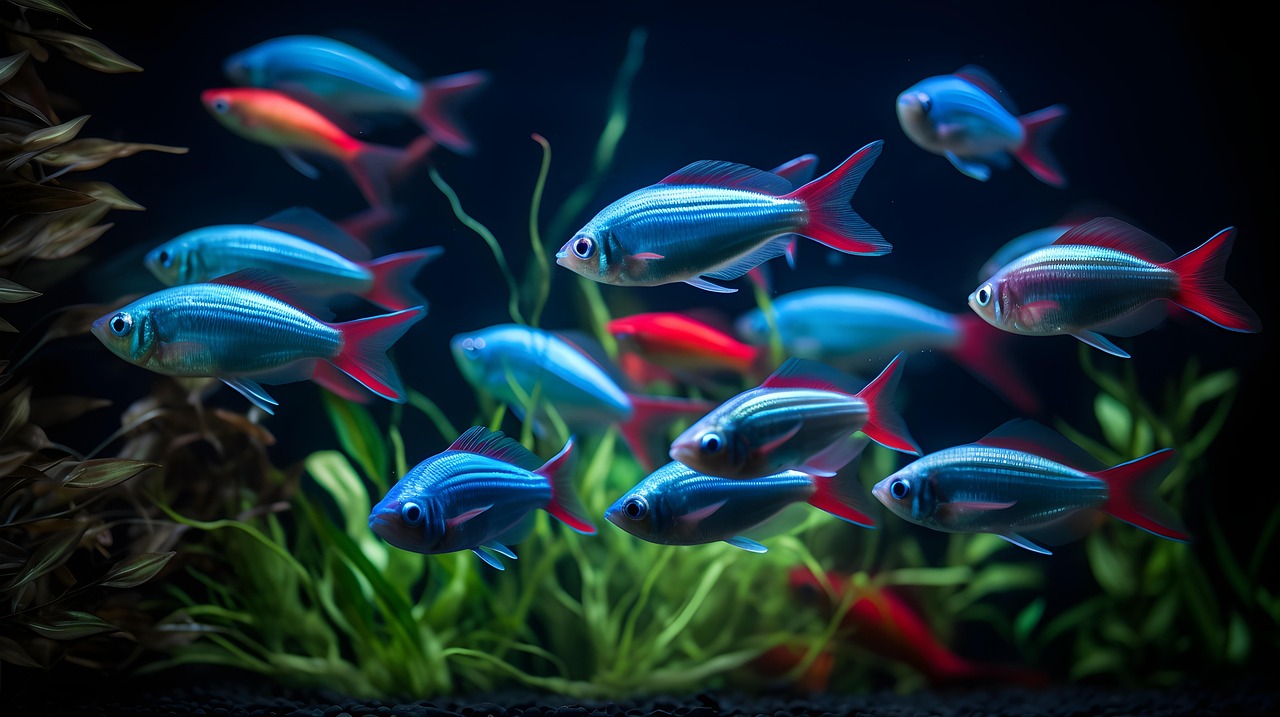
Neon tetras are the most-sold community fish globally, and Singapore is no exception, with shop tanks routinely holding hundreds in single batches. The neon tetra faq below answers the questions customers most often raise after buying their first school. This neon tetra faq draws on long-running diagnostic conversations at Gensou Aquascaping in 5 Everton Park. Each question is a standalone snippet; this guide answers the eleven questions Singapore aquarists ask most about neon tetras.
How Many Neon Tetras Should I Keep?
Six is the absolute floor; ten or more is genuinely better. Paracheirodon innesi is a shoaling species that loses its bright stripes and becomes shy when kept in low numbers. A school of fifteen in a 60-litre tank produces the moving streak of blue-and-red colour that makes the species worth keeping. Lone neons hide constantly and rarely live a full lifespan.
What Tank Size for a Proper School?
Forty litres minimum for ten neons; sixty litres for fifteen to twenty. Length matters more than volume — neons school horizontally, so a long shallow tank shows behaviour better than a tall cube. Heavy planting along the back and sides creates the dim refuges that match their blackwater habitat.
What Is Neon Tetra Disease?
Neon tetra disease is caused by the parasitic microsporidian Pleistophora hyphessobryconis. It attacks muscle tissue, producing pale patches along the body that progress to spinal curvature and death. There is no effective cure once symptoms appear. Affected fish must be removed immediately to prevent spread through cannibalism — tank mates eat the dead fish and become infected.
How Do I Identify Neon Tetra Disease Versus Stress?
Stressed neons show pale stripes that recover within hours of conditions improving. Neon tetra disease produces irregular pale patches that grow and do not recover. Affected fish swim erratically, lose body condition, and develop visible spinal curvature. False neon disease (Mycobacterium) presents almost identically — neither responds reliably to treatment.
What Tank Mates Work With Neon Tetras?
Peaceful community fish under 10cm: corydoras, otocinclus, harlequin rasboras, dwarf gouramis, sparkling gouramis. Avoid angelfish — adults view neons as food. Avoid larger cichlids and any fin-nippers. Cherry shrimp coexist well in heavily planted tanks but expect adult neons to pick off newborn shrimp.
What Water Parameters Do Neons Want?
Soft, slightly acidic water at GH 2-6, KH 1-3, pH 5.5-7.0, temperature 24-26°C. Singapore PUB tap water is naturally close to ideal — the soft baseline is one reason neons thrive here. Skip remineralisation unless your specific source runs harder than typical PUB output. Add Indian almond leaves or peat moss for blackwater conditions.
How Do I Feed Neon Tetras?
Small flakes or micro-pellets twice daily, supplemented with frozen daphnia, baby brine shrimp and bloodworm. Feed only what the school consumes within ninety seconds. Their small mouths cannot handle larger pellets. The fish food range stocks micro-pellet lines suited to neons and other small tetras.
Why Are My Neons Hiding All the Time?
Persistent hiding usually means too few in the school, aggressive tank mates, water parameters off, or insufficient cover. Add more neons to bring the school to ten-plus, plant the tank heavily, and check parameters. New arrivals often hide for one to two weeks while acclimating; this is normal.
How Long Do Neon Tetras Live?
Five to eight years in well-kept tanks, though most shop neons are mass-bred and live three to five. Wild-caught Brazilian stock, when available, lives longer than commercial farm-bred fish. The mortality curve is heaviest in the first month after purchase due to transport stress and parasite load.
Can I Breed Neon Tetras at Home?
Possible but difficult. Breeding requires very soft water (GH under 1), darkness, and fine-leaved spawning mops. Eggs and fry are light-sensitive. Most home breeders fail at the egg stage. Commercial neons come from dedicated breeding facilities in Eastern Europe and Southeast Asia using controlled conditions.
What Is the Difference From Cardinal Tetras?
Cardinal tetras (Paracheirodon axelrodi) are slightly larger with red running the entire length of the body, where neons have red only on the rear half. Cardinals prefer warmer 26-28°C and are slightly hardier. Many Singapore keepers actually prefer cardinals for the longer red and easier care.
Related Reading



