Top 10 Schooling Aquarium Fish Roundup: Tight Group Species
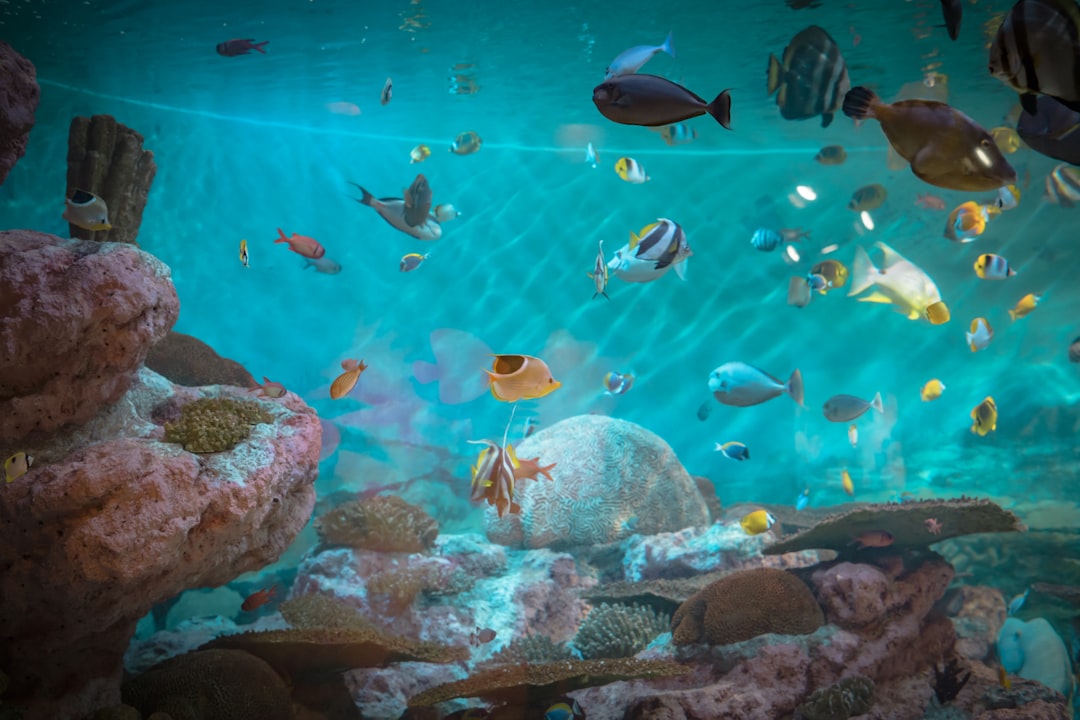
True schooling behaviour — coordinated swimming with synchronised turns — only emerges when group size, tank length and water flow line up. The top 10 schooling aquarium fish below are ranked by tightness of formation observed in adult groups, with the most consistently shoaling species first. This roundup from Gensou Aquascaping at 5 Everton Park sets minimum group thresholds, tank lengths and sourcing tips that turn a loose grouping into a cohesive school. Aim for tanks 90cm long or longer wherever possible — short tanks force schoolers into a square-shaped scatter rather than directional swimming, and the visual payoff disappears entirely below 60cm length.
What Triggers Tight Schooling
Group size is the single biggest factor — most species need 12 individuals minimum before tight schooling emerges. Below that threshold, fish operate as loose social groups rather than coordinated shoals. Tank length matters next: schooling fish need straight runs of at least 60-80cm to build momentum and execute the synchronised turns that look so striking in mature aquariums. Predator presence (real or perceived from active centrepiece species) also tightens schooling response.
1. Rummynose Tetra (Hemigrammus rhodostomus)
The benchmark for tight schooling — 12+ rummynose move as a single red-headed cloud. 5cm adult, 90cm tank minimum, GH 2-6, pH 6.0-7.5. Iwarna prices them at SGD 3-5. The bright red nose blanches when ammonia or nitrite climb, which makes them unintentional water-quality indicators. Quarantine new stock thoroughly — wild imports from the Rio Negro often arrive thin and need two weeks of quality feeding before joining the main display.
2. Cardinal Tetra (Paracheirodon axelrodi)
Larger and more vibrant than neons with full red ventral stripe. 4cm, group of 12, 75-litre minimum. SGD 2-3 each. Wild-caught Brazilian imports school tighter than tank-bred Asian stock — Iwarna labels origin clearly. Add to a tannin-stained tank for the most intense colour expression and avoid hard water (KH above 4 dulls the iridescent stripe).
3. Harlequin Rasbora (Trigonostigma heteromorpha)
Reliable schoolers in groups of ten or more. 4.5cm, 75-litre minimum, hardy. C328 lists them at SGD 2-4. Their copper flanks against the black wedge create a moving wall when light hits from above. Singapore tap water (GH 2-4) suits them straight from the conditioner — no remineralisation required.
4. Congo Tetra (Phenacogrammus interruptus)
Larger schooler with iridescent males trailing wispy fins. 8cm adult, group of eight, 150-litre tank. Petopia stocks them at SGD 8-15. Pair with a 120cm aquarium tank for true cruising space. Males develop full finnage by 18 months and dominate the open swim corridor.
5. Black Neon Tetra (Hyphessobrycon herbertaxelrodi)
White and black banded body with green-yellow shimmer. 4cm, group of 12, hardier than common neons. SGD 1-2 each across most local shops. Mature stock develops red eye-spots that catch overhead lighting beautifully against dark substrate.
6. Pristella Tetra (Pristella maxillaris)
Hardy x-ray-style tetra that schools tightly when stocked at 12+. 4.5cm, accepts pH 6.0-8.0, almost bulletproof. SGD 2-3 from Iwarna. Use the fish food range for varied micro-pellets. Long-lived (5+ years) and one of the few tetras tolerant of slightly hard remineralised water.
7. Lemon Tetra (Hyphessobrycon pulchripennis)
Pale yellow body with red-and-black-edged dorsal. 5cm, group of ten, 75-litre tank. SGD 3-5 each. Mature males develop translucent yellow finnage that catches LED spotlights. Subtle rather than flashy — best appreciated in mature planted tanks with diffuse overhead lighting.
8. Diamond Tetra (Moenkhausia pittieri)
Iridescent silver-violet schooler that improves visually with age. 6cm adult, group of eight, 90cm tank. Iwarna prices them at SGD 5-9. Soft acidic water (GH 2-4) intensifies the violet sheen and deepens the body iridescence over months.
9. Cherry Barb (Puntius titteya)
Schools loosely as juveniles, tightens with age and group size of ten or more. 5cm, 60-litre tank. Carousell breeders post lines at SGD 3-5. Males turn deeper scarlet during display chases. The exception in the barb family — peaceful and reliable in mixed setups.
10. Galaxy Rasbora (Danio margaritatus)
Schools at 12+ in groups when kept at 22-26°C. 2cm adult, 30-litre nano works. SGD 4-8 from Petopia and Iwarna. A QANVEE Bio Sponge Filter creates the gentle current that triggers schooling without exhausting the fish. Captive-bred lines now dominate but wild stock from Myanmar’s Inle Lake region still appears occasionally.
Related Reading