
Aquarium Ion Exchange Resin Glossary Guide: DI Resin Function
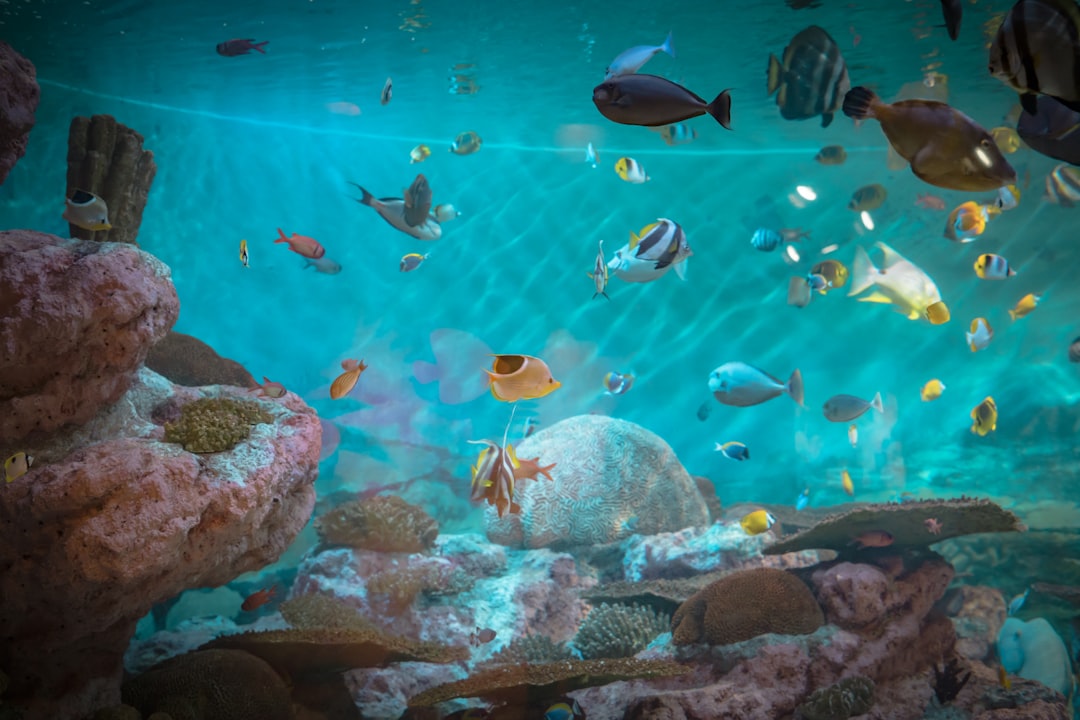
Aquarium ion exchange resin is the polishing media inside the deionising stage of every reef-grade RODI unit, swapping unwanted dissolved ions in tap water for harmless H+ and OH- that combine to pure water. The resin is a tiny plastic bead studded with charged functional groups; when those groups are exhausted, TDS rises and the cartridge needs replacing. This guide from Gensou Aquascaping at 5 Everton Park covers the chemistry, the colour-change indicators, and the costs of running pure water for a Singapore reef or shrimp tank.
What Ion Exchange Resin Means
Ion exchange resin is a cross-linked polystyrene-divinylbenzene polymer manufactured as 0.5-1 mm beads. Each bead surface carries fixed functional groups: sulfonic acid (cation resin) or quaternary ammonium (anion resin). Cation resin trades H+ for cations like calcium, magnesium and sodium; anion resin trades OH- for nitrate, sulphate and chloride. Mixed-bed deionising cartridges combine both resins for water polishing down to 0 TDS.
How It Works in an Aquarium
Tap water entering an RODI unit first passes through sediment and carbon prefilters, then a reverse osmosis membrane that removes 90-98 per cent of dissolved solids. The remaining 1-5 ppm TDS enters the DI cartridge, where mixed-bed resin scavenges the leftover ions. Output reads 0-1 ppm TDS — true pure water. The H+ and OH- released combine to form additional water molecules, so volume effectively does not change.
Typical Values and Ranges
A standard 250 mL DI cartridge processes 1500-3000 L of low-TDS RO permeate before exhaustion. Singapore PUB tap arrives at roughly 60-90 ppm TDS; after RO, that drops to 1-3 ppm; after DI, 0 ppm. Cartridge cost runs SGD 18-35 per refill. Heavy reef users replace DI every 2-4 months; planted tank shrimp keepers extend to 6-9 months because their water demand is lower.
How to Measure
An inline TDS meter on the DI output is essential. HM Digital ZT-2 or Apera TDS20 (SGD 35-65) gives reliable continuous monitoring. Most colour-changing resins shift from blue/green when fresh to amber/brown when exhausted, providing a visual cue. Test the input TDS too; rising RO permeate TDS indicates a tired membrane upstream rather than DI failure. Aim to replace DI when output reaches 1-2 ppm.
Common Imbalance Symptoms
The classic symptom is silent silica leak: TDS reads 0 but reef tank glass develops brown diatom film within days. Some early-exhaustion DI cartridges drop nitrate and phosphate retention before TDS climbs visibly. Yellow-tinted output water indicates cation exhaustion ahead of anion. Sudden TDS spike from 0 to 10+ ppm signals complete resin exhaustion.
How to Adjust
Replace exhausted cartridges promptly — rinse the housing with RO water before refilling. Bulk loose resin from BRS, Spectrapure or Aquatic Life (SGD 25-60 per litre) is more economical than pre-packed cartridges if you DIY. Add a silicate-specific anion resin upstream for reefs in high-silicate areas. Consider doubling DI stages — first stage scrubs the bulk, second polishes — extending overall life. Browse the aquarium filtration range for compatible RODI components and the water treatment shelf for replacement media.
Singapore-Specific Note
PUB water sits at moderate TDS (60-90 ppm) compared with hard-water cities at 200-400 ppm, so DI cartridges last roughly twice as long here. Local humidity means uninstalled resin should be sealed — moisture absorption swells the beads and reduces flow. Reef keepers in Singapore typically pair a 75 GPD RO membrane with a single 250 mL DI cartridge and refill resin every 4-6 months. The 28-30°C ambient slightly improves RO membrane flow rates compared with cold-water systems.
Connected Concepts
Ion exchange resin works downstream of reverse osmosis and upstream of remineralisation salts like Tropic Marin. It removes phosphate and silicate as side benefits, reducing algae fuel. Read about chloramine, alkalinity and oxygen saturation to see how pure water then needs reconstruction before fish-keeping.
Common Misconceptions
“DI water is healthy for fish” — only after remineralising. Pure 0 TDS water is osmotically aggressive; freshwater fish dropped into it experience cell rupture within hours. Always use DI as a base for reef salt mix or as a soft-water blend, never as straight tank water.
Related Reading



