
Aquarium Osmosis and Osmotic Shock Glossary Guide: Cell Membrane Risk
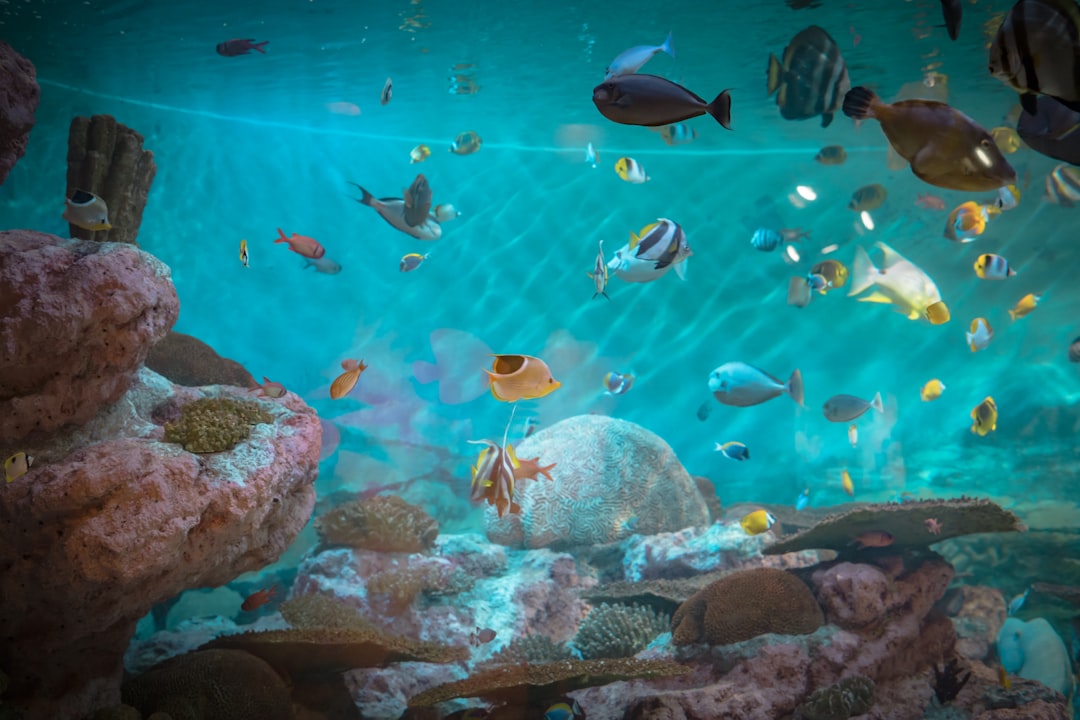
Aquarium osmosis explained is the silent biophysics that keeps freshwater fish alive — and kills them when ignored. Osmosis is the passive movement of water across a semipermeable membrane from low solute concentration to high. Fish gills, skin and gut are all semipermeable, so a freshwater fish in soft water constantly absorbs water inwards and excretes dilute urine to compensate. Drop that fish into harder water without acclimation and the gradient flips painfully fast. Gensou Aquascaping at 5 Everton Park covers the physiology, the drip acclimation maths, and how Singapore’s soft tap water shapes shrimp and discus husbandry.
What Osmosis Means
Osmosis is water diffusion across a barrier permeable to solvent (water) but not solute (salts, sugars, proteins). The driving force is osmotic pressure, measured in osmoles per litre (osmolarity). Pure water sits at 0 mOsm/L; freshwater tank water at 5-15 mOsm/L; freshwater fish blood at 280-300 mOsm/L. Marine fish blood is similar to freshwater fish at roughly 320 mOsm/L, but seawater itself runs near 1000 mOsm/L — the gradient flips entirely.
How It Works in an Aquarium
Freshwater fish constantly fight water inflow. Gills exclude what they can; the kidneys produce copious dilute urine; specialised chloride cells actively pump in salts to compensate. The whole system uses about 20-30 per cent of basal metabolic energy. Marine fish do the opposite: they drink seawater, excrete salts through gills and rectum, and produce concentrated urine. Sudden moves between waters of different osmolarity force the fish’s regulatory system to switch direction faster than it can adapt — the result is osmotic shock.
Typical Values and Ranges
Singapore PUB tap: 60-90 ppm TDS, roughly 5-8 mOsm/L. A typical pet store bag from a different region might run 150-300 ppm TDS. Discus tanks: 1-3 dGH, soft. African Rift Lake tanks: 12-20 dGH, hard. Reef tanks: 35 ppt salinity, 1.024-1.026 specific gravity. Acclimation tolerance varies by species — neons handle 100 ppm TDS swing in 30 minutes; Caridina shrimp handle 30 ppm in 60 minutes; discus handle 50 ppm in 90 minutes.
How to Measure
TDS meters track total ion load — HM Digital ZT-2 or Apera TDS20 (SGD 35-65) cover most aquarium needs. Refractometers like Vital Sine SR-6 (SGD 60-90) read marine specific gravity. GH and KH titrations from API or Salifert give the freshwater hardness picture. Compare bag water to tank water before adding livestock; mismatches above 50 ppm TDS or 3 dGH need slow acclimation.
Common Imbalance Symptoms
Osmotic shock shows as gasping, erratic swimming, and clamped fins minutes after a transfer. Severe cases trigger hemorrhagic streaks on the body and fin bases. Shrimp die fastest because their permeability and surface-to-volume ratio amplifies water flow. Slow chronic mismatch — keeping a soft-water tetra in 12 dGH water for months — produces ragged fins, refusal to breed, and shortened lifespan rather than acute death.
How to Adjust
Drip acclimate at 2-4 drops per second over 60-90 minutes for shrimp, 30-45 minutes for community fish. Use airline tubing tied in a knot for flow control or a dedicated kit from JBL or Aqueon (SGD 12-25). For long-term water building, blend RODI from your DI cartridge with remineraliser like Salty Shrimp Bee Shrimp Mineral GH+ or Tropic Marin Re-Mineral Tropic to hit target TDS and GH. Browse the water treatment range for remineralisers and the aquarium filtration shelf for RODI components.
Singapore-Specific Note
Soft PUB tap (5-8 mOsm/L) suits most South-East Asian and South American species, including bettas, tetras and apistos, with minimal modification. Imported African cichlids and reef stock arrive from much harder water — drip acclimate aggressively, and remineralise the destination tank to match. Shrimp keepers running pure RODI plus mineraliser should monitor TDS daily during the first week as the new substrate releases or absorbs ions and shifts the equilibrium.
Connected Concepts
Osmosis underpins drip acclimation, RODI water preparation, fish osmoregulation physiology, and the impact of GH/KH on livestock health. Read entries on water hardness, osmoregulation and ion exchange resin to see how the chemistry chains together. Salt baths exploit the gradient deliberately to dehydrate parasites.
Common Misconceptions
“Just float the bag for 15 minutes” — temperature acclimation only, not osmotic. Bag water often differs by 100+ ppm TDS from your tank, and 15 minutes is nowhere near enough for sensitive species.
Related Reading

emilynakatani
Still Have Questions About Your Tank?
Drop by Gensou Aquascaping — most walk-in questions get answered in under 10 minutes by someone who has set up hundreds of tanks.
5 Everton Park #01-34B, Singapore 080005 · Open daily 11am – 8pm


