
Angelfish Colour Genetics Breeding Guide: Pearl Scale, Koi, and Platinum
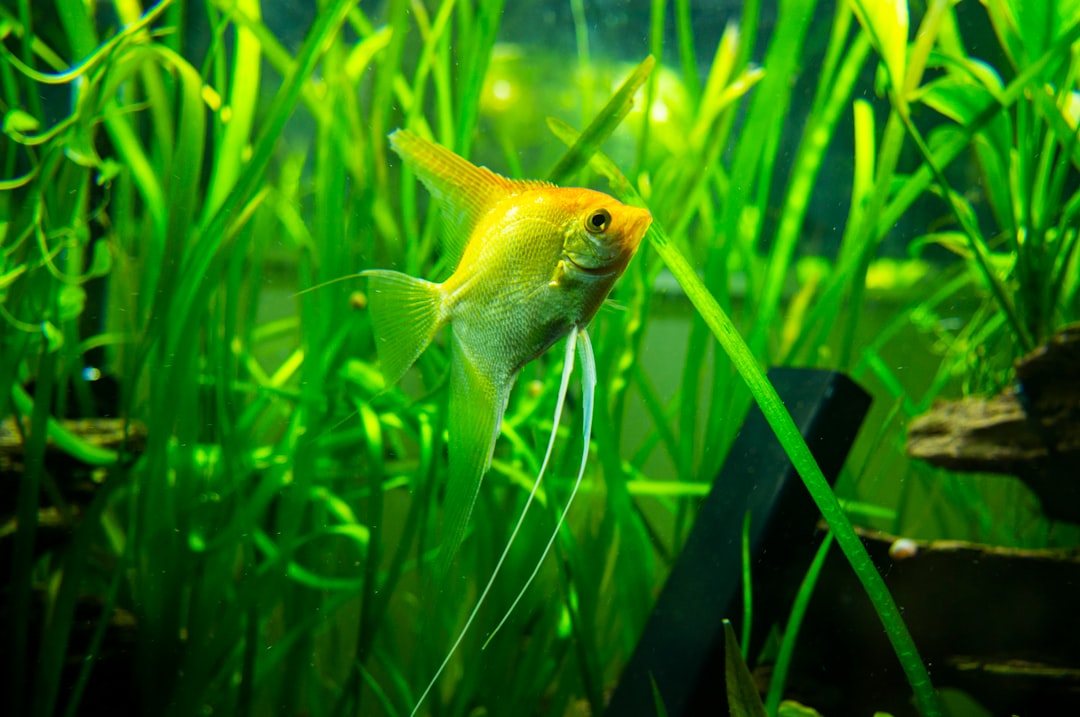
Few freshwater fish reward selective breeding as richly as Pterophyllum scalare, and understanding angelfish colour genetics breeding turns a chance spawn into a predictable pairing. This guide from Gensou Aquascaping at 5 Everton Park, Singapore, draws on over 20 years of hands-on experience with pearl scale, koi, and platinum lines to explain how loci interact, how to read a Punnett square for multi-gene crosses, and how to keep a line healthy without inbreeding collapse. Singapore hobbyists can raise at least three generations a year in local tap water, so small genetic decisions compound quickly.
Understanding Angelfish Colour Loci
Angelfish colour traits sit on roughly eight recognised loci, each with a pair of alleles inherited one from each parent. The Dark locus (D) controls black pigment dosage, Gold (g) removes melanin partially, Smokey (Sm) adds smoky body shading, Marble (M) produces the irregular blotching seen in marble and koi fish, Stripeless (S) removes vertical bars, and the Pearlscale (p) gene produces the sparkling reflective scaling so prized in pearly pearls.
Every fish you buy at C328 Clementi or a Serangoon shop carries a genotype that is often hidden beneath visible markers. A silver angel may secretly carry one copy of gold, one of pearlscale, or one of stripeless. Only test crosses reveal these silent alleles, which is why serious breeders keep spreadsheets.
Dominant, Recessive, and Co-Dominant Traits
Most angelfish colour genes show incomplete dominance or dosage effects, meaning a single copy looks different from two copies. Dark (D) is the textbook example: one copy of D on a silver background gives the Zebra phenotype, while two copies (DD) produce the solid Black Lace and double dark fish. Marble (M) works similarly — a single M copy yields Marble, two copies (MM) give Gold Marble or Black Marble depending on other loci.
Pearlscale (p), by contrast, is fully recessive. Only fish carrying two pearlscale alleles (pp) express the bumpy reflective scaling; heterozygous fish (Pp) look entirely normal. Gold (g) and Stripeless (S) are also recessive. Platinum is the double-dose expression of gold on a stripeless background, producing that ghostly silvery-white body with no bars.
Building a Punnett Square for Angelfish
Start with a single-gene cross to build confidence. Pair a pearlscale (pp) with a heterozygous carrier (Pp) and you get 50 per cent pearlscale fry and 50 per cent normal-scaled carriers. Pair two heterozygous carriers (Pp x Pp) and the classic 1:2:1 ratio gives 25 per cent pp (visible pearl), 50 per cent Pp (hidden carriers), and 25 per cent PP (no gene at all).
Two-Gene Example: Koi x Platinum
A koi is usually MmGg (one marble, one gold, heterozygous for both) on a stripeless background. A platinum is ggSS at minimum. Crossing them produces a 16-cell Punnett grid where a quarter of fry will be visibly gold, an eighth will be marble-gold (orange koi), and the rest split between silver carriers and dark marbles. Draw the grid on paper before spawning — it catches expectations that the fish will never meet.
Line Breeding Pearl Scale, Koi, and Platinum
Line breeding means deliberately mating relatives to fix desirable traits. For pearlscale, pair a strong pp male with a pp female from a different sibling group, raise 200 fry, and select the ten with tightest pearling at 3 cm body length. Backcross the best male to his dam or aunt to concentrate modifier genes that tighten scale expression. Refresh the line every fourth generation with an unrelated pp fish from a trusted breeder to avoid bottlenecking.
Koi angels need selection for three things at once: large red crown patches, clean white bodies, and black marbling that does not spread with age. Photograph each breeder at 4, 8, and 12 months because the black often expands — a fry that looks perfect at two months may turn muddy by adulthood. Platinums demand even stricter culling since any residual stripe or yellowing disqualifies show-grade fish.
Spawning Conditions in Singapore Tap Water
Angelfish spawn readily at 27-29 °C in slightly soft water, which matches PUB tap water after dechlorination. Use RO water only if you want higher fertility rates on wild-type crosses; domesticated lines breed in straight tap. Drop a vertical slate or broad Amazon sword leaf into the tank and the pair will clean it obsessively before laying 300-800 eggs.
Pull the slate at day two if the parents keep eating the brood, which happens often with young pairs. Artificial incubation in a 10-litre fry tank with a gentle air stone, methylene blue at 2 drops per 10 L, and 28 °C gives hatch rates above 80 per cent. First feeds at day six are newly-hatched brine shrimp.
Recording Pedigree and Avoiding Inbreeding Depression
Inbreeding coefficient above 0.25 across three generations produces smaller spawns, spinal deformities, and reduced immune response. Tag each breeder with a simple code (year-batch-pair, e.g. 26A-03) and keep a paper or spreadsheet pedigree showing every ancestor back four generations. Import a new bloodline every 18 months from overseas stock via aquabid groups or local importers around Pasir Ris.
Cull ruthlessly. A breeder who keeps every fry produces a weaker strain than one who retains only the top 5 per cent. Singapore tanks are space-limited, so culling is a kindness — substandard fry go to community tanks or are humanely dispatched, never sold as breeder stock.
Related Reading
- Angelfish Care Guide: Pterophyllum scalare Basics
- Angelfish Breeding Guide for Singapore Hobbyists
- Beginner Breeding Tank Setup Guide
- Fry Grow-Out Tank Guide
- Brine Shrimp Hatchery Guide for Fry Feeding
Conclusion
Serious angelfish colour genetics breeding rewards breeders who plan pairings with a Punnett square in hand rather than hoping for the best. Track pedigrees, select hard, refresh bloodlines, and treat each spawn as a test of the previous generation’s decisions. With patience, a Singapore hobbyist can produce show-grade pearl scale, koi, and platinum lines that rival anything imported — and Gensou Aquascaping is always happy to talk genetics with visitors who bring photos of their latest grow-out.



