Plant Grouping Techniques in Aquascaping: Clusters, Streets and Rows
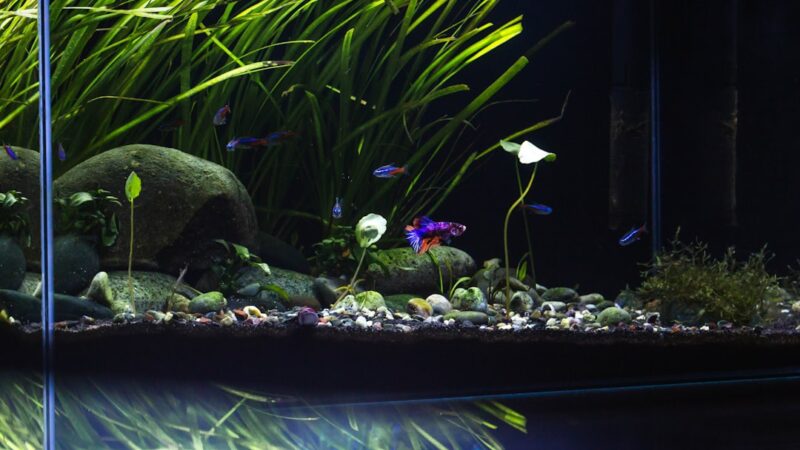
Mastering aquascape plant grouping technique is what separates a planted tank that looks like a garden centre display from one that resembles a natural underwater landscape. At Gensou Aquascaping, based at 5 Everton Park in Singapore, we spend considerable time teaching clients how to group plants effectively, because placement matters as much as species selection.
Why Plant Grouping Matters
In nature, aquatic plants rarely grow in mixed, random arrangements. They form colonies, follow water flow patterns, and cluster around favourable microhabitats. Replicating this natural grouping in your aquascape creates visual coherence and a sense of authenticity that scattered planting cannot achieve. Good grouping also simplifies maintenance, as species with similar needs are kept together, making targeted fertilisation and trimming more efficient.
Cluster Planting Explained
Cluster planting involves grouping multiple stems or rosettes of the same species together in a defined area. Rather than planting a single stem of Rotala here and another there, you plant fifteen to twenty stems tightly in one spot. The cluster grows into a dense bush with a clear visual boundary, creating a block of colour and texture that registers as a single design element.
For best results, plant the centre of the cluster more densely and allow the edges to thin out slightly. This creates a soft, organic boundary rather than a hard geometric edge. In a 60 cm tank, three to five distinct clusters of different species is usually the right balance. In nano cubes, two to three clusters prevent overcrowding.
The Dutch Street Technique
The Dutch aquascaping tradition introduced the concept of plant streets, diagonal rows of a single species running from front to back. Streets create strong visual lines that guide the eye through the layout and establish a sense of depth. A classic Dutch aquascape might feature four or five parallel streets, each containing a different species, arranged at slight angles to one another.
To create a street, plant a row of stems along a diagonal line, spacing them 1 to 2 cm apart. As the plants grow and are trimmed, they form a continuous ribbon of colour and texture. The diagonal angle is important; a street running straight from front to back appears flat, while a diagonal line creates perspective. Streets work best with compact stem plants like Rotala, Ludwigia, Alternanthera, and Limnophila.
Row Planting for Background Depth
Row planting is a straightforward technique where plants are arranged in horizontal bands across the width of the tank. This is most commonly used in the background, where tall stem plants form a continuous hedge behind the midground and foreground layers. A well-maintained row of Rotala rotundifolia or Hygrophila corymbosa creates a lush green wall that frames the entire layout.
Avoid planting background rows in a perfectly straight line. A gentle curve or a slight variation in height adds natural movement. Alternating between two species in the same row, for example mixing Rotala green and Rotala H’Ra, introduces subtle colour variation without disrupting the overall rhythm.
Transitional Planting Between Groups
The spaces between plant groups deserve careful attention. Hard boundaries where one species abruptly ends and another begins can look artificial. Use transitional plants, species with neutral colour and medium texture, to bridge the gap between contrasting groups. Cryptocoryne wendtii, Staurogyne repens, and Hydrocotyle tripartita are excellent transition species available in Singapore for SGD 3 to SGD 8 per portion.
Another approach is to overlap groups slightly at their edges, allowing a few stems of one species to mingle with the neighbouring group. This mimics how plant colonies naturally compete for space along their boundaries.
Foreground Carpeting Strategies
Carpeting plants like Hemianthus callitrichoides, Monte Carlo, and Glossostigma benefit from a grid planting technique. Divide tissue culture cups into small portions, each about 1 cm square, and plant them in a grid pattern with 2 to 3 cm spacing. Over four to six weeks, the portions spread and merge into a continuous carpet. In Singapore’s warm water, carpeting plants grow quickly if CO2 and lighting are adequate.
Avoid planting carpet species too close to the front glass, as maintenance access becomes difficult. Leave a 1 to 2 cm gap along the front and sides for easy cleaning. This gap disappears visually as the carpet creeps forward over time.
Epiphyte Placement on Hardscape
Epiphytes like Anubias, Bucephalandra, and various mosses are attached to wood and stone rather than planted in substrate. Group these species in naturalistic patches rather than covering every available surface. A single stone with a well-placed cluster of Bucephalandra looks far more effective than the same stone completely encrusted with mixed species.
Use super glue gel or cotton thread to attach epiphytes. Position them where they would naturally accumulate in a stream, such as in crevices, on the downstream side of rocks, and along the lower portions of driftwood where humidity and shade are highest. In Singapore, Bucephalandra varieties are widely available at SGD 5 to SGD 20 per portion, making them an accessible choice for accent planting.
Putting Grouping Techniques Together
The best aquascapes combine multiple grouping techniques in a single layout. A background row provides structure, midground clusters add colour blocks, a foreground carpet establishes a clean base, and epiphyte accents on hardscape tie everything together. Plan your groups on paper before planting, sketching rough zones for each species. This preparation prevents impulsive planting decisions that are difficult to correct later. For help designing your plant grouping plan, visit Gensou Aquascaping at 5 Everton Park in Singapore and work with our team to create a cohesive, professional-looking layout.
Related Reading