
How to Aquascape for Angelfish in a Tall Tank: Vertical Drama
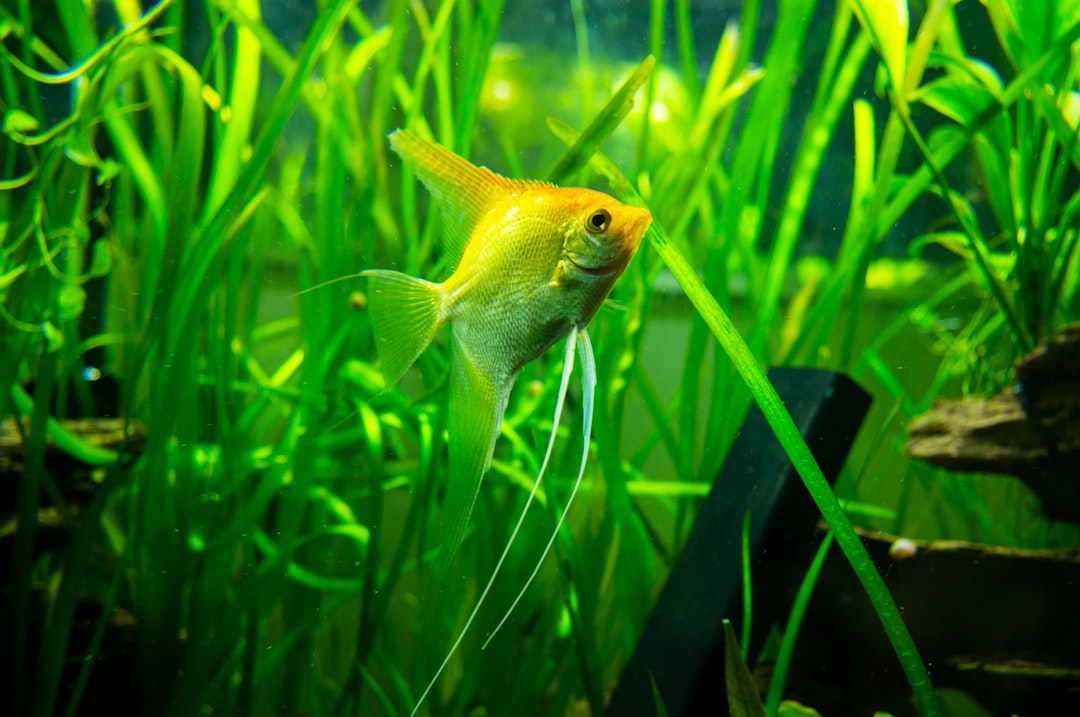
Angelfish are built for vertical space — their tall, laterally compressed bodies glide effortlessly between upright driftwood and towering stems. An aquascape angelfish tall tank guide focuses on exploiting height rather than length, creating dramatic compositions that suit the fish’s natural behaviour. Gensou Aquascaping at 5 Everton Park, Singapore has designed numerous angelfish displays, and vertical thinking is what sets great ones apart from merely adequate setups.
Ideal Tank Dimensions
Standard angelfish (Pterophyllum scalare) reach 15 cm in body length and up to 20 cm in fin span from dorsal to ventral tip. A tank height of at least 50 cm — ideally 55–60 cm — prevents fin tips from dragging on the substrate or breaking against the surface. Footprint matters too: 90 x 45 cm or larger gives a pair adequate territory. Total volume should be 180 litres minimum for a small group.
In Singapore, tall tanks are available from local custom builders or brands like ANS and Elos. A 90 x 45 x 55 cm rimless tank typically costs $150–$250 depending on glass thickness and brand.
Vertical Hardscape Design
Tall driftwood pieces are the backbone of an angelfish aquascape. Spiderwood, Malaysian driftwood, or branching manzanita positioned upright creates natural vertical lanes that angelfish patrol. Anchor heavy pieces firmly in the substrate or silicone them to stone bases — a toppled branch in a tall tank can crack glass.
Arrange wood asymmetrically, leaving one side more open for swimming and the other denser for territory and shelter. Three to four vertical pieces of varying height create depth and prevent the layout from looking flat when viewed from the front.
Plant Selection for Height
Tall stem plants fill vertical space quickly. Vallisneria gigantea sends ribbon-like leaves to the surface and sways gently in current — visually stunning behind angelfish. Echinodorus bleheri (Amazon sword) grows broad rosettes that reach 40–50 cm, providing the broad-leaf shelter angelfish naturally seek for spawning. Crinum calamistratum adds curling, textured leaves that contrast beautifully with smoother foliage.
Attach Anubias and java fern to mid-height positions on driftwood. These epiphytes fill the middle zone where angelfish spend most of their time, softening bare wood and adding visual layers.
Substrate and Base Planting
Fine gravel or nutrient-rich substrate in a dark tone — black or dark brown — makes angelfish colours pop. A depth of 4–5 cm supports rooted plants and anchors hardscape effectively. Foreground plants like Cryptocoryne parva or Sagittaria subulata carpet the base without growing tall enough to obstruct the vertical view.
Avoid sharp substrates. Angelfish sometimes sift through the bottom layer, and rough edges can damage their delicate ventral fins.
Water Parameters and Flow
Angelfish prefer warm, slightly acidic to neutral water: 26–30 degrees C, pH 6.0–7.5, and soft to moderate hardness (GH 3–10 dGH). Singapore’s PUB tap water, after dechloramination, sits comfortably in this range. No heater is needed in most homes where ambient temperature stays above 27 degrees C.
Moderate flow suits angelfish — they are not strong swimmers and struggle in high-current setups. A canister filter with a spray bar or lily pipe diffuser, oriented to distribute flow gently across the tank’s length, keeps water clean without creating a river. Aim for 5–6 times turnover per hour.
Stocking and Compatibility
Keep angelfish in groups of four to six when young, allowing natural pairs to form. Once a pair bonds, they may become territorial — a well-planted tall tank with broken sightlines reduces aggression toward remaining group members. Compatible tank mates include corydoras (which occupy the bottom zone), rummy-nose tetras, and larger rasboras. Avoid fin nippers like tiger barbs and anything small enough to fit in an adult angelfish’s mouth — neon tetras, for instance, often become expensive snacks.
Lighting and Aesthetics
LED fixtures with adjustable intensity let you balance plant growth needs with the subdued ambiance angelfish prefer. A colour temperature of 6500–7000K brings out the silvery sheen on marble and silver angelfish varieties, while warmer tones around 4000K emphasise gold and koi angelfish colouration. Many modern LEDs offer channel control, letting you fine-tune the spectrum.
Floating plants like Salvinia or Ceratopteris (water sprite) diffuse overhead light, creating dappled shadows that mimic the rainforest canopy of the angelfish’s native Amazon tributaries. This encourages confident, natural behaviour.
Bringing It Together
An aquascape angelfish tall tank is fundamentally about celebrating vertical drama. Tall wood, towering plants, and elegant fish create a living column of movement and colour. At Gensou Aquascaping, we find this style particularly impressive in narrow spaces — a tall, slim tank against a feature wall transforms a corridor or entrance into something visitors remember.
Related Reading



