How to Aquascape a Guppy Breeding Display Tank
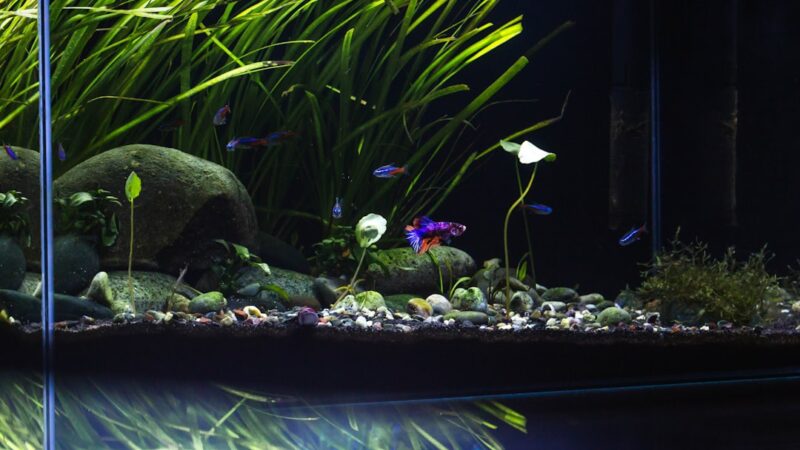
Guppy breeding tanks have a reputation for being utilitarian — bare bottoms, plastic breeding boxes and sponge filters. But it does not have to be that way. This aquascape guppy breeding display tank guide from Gensou Aquascaping in Singapore proves you can maintain a productive breeding colony inside a beautifully aquascaped tank that you are proud to display in your living room.
The Challenge: Beauty Meets Function
Breeding guppies successfully requires fry survival, which means dense cover for newborns to hide from hungry adults. Traditional aquascapes often prioritise open swimming space and clean sight lines — the opposite of what fry need. The trick is designing a layout where dense refuge zones coexist with open display areas, giving you both aesthetic appeal and practical breeding results.
Tank Size and Shape
A 60 cm (approximately 60-litre) tank is the sweet spot for a guppy breeding display. It provides enough volume for stable water parameters, sufficient floor space for plant growth and adequate swimming room for adult guppies to show off their finnage. Rimless tanks look best and are readily available in Singapore from $40-$80 depending on brand. Avoid anything smaller than 30 litres — guppy colonies produce waste quickly, and cramped conditions stress fish and stunt growth.
Substrate and Hardscape
Fine sand or small-grain gravel in a neutral colour lets the vivid colours of fancy guppies pop visually. A 3-4 cm layer of aquasoil capped with sand supports rooted plants while keeping the aesthetic clean. For hardscape, use small pieces of driftwood positioned to create archways and tunnels — fry instinctively hide in shaded crevices beneath overhanging wood.
A single piece of branching spider wood arranged off-centre creates a natural focal point. Keep stone minimal — one or two accent pieces rather than a full rock arrangement. The plants and fish are the stars here.
Plant Selection for Fry Survival
Dense floating plants are the single most effective fry refuge. Salvinia minima, Ceratopteris thalictroides (water sprite) and Limnobium laevigatum (frogbit) create a thick surface canopy where newborn fry hide within seconds of birth. Root tangles hanging from floating plants provide additional cover. Keep floating plants covering roughly 40-60 % of the surface — enough for shelter without blocking all light to submerged plants below.
For mid-water and substrate-level cover, plant dense clumps of Java moss on driftwood and Najas guadalupensis (guppy grass) in the background. Both species grow rapidly and create impenetrable thickets that fry navigate easily while adult guppies struggle to follow.
Open Display Zone
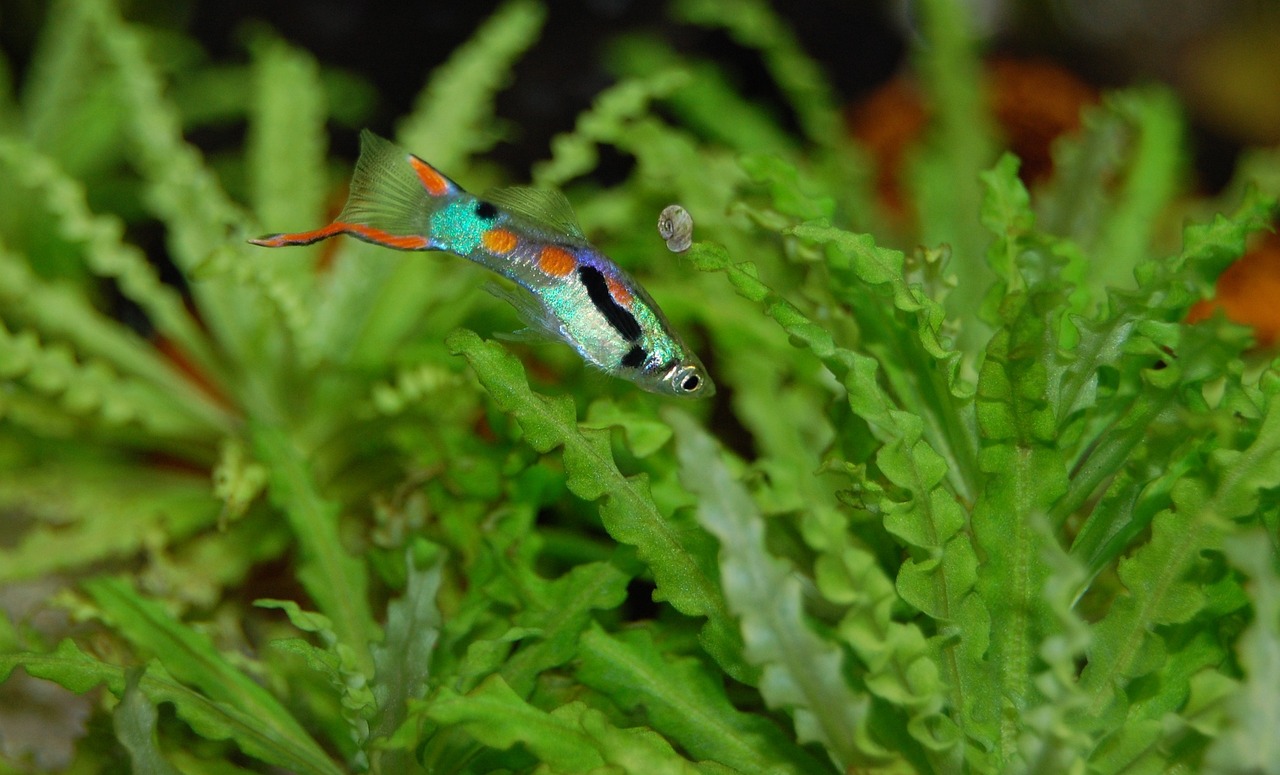
Reserve the front third of the tank as an open swimming area with only low-growing foreground plants like Eleocharis pusilla (dwarf hairgrass) or no plants at all. This is where adult male guppies display their tails, chase females and show their best colours. Good front lighting and a dark background intensify the visual impact of metallic and delta-tail varieties.
Filtration and Flow
Sponge filters remain the safest choice for guppy breeding tanks — zero risk of fry being sucked into an intake. A double-sponge filter rated for your tank volume provides adequate biological filtration while adding gentle surface agitation. If you prefer a canister or hang-on-back filter for better clarity, cover the intake with a fine stainless steel mesh guard or a pre-filter sponge. Flow should be gentle; guppy fry are weak swimmers and strong current exhausts them.
Breeding Colony Management
Maintain a ratio of one male to two or three females to reduce harassment of any single female. A colony of 3 males and 8-10 females in a 60-litre planted tank produces a steady stream of fry. Guppies drop fry every 25-30 days, and well-fed females can produce 20-50 fry per batch. With good plant cover, expect 30-50 % fry survival without separating adults — enough to grow your colony or sell surplus on Carousell, where fancy guppy strains fetch $2-$8 per fish in Singapore.
Water Parameters and Feeding
Guppies thrive in Singapore’s PUB tap water with minimal adjustment. They prefer slightly hard water (GH 4-8), so if your tap water tests at GH 2-3, add a small bag of crushed coral to the filter. Temperature of 26-28 °C suits both adults and fry — no heater needed in most Singaporean homes. Feed a varied diet of quality flake, baby brine shrimp and blanched vegetables. Crush flake food to powder for fry, or let them graze on biofilm and infusoria growing naturally on plant surfaces.
A Tank That Does Double Duty
With thoughtful plant placement and a clear zoning strategy, your guppy breeding tank becomes a display piece that also happens to produce healthy fry. The lush planted backdrop, floating plant canopy and open front viewing zone create a dynamic aquascape that evolves as your colony grows — functional, beautiful and endlessly entertaining to watch.
Related Reading
- How to Aquascape an Angelfish Display Tank: Tall Plants and Verticals
- How to Aquascape for Apistogramma Breeding: Caves and Territory
- How to Aquascape a Breeding Tank: Function Meets Beauty
- How to Aquascape a Cherry Shrimp Display Tank
- How to Aquascape for a Corydoras Breeding Tank: Sand and Shelter