
Blue Velvet Shrimp Care Guide: Striking Colour for Any Tank
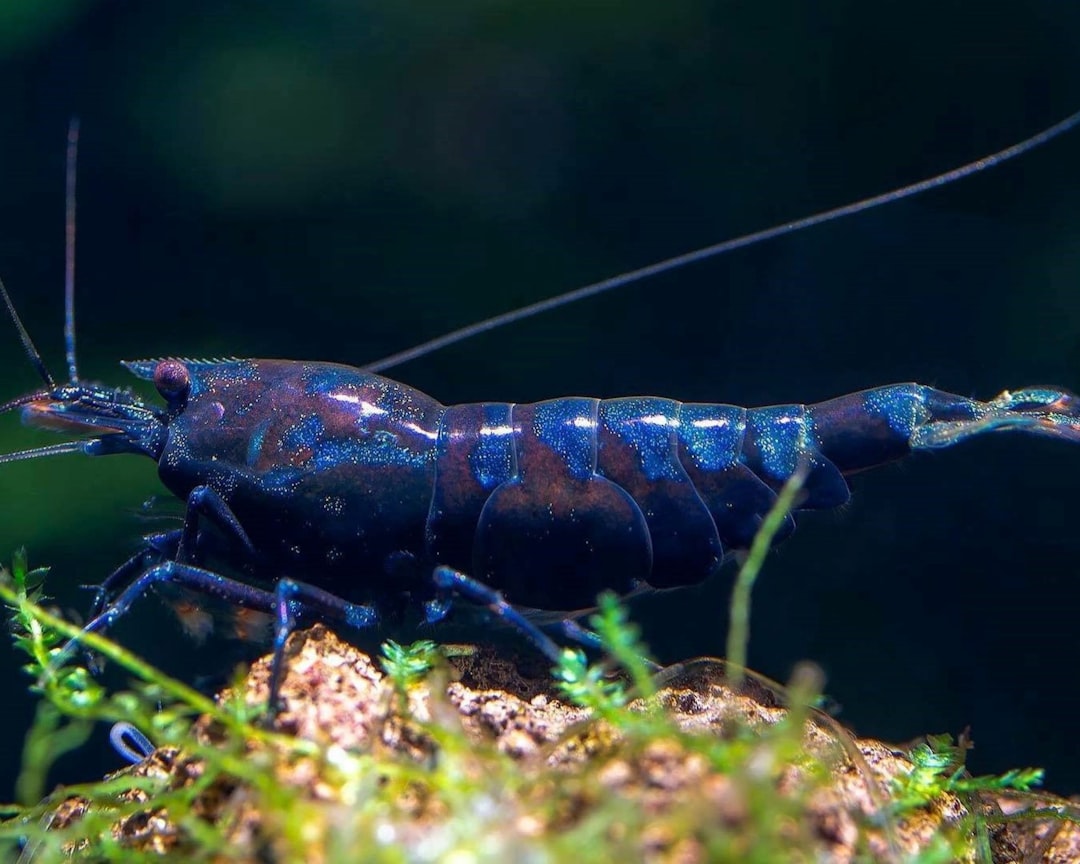
Table of Contents
- Introduction to Blue Velvet Shrimp
- Grading: From Light Blue to Blue Dream
- Tank Setup for Singapore
- Water Parameters
- Feeding
- Breeding and Colour Genetics
- Why You Should Not Mix Neocaridina Colours
- Tank Mates
- Frequently Asked Questions
Introduction to Blue Velvet Shrimp
The blue velvet shrimp is one of the most visually striking Neocaridina colour morphs available. A rich, velvety blue covering the entire body, these shrimp bring a colour that is rare in the freshwater world and looks stunning against green planted backgrounds. For Singapore hobbyists seeking something beyond the standard cherry shrimp red, blue velvets deliver immediate impact with the same forgiving care requirements. This guide sits inside our broader Tropical Fish Species Master Index reference.
Like all Neocaridina colour variants, blue velvets are selectively bred from Neocaridina davidi (formerly N. heteropoda). Their care is essentially identical to cherry shrimp, with the key difference lying in colour genetics and the importance of selective breeding to maintain that gorgeous blue.
At Gensou, with over 20 years of aquascaping experience in Singapore, we have kept and bred blue velvet colonies for many years. This guide shares the practical knowledge needed to maintain vibrant blue shrimp in our local conditions.
Grading: From Light Blue to Blue Dream
Blue Neocaridina shrimp exist on a spectrum of colour intensity. Understanding the grades helps you know what you are buying and what you are breeding towards.
| Grade | Appearance | Price Range (SG) | Availability |
|---|---|---|---|
| Light Blue / Blue Jelly | Translucent body with light blue tint; internal organs may be visible | $1 – $2 each | Common |
| Blue Velvet | Solid blue covering most of the body; opaque; even colouration | $2 – $5 each | Common |
| Blue Dream | Deep, rich blue; completely opaque; colour extends to legs and swimmerets | $4 – $8 each | Moderate |
| Blue Diamond / Blue Bolt (appearance) | Intense, near-metallic blue; highest colour density; no translucency | $8 – $15+ each | Uncommon |
Note: “Blue bolt” in the Neocaridina context describes an appearance grade, not to be confused with true Blue Bolt Caridina (Taiwan bee shrimp), which are an entirely different species with different care requirements. This is a common source of confusion in Singapore hobbyist groups.
For a detailed understanding of how shrimp grading works across all colour lines, see our cherry shrimp grading guide.
Tank Setup for Singapore
Tank Size
Blue velvet shrimp thrive in tanks as small as 10 to 20 litres, though 30 to 45 litres provides more stable parameters and allows a colony to grow comfortably. In Singapore’s HDB flats and condos, a nano shrimp tank on a desk or shelf is one of the most space-efficient ways to enjoy the hobby.
Substrate
Blue velvet shrimp look particularly stunning against dark substrates. Black aqua soil or dark gravel creates maximum contrast with their blue colouration. Active aqua soils (such as ADA Amazonia or similar) also help buffer pH to the slightly acidic range Neocaridina appreciate.
Inert substrates (sand, gravel) work perfectly well and do not affect water chemistry. Choose based on aesthetic preference and whether you plan to grow demanding aquatic plants.
Plants and Hardscape
Heavily planted tanks are ideal for shrimp. Plants provide:
- Biofilm surfaces for grazing (the primary natural food source)
- Hiding spots for moulting shrimp and newborn shrimplets
- Improved water quality through nutrient absorption
- A beautiful backdrop that complements blue colouration
Mosses (Java moss, Christmas moss, flame moss) are particularly valuable as they trap micro-organisms and provide sheltered spaces for shrimplets. Driftwood supports biofilm growth. Indian almond leaves add tannins and serve as a food source as they decompose.
Filtration
A sponge filter is the gold standard for shrimp tanks. It provides biological filtration without risking shrimp or shrimplets being sucked into the intake. If using a hang-on-back or canister filter, always fit a pre-filter sponge over the intake. In Singapore’s warm climate, the sponge filter’s gentle aeration also helps maintain adequate oxygen levels.
Water Parameters
| Parameter | Ideal Range | Notes for Singapore |
|---|---|---|
| Temperature | 22 – 28 °C | SG ambient 28 – 32 °C is warm; use fan if needed |
| pH | 6.5 – 7.5 | SG tap water suitable after treatment |
| GH | 6 – 12 dGH | Critical for moulting; may need GH booster |
| KH | 3 – 8 dKH | Provides pH stability |
| TDS | 150 – 250 ppm | Monitor with TDS meter |
| Ammonia / Nitrite | 0 ppm | Shrimp are sensitive; fully cycle first |
| Nitrate | Below 20 ppm | Regular small water changes |
Singapore’s PUB tap water needs dechlorination to remove chloramine before use. Neocaridina are particularly sensitive to chloramine, so use a quality water conditioner and never skip this step. Our tap water’s GH is usually sufficient for moulting, but test and supplement with a GH booster if needed. Consistent parameters matter more than hitting exact numbers.
Temperature Management
Blue velvet shrimp prefer temperatures below 28 degrees. Singapore’s ambient 28 to 32 degrees sits at or above their comfort zone. While Neocaridina tolerate warmer water better than Caridina species, you can improve conditions with a small clip-on fan directed at the water surface, which drops temperatures by 2 to 4 degrees through evaporative cooling. Top up with treated water to compensate for evaporation.
Feeding
Blue velvet shrimp are omnivorous scavengers that eat continuously throughout the day.
- Staple: High-quality shrimp pellets (Glasgarten, Shrimp King, Borneo Wild)
- Vegetable: Blanched spinach, courgette, kale; spirulina powder
- Protein: Dried mulberry leaves, snowflake food (soya hulls), bee pollen
- Mineral: Mineral supplements, cuttlebone (calcium for moulting)
- Biofilm: Indian almond leaves, banana leaves (decompose and grow biofilm)
In a mature planted tank, biofilm on surfaces provides a significant portion of their diet. Supplemental feeding should be light — offer a small amount every one to two days and remove uneaten food after a few hours. Overfeeding is the most common cause of water quality issues in shrimp tanks.
Breeding and Colour Genetics
Blue velvet shrimp breed readily in a well-maintained tank. The breeding process is identical to cherry shrimp breeding, with the added consideration of colour selection.
Breeding Basics
Females carry eggs (visible as a cluster under the tail, called “berried”) for 28 to 35 days before releasing fully formed miniature shrimp. No larval stage means no special rearing requirements. Shrimplets are independent from birth and graze on biofilm immediately.
A healthy colony in a well-planted tank with stable parameters will breed continuously. Expect a new batch of shrimplets every few weeks from multiple females.
Maintaining Blue Colour
The blue colouration is genetically recessive and requires selective pressure to maintain intensity across generations. Without culling, colonies tend to produce an increasing proportion of lower-grade (paler, more translucent) offspring over time.
To maintain high-grade blue:
- Cull lower grades: Remove pale, translucent or wild-type (brownish) offspring to a separate tank
- Keep only the bluest breeders: Select shrimp with the deepest, most opaque blue for your breeding colony
- Introduce fresh genetics: Occasionally add unrelated high-grade blue velvets to prevent inbreeding depression
- Never mix colours: Keep blue velvet colonies separate from other Neocaridina colour lines
Why You Should Not Mix Neocaridina Colours
This is one of the most important rules in Neocaridina keeping, and one that new hobbyists frequently break. All Neocaridina colour morphs (red, blue, yellow, orange, green, black) are the same species: Neocaridina davidi. They interbreed freely.
When different colour lines breed together, the offspring inherit a mix of colour genes. The result is not a beautiful rainbow of shrimp — instead, within two to three generations, you get a colony of dull, brownish wild-type shrimp. All the carefully selected colour is lost.
Practical Advice
- Keep only one Neocaridina colour per tank
- If you want multiple colours, maintain separate tanks for each
- Wild-type (brown/clear) culls from any colour line can be mixed together in a “cull tank” without concern
- Neocaridina and Caridina species do not interbreed, so you can safely keep blue velvet Neocaridina alongside, say, crystal red Caridina in the same tank (though water parameter preferences differ)
Tank Mates
Blue velvet shrimp are tiny and defenceless. Tank mate selection must prioritise shrimp safety.
Safe Tank Mates
- Otocinclus (gentle algae eaters)
- Small snails (nerite, ramshorn, Malaysian trumpet)
- Pygmy corydoras (very peaceful, similar size)
- Micro rasboras (Boraras species — may eat some shrimplets but generally coexist)
Risky Tank Mates
- Bettas (will hunt shrimp in smaller tanks; some individuals are shrimp-safe, most are not)
- Guppies and endlers (eat shrimplets; adults usually safe)
- Small tetras (neon, ember — eat shrimplets; adults usually safe)
Avoid
- Any fish larger than 5 cm (will eat shrimp)
- Loaches of any kind (snail and shrimp hunters)
- Cichlids (even dwarf cichlids hunt shrimp)
For maximum colony growth and colour development, a species-only shrimp tank is the best approach. Our aquascaping team can design beautiful shrimp-only nano tanks that showcase blue velvets without compromise.
Frequently Asked Questions
Are blue velvet shrimp harder to keep than cherry shrimp?
No. Blue velvet shrimp are genetically the same species as cherry shrimp (Neocaridina davidi) and have identical care requirements. The only additional “difficulty” is maintaining colour quality through selective breeding. If you can keep cherry shrimp alive, you can keep blue velvets. Water parameters, feeding and tank setup are exactly the same.
Can I keep blue velvet shrimp with cherry shrimp?
You can, but you should not. They will interbreed, and within a few generations your colony will revert to wild-type brown colouration. If you want both colours, maintain them in separate tanks. This is not a matter of compatibility (they get along perfectly) but of colour genetics.
Why are my blue velvet shrimp turning brown or clear?
Several factors affect colour intensity. Stress from poor water quality, recent introduction to a new tank, low mineral content (particularly calcium) and inadequate diet all cause colour fading. Ensure your GH is 6 to 12 dGH, feed colour-enhancing foods (spirulina, astaxanthin-containing pellets) and give newly purchased shrimp two to four weeks to settle in. If your colony is gradually producing paler offspring over generations, you need to cull lower-grade individuals more aggressively.
Do blue velvet shrimp need a chiller in Singapore?
Not necessarily, but they benefit from cooling. Neocaridina tolerate temperatures up to 30 degrees, but they are more active, breed more readily and show better colour at 24 to 26 degrees. A small clip-on fan provides sufficient cooling for most nano shrimp tanks in Singapore, bringing temperatures down by 2 to 4 degrees. A chiller is overkill for Neocaridina. Visit our aquarium maintenance page for more nano tank tips.
Start Your Blue Velvet Colony
Blue velvet shrimp bring a unique, eye-catching colour to the freshwater hobby with care requirements no more demanding than the common cherry shrimp. Whether you are setting up your first nano tank or adding a new colour line to your collection, blue velvets are a rewarding choice for Singapore hobbyists.
Visit us at Gensou, 5 Everton Park, Singapore to see blue velvet shrimp in our displays and discuss your shrimp tank project. With over two decades of aquascaping experience in Singapore, we will help you set up a tank that keeps your blue velvets thriving and breeding true.
Related Reading
- Blue Dream Shrimp vs Blue Velvet Shrimp: Grade and Colour Differences
- Blue Velvet Shrimp Grading Guide: Colour Intensity and Selection
- Aura Blue Shrimp Care Guide: Caridina Cantonensis Blue Morph
- How to Breed Blue Bolt Shrimp: Taiwan Bee Colour Selection
- Blue Bolt Shrimp Care Guide: The Crown Jewel of Caridina



