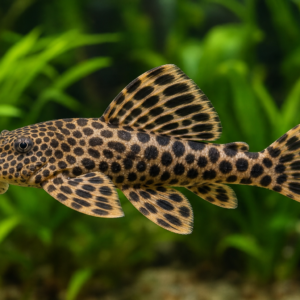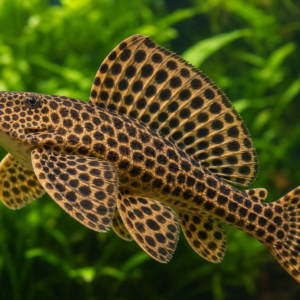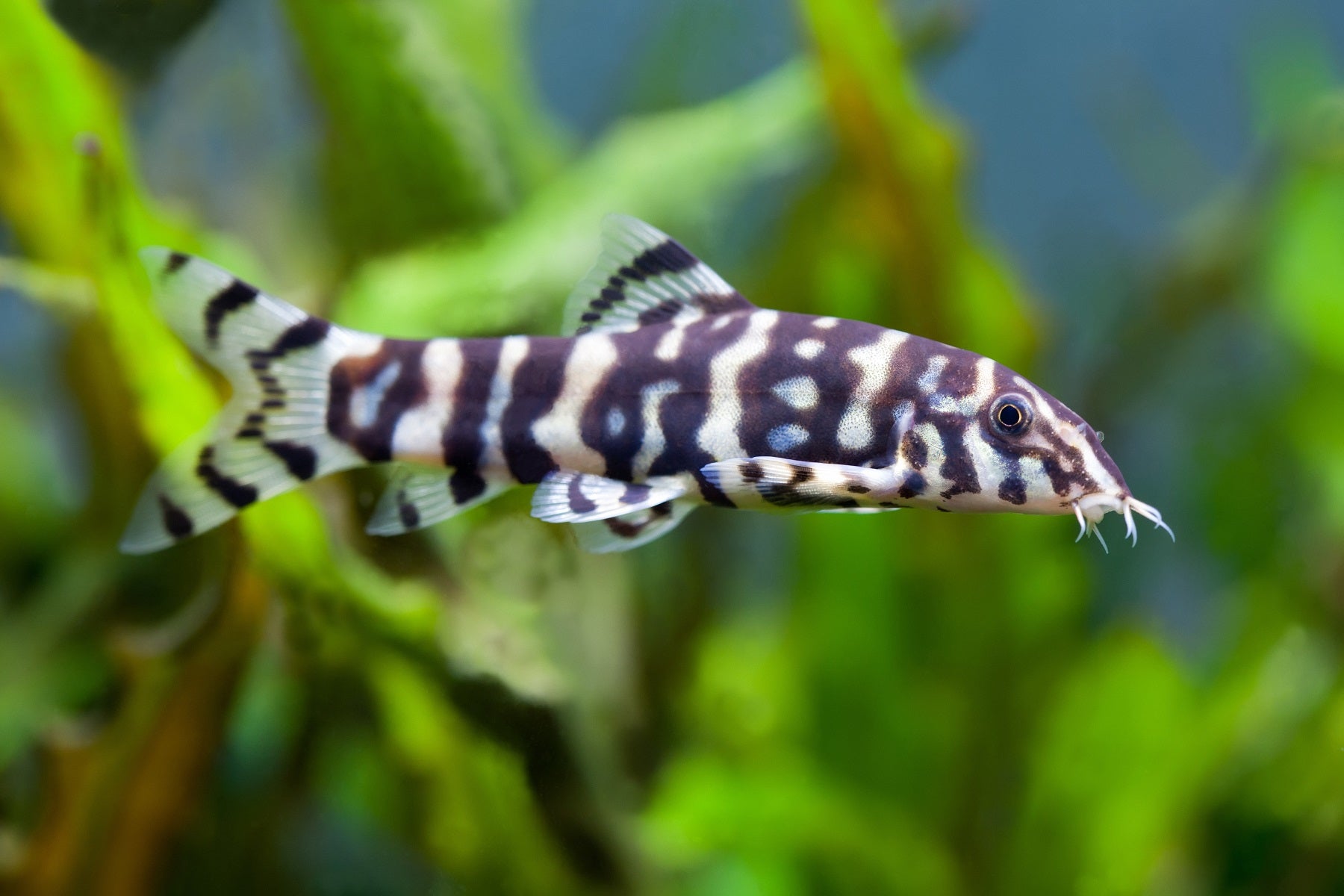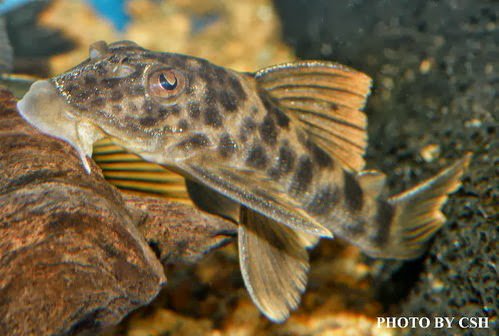
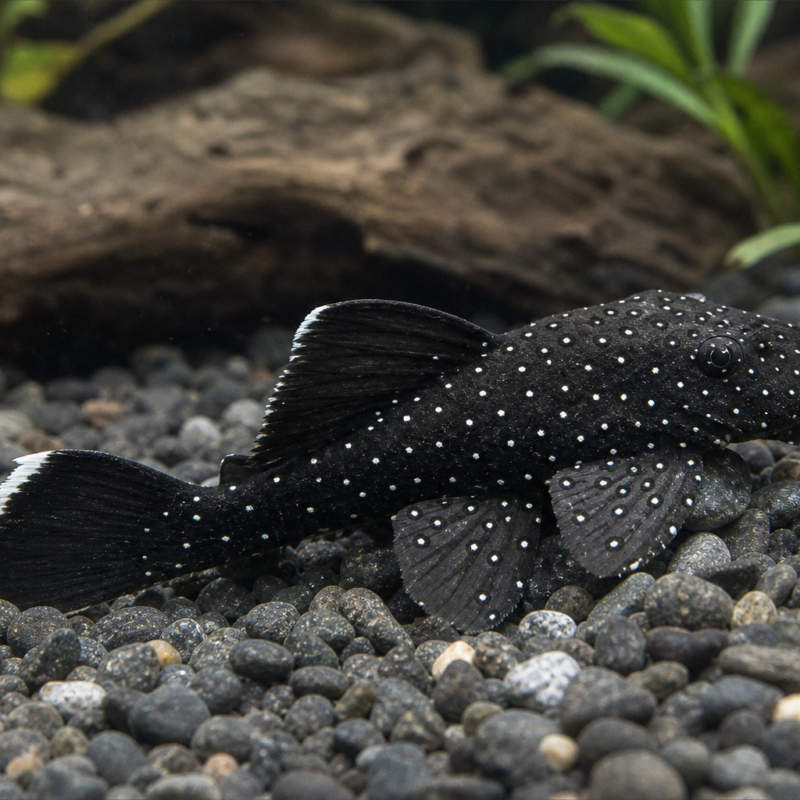
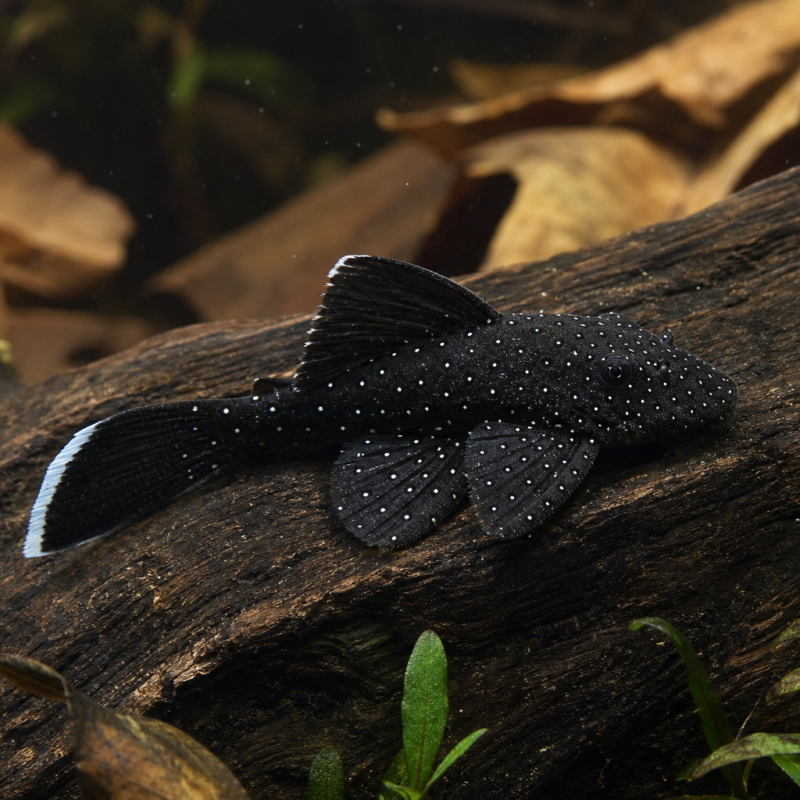
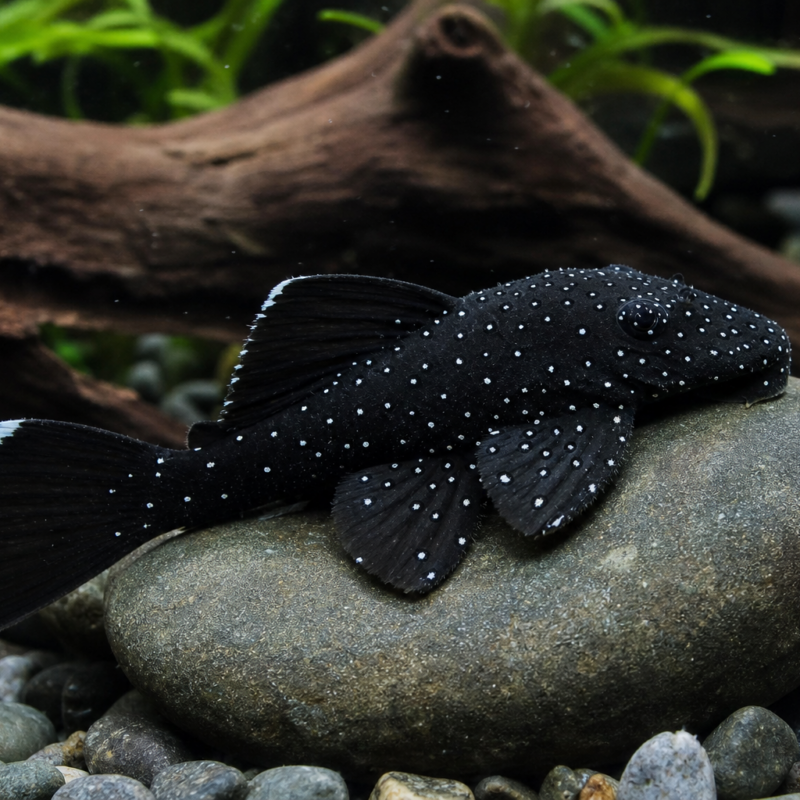
Starlight Bristlenose Pleco (L183)
Ancistrus dolichopterus · Peaceful; territorial with other plecos around caves · Intermediate care
A peaceful, night-active L183 bristlenose with a deep black body, fine white star-like spots and pale fin seams. Best kept in a mature, well-oxygenated aquarium with driftwood, shaded caves and stable water.
Pairs well with
At a glance
Species profile Ancistrus dolichopterus
Origin
Upper and middle Amazon basin, including the Rio Negro, lower Trombetas, Tefé, Madeira and Tapajós river basins
Family
Loricariidae
Adult size
Up to 14.5 cm
Diet
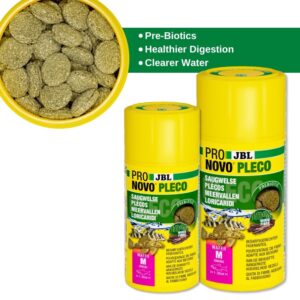
Plant-rich omnivore: algae and biofilm, sinking pleco wafers, varied blanched vegetables and occasional protein-rich food (Omnivore (plant-rich grazer))
Temperament
Peaceful; territorial with other plecos around caves
Swimming level
Bottom
Lifespan
8–10 years with good care
Minimum tank
100 L / 80 cm long minimum for one adult
Water type
Freshwater
Size to scale
14.5 cm adult length, shown to scale against an iPhone 15 Pro (14.66 cm).
Natural range
Where it comes from — South America
Upper and middle Amazon basin, including the Rio Negro, lower Trombetas, Tefé, Madeira and Tapajós river basins
Water
Singapore tap water vs its needs
Hardness: Soft to moderately hard (5–12 dGH preferred).
In the aquarium
How it lives in the tank
Swims in the bottom of the tank
Sensitivity Index — Moderate
Adaptable, but happiest with stable parameters in a matured tank.
Our own read on how forgiving this species is of water changes — not a formal standard.
Keeping & care
What this fish needs
Family
About the Loricariidae family
Loricariidae are the armoured suckermouth catfishes — the plecos — a huge South American family clad in bony plates with a ventral sucker-mouth for grazing surfaces and holding station in current. They range from the tank-friendly bristlenose (Ancistrus) and dwarf 'L-number' plecos up to the massive common pleco that outgrows most tanks. Most are peaceful and nocturnal and appreciate driftwood to rasp on, though diets vary from algae to wood to protein by species.
Give plecos driftwood and caves, feed to their actual diet (algae wafers, vegetables, or protein/wood by species), and always check adult size — many sold small grow far too large for community tanks.
Breeding
Cave-spawner (male-guarded)Many smaller plecos, especially bristlenose, are cave-spawners that breed readily: the female lays a clutch inside a snug cave or pleco log and the male guards and fans it until the yolk-sac fry emerge. Provide correctly-sized caves, good feeding and a cooler water change to trigger spawning; larger and fancy L-number plecos are progressively harder and some are rarely bred.
Feeding
Recommended food
Compatibility
Best tankmates
Community