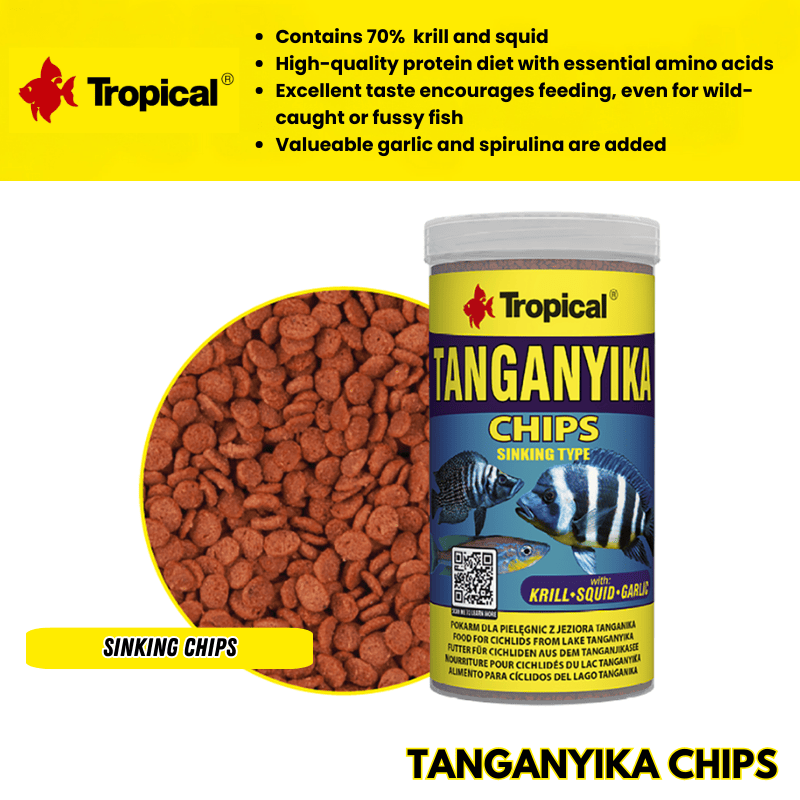
Tropical Tanganyika Chips (high in krill)
Description
Size: 250ml/130g
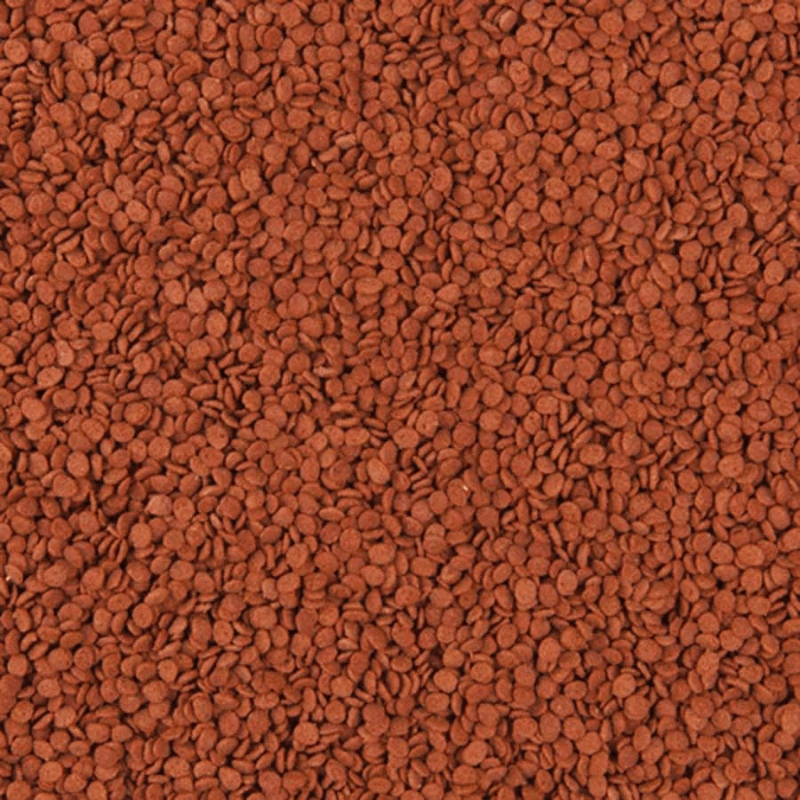
TANGANYIKA CHIPS Special, multi-ingredient sinking chips for large cichlids from Lake Tanganyika from genera Altolamprologus, Julidochromis, Lamprologus, Neolamprologus, Lepidiolamprologus, young Cyphotilapia frontosa and other, whose diet is based mainly on animal material.
TANGANYIKA CHIPS contains 70% ingredients of marine origin, including krill and squid, which are the source of high quality protein, rich in essential amino acids. Thanks to excellent taste of those additions, the food is eagerly eaten even by most fussy fish, including wild-caught specimens. Fish’s immune system is enhanced by substances present in spirulina, Kelp algae, garlic and stabilised vitamin C.
TROPICAL6.55k subscribersSpecial food for cichlids from Lake Tanganyika – TROPICAL TANGANYIKA CHIPSTROPICALSearchInfoShoppingTap to unmuteIf playback doesn’t begin shortly, try restarting your device.Full screen is unavailable. Find out moreYou’re signed outVideos that you watch may be added to the TV’s watch history and influence TV recommendations. To avoid this, cancel and sign in to YouTube on your computer.CancelConfirmShareInclude playlistAn error occurred while retrieving sharing information. Please try again later.Watch LaterShareCopy linkWatch on0:000:00 / 0:53•Live•
An error occurred.
Try watching this video on www.youtube.com, or enable JavaScript if it is disabled in your browser.
Tropical Tanganyika Chips for Singapore rift-lake tanks
These sinking chips are built for the carnivorous Tanganyikans we sell a lot of locally: Altolamprologus, Julidochromis, Lamprologus, Neolamprologus and young Cyphotilapia frontosa. The high marine content of krill and squid matches what these predators expect, and because the chips sink, they feed the mid and lower water where rift cichlids naturally hunt around rockwork rather than chasing food at the surface.
The strong taste tends to win over fussy or wild-caught fish that snub other foods, which is handy when settling in newly imported specimens. In our warm water these cichlids are active and hungry, so feed measured portions a few times a day rather than one large drop, and let the chips reach the rocks before they break apart. Keep the tub sealed against humidity so the chips stay firm.
This sits in our cichlid food range. For setup and care, read our Lake Tanganyika biotope aquascape guide, our frontosa cichlid care guide, and our Neolamprologus cylindricus care guide.