
Fish Behaviour Ethology Deep Guide: Schooling Aggression Spawning
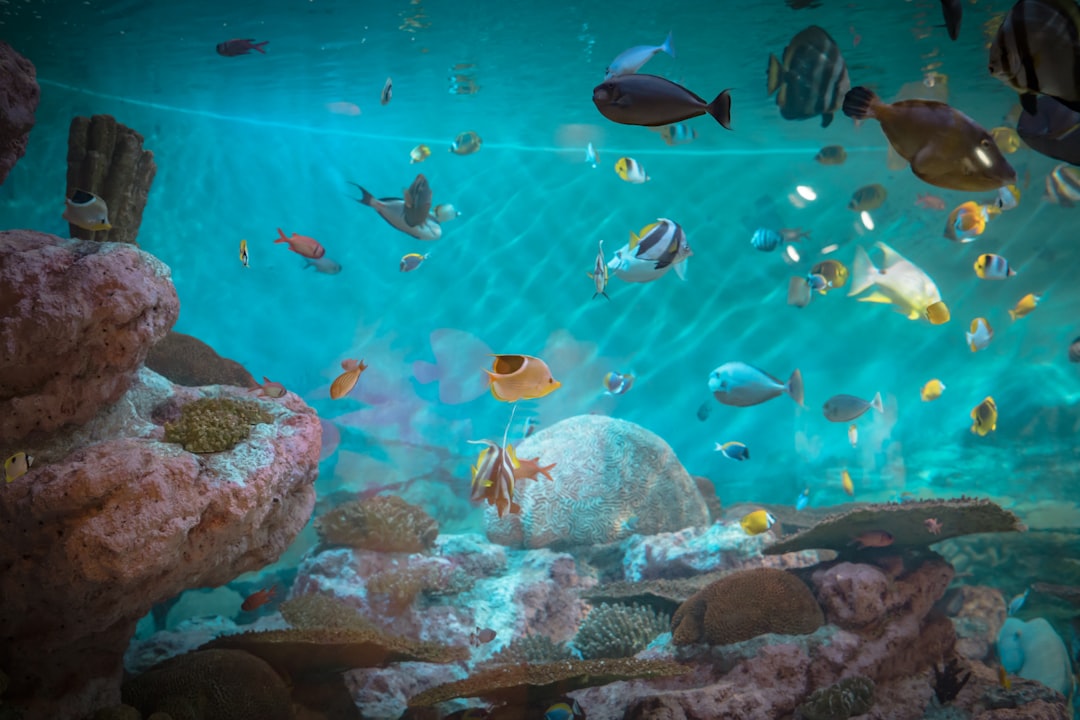
The way fish move through your tank is not random — it is the surface of decades of evolutionary problem-solving expressed through neural circuits, hormone gradients and learned imprints. Studying fish behaviour ethology properly means separating shoaling from schooling, mapping the dominance ladders that decide who eats first, and reading the photoperiod and conductivity cues that trigger spawning. This deep dive from Gensou Aquascaping at 5 Everton Park covers the academic distinctions that explain why your “peaceful community” cichlid pair just murdered the tetras.
Shoaling vs Schooling: The Distinction Matters
Ethologists draw a precise line. Shoaling describes any loose social aggregation — cardinal tetras drifting roughly together count as a shoal. Schooling is the structured, polarised, synchronised swimming pattern where all individuals match speed and heading within milliseconds — rummynose tetras tipping in unison are a true school. The difference is neurological: schooling fish have specialised lateral-line processing that translates neighbour position into motor adjustment within 30-50 ms. Shoaling fish lack this circuitry and rely on vision alone.
Why Group Size Has Threshold Effects
A school does not form below a critical mass. Six rummynose tetras shoal loosely; twelve school properly with the tight-formation flicker that defines the species’ display. The threshold reflects the cost-benefit calculation each individual makes — joining costs energy in matching motion, but reduces predation risk through the dilution effect and confusion effect. Below threshold, individual cost outweighs group benefit and structured schooling collapses.
Dominance Hierarchies in Cichlids
African cichlid hierarchies follow the alpha-beta-omega pattern documented by Niko Tinbergen and refined by modern ethologists. The alpha holds central territory and breeding rights; betas hold satellite territories and harass omegas. Hierarchy is reinforced through ritualised displays — fin-spreading, lateral threat, jaw-locking — that resolve conflicts without injury. Inject a new fish into an established Mbuna setup and the hierarchy must reset, which is why introductions during the established midday lull cause less violence than at feeding time.
Spawning Triggers: Photoperiod and Temperature
Most freshwater fish spawn in response to environmental cues that signal seasonal abundance for fry. Photoperiod is the dominant cue for many killifish and Australian rainbows — extending day length by 30 minutes per week over a month mimics spring. Temperature swings of 3-5°C signal monsoon onset for South American characins; conductivity drops from heavy rainfall trigger discus and angelfish. Replicate the cues using equipment from the aquarium equipment range and breeding becomes predictable rather than mysterious.
Imprint Behaviours and Early Learning
Fry imprint on visual and chemical cues during a sensitive window in the first 14-30 days. Discus fry imprint on their parents’ mucous coat — separate them too early and they fail to thrive even on artemia. Cichlid fry imprint on parental colour patterns and may reject mates of different colour morphs years later. Tank-bred lines that have been raised away from parents for multiple generations sometimes lose key behaviours like fry-guarding entirely.
Territorial Spatial Cognition
Cichlids and bettas hold detailed mental maps of their territory. Rearrange hardscape from the decoration and substrate range and a previously settled fish will swim transect patterns for two to three days while it rebuilds its map. This is also why moving tanks to a new room triggers stress responses lasting a week or more — the visual landscape outside the glass is part of the cognitive territory.
Aggression Asymmetry in Mixed Pairs
Many “compatible” pairings sour because aggression is rarely symmetric. A male Apistogramma outweighs a female by 30 per cent and dominates feeding stations completely; the female may starve in plain sight unless feeding is dispersed. The same pattern appears in betta sororities, dwarf cichlid trios and any breeding setup where the dominant individual controls a single resource bottleneck.
Stress Behaviours and Their Origins
Glass surfing, clamped fins and persistent hiding are stress signals with specific causes. Glass surfing in new fish usually reflects unmet exploration drive in an under-furnished tank. Clamped fins indicate gill irritation, often from chloramine residue or high ammonia. Persistent hiding in established fish often reflects new tank-mate intimidation rather than illness. The aquarium fertiliser range includes stress coat conditioners that mitigate the immediate physiological response while you address the cause.
Cognitive Capabilities That Surprise Hobbyists
Fish recognise individual humans by face, learn feeding schedules to the minute, and pass tool-use tasks in laboratory settings. Archerfish predict moving target trajectories. Cichlids count up to four. The “three-second memory” myth has been disproven so many times in the literature it should embarrass the people still repeating it.
Related Reading



