How to Aquascape a 5 Gallon Nano Tank

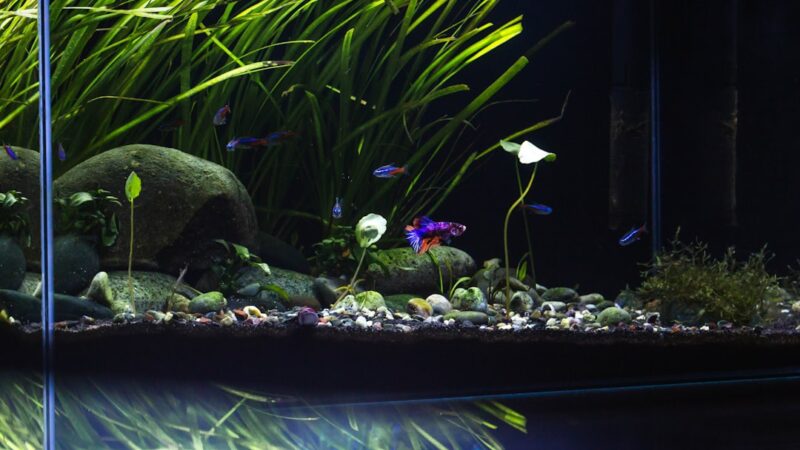
If you think you need a massive aquarium to create a stunning underwater landscape, think again. Learning how to aquascape a 5 gallon nano tank is one of the most rewarding entry points into this hobby, and it is surprisingly achievable even in compact Singapore flats. At Gensou, our studio at 5 Everton Park has helped countless hobbyists discover that a small footprint can deliver enormous visual impact — provided you understand the principles that govern nano-scale design.
Over more than 20 years of aquascaping in Singapore, we have seen the nano movement grow from a niche curiosity into one of the most popular segments of the hobby. A 5 gallon tank sits comfortably on a study desk, a kitchen counter, or a bedroom shelf. It requires less water, less substrate, and less equipment than its larger cousins, yet it demands just as much — if not more — creative thought.
This comprehensive guide walks you through every stage, from selecting the right tank to planting, maintenance, and the common pitfalls that trip up beginners.
Table of Contents
- Why a 5 Gallon Tank Is the Perfect Starting Point
- Design Principles for Nano Aquascaping
- Essential Equipment for a 5 Gallon Setup
- Choosing and Placing Hardscape
- Step-by-Step Aquascaping Process
- Best Plants for a 5 Gallon Nano Tank
- Suitable Livestock Options
- Maintenance Schedule
- Common Mistakes to Avoid
- Frequently Asked Questions
- Get Started with Gensou
Why a 5 Gallon Tank Is the Perfect Starting Point
A 5 gallon tank — roughly 19 litres — strikes a sweet spot between manageability and creative potential. It is large enough to sustain a stable mini-ecosystem yet small enough to fit into the tightest HDB bedroom. For Singaporeans living in compact spaces, this matters tremendously.
Cost is another advantage. You can outfit a complete 5 gallon nano setup, including light, filter, substrate, hardscape, and plants, for a fraction of what a 60 cm tank demands. This lower barrier to entry encourages experimentation: if a layout does not work, you can tear it down and start fresh without significant financial pain.
Perhaps most importantly, nano tanks teach discipline. Every centimetre of space counts, so you learn to edit ruthlessly — a skill that transfers beautifully when you eventually scale up to larger aquariums.
Design Principles for Nano Aquascaping
Good nano design is governed by the same rules that guide larger aquascapes, but the margin for error shrinks considerably. Here are the core principles to keep in mind.
The Rule of Thirds
Divide your tank visually into a 3 × 3 grid. Place your focal point — typically the tallest piece of hardscape or the most striking plant — at one of the four intersections. This creates a naturally pleasing composition that draws the eye without feeling forced.
Scale and Proportion
This is where nano aquascaping gets tricky. A rock that looks modest in a 90 cm tank can overwhelm a 5 gallon cube. Choose hardscape pieces that are proportionate to the tank dimensions. As a rough guide, your tallest element should reach between 60 and 75 per cent of the tank’s height.
Negative Space
Resist the urge to fill every corner. Empty space — open sand beds, unplanted areas of substrate — gives the eye a place to rest and makes your planted sections look more lush by contrast. In a nano tank, negative space also helps prevent the layout from feeling cramped.
Depth Illusion
Sloping the substrate from back to front creates a sense of depth that makes the tank appear larger than it is. Fine-textured plants in the background and coarser textures in the foreground reinforce this illusion.
Essential Equipment for a 5 Gallon Setup
You do not need a mountain of gear to get started, but choosing the right equipment makes a significant difference in a small volume of water.
| Equipment | Recommendation | Why It Matters |
|---|---|---|
| Tank | Rimless glass cube (20 × 20 × 25 cm or similar) | Rimless designs maximise viewing clarity and suit modern interiors |
| Light | LED clip-on or pendant (6500–7000 K, 15–30 PAR at substrate) | Correct colour temperature promotes healthy plant growth |
| Filter | Small hang-on-back or sponge filter | Gentle flow prevents uprooting delicate nano plants |
| Heater | 25 W adjustable mini heater | Singapore’s air-con can drop room temp; stability is key |
| Substrate | Active aqua soil (e.g., ADA Amazonia, Tropica Soil) | Buffered substrates support plant roots and stabilise pH |
| CO2 (optional) | DIY citric acid kit or nano CO2 regulator | Boosts plant growth; not essential for low-tech species |
Choosing and Placing Hardscape
Hardscape — rocks and driftwood — forms the skeleton of your layout. In a nano tank, less is more.
Rock Selection
Seiryu stone, dragon stone (ohko stone), and lava rock are all popular choices available at local fish shops across Singapore. For a 5 gallon tank, aim for one main stone and one or two accent pieces. Avoid mixing rock types, as consistency looks more natural at this scale.
Driftwood
Spider wood and manzanita are excellent for nano tanks because their branching structure adds complexity without bulk. Soak driftwood for a few days before use to reduce tannin leaching. In Singapore’s warm tap water, tannins leach out faster than in cooler climates.
Placement Tips
Start by placing hardscape in the dry tank. Photograph each arrangement from the front viewing angle before committing. Move pieces around freely — this is much harder once substrate and water are in place. Ensure rocks are stable and will not topple onto livestock later.
Step-by-Step Aquascaping Process
Follow this sequence for a smooth setup.
- Clean the tank — Rinse with plain water only. Never use soap or detergent.
- Add substrate — Pour aqua soil to a depth of about 3 cm at the front, sloping up to 5–6 cm at the back. Use substrate support material underneath if building steep slopes.
- Position hardscape — Place your main stone or driftwood according to the rule of thirds. Add accent pieces. Press them firmly into the substrate so they do not shift.
- Mist the substrate — Spray with a plant mister until the soil is damp but not submerged. This makes planting easier.
- Plant — Start with foreground carpeting plants, then mid-ground, then background stems. Use aquascaping tweezers for precision. In a 5 gallon tank, fine-tipped tweezers are essential.
- Fill slowly — Place a small plastic bag or saucer on the substrate and pour water onto it. This diffuses the flow and prevents the substrate from being disturbed.
- Install equipment — Attach the filter, heater, and light. Set the light timer to 6–8 hours initially.
- Cycle the tank — Allow the nitrogen cycle to establish over 2–4 weeks before adding livestock. Test ammonia and nitrite levels with a liquid test kit.
Best Plants for a 5 Gallon Nano Tank
Plant selection can make or break a nano aquascape. The key is choosing species that stay compact and grow at a manageable rate.
| Plant | Position | Light Requirement | CO2 Needed? |
|---|---|---|---|
| Monte Carlo (Micranthemum tweediei) | Foreground carpet | Medium–High | Recommended |
| Java Moss (Taxiphyllum barbieri) | Attached to hardscape | Low–Medium | No |
| Anubias Nana Petite | Mid-ground, attached to wood/rock | Low | No |
| Bucephalandra | Mid-ground, attached to hardscape | Low–Medium | No |
| Rotala Rotundifolia | Background | Medium–High | Recommended |
| Cryptocoryne Parva | Foreground | Low–Medium | No |
For a low-tech nano setup without CO2 injection, stick with the species marked “No” above. They will thrive under moderate lighting and benefit from a liquid fertiliser dosed weekly.
Suitable Livestock Options
Stocking a 5 gallon tank requires restraint. Overstocking leads to poor water quality, stressed animals, and algae blooms.
Shrimp
Neocaridina shrimp — Cherry Reds, Blue Dreams, or Yellow Sakura — are arguably the best inhabitants for a nano aquascape. A colony of 10–15 shrimp provides constant movement and colour without significant bioload. They also graze on algae, helping to keep the tank clean.
Small Fish
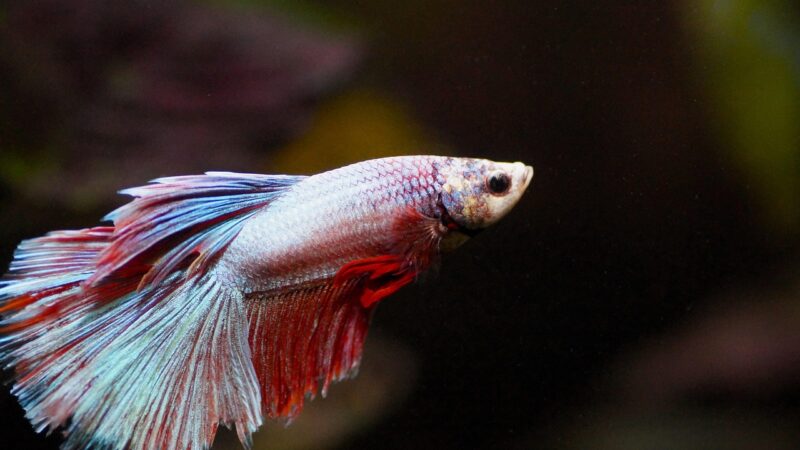
A single betta or a small school of 6 chili rasboras (Boraras brigittae) can work well. Avoid larger species like tetras or guppies, which need more swimming room than a 5 gallon tank provides.
Snails
Nerite snails are outstanding algae cleaners and will not reproduce in freshwater. One or two nerites complement a shrimp colony perfectly.
Maintenance Schedule
Nano tanks require more frequent attention than larger setups because water parameters can shift quickly in a small volume.
| Task | Frequency | Notes |
|---|---|---|
| Water change (30–50%) | Twice weekly during first month, then weekly | Use dechlorinated water matched to tank temperature |
| Glass cleaning | Every 2–3 days | A magnetic algae scraper designed for nano tanks works best |
| Trim plants | Weekly or as needed | Remove dead leaves promptly to prevent ammonia spikes |
| Test water parameters | Weekly | Monitor ammonia, nitrite, nitrate, and pH |
| Filter maintenance | Monthly | Rinse sponge in old tank water — never tap water |
| Dose fertiliser | Weekly | Use a half-dose of liquid all-in-one fertiliser for nano tanks |
Common Mistakes to Avoid
1. Overcrowding the Layout
It is tempting to cram in as many plant species and hardscape pieces as possible, but restraint is the hallmark of good nano design. Stick to 3–5 plant species and 2–3 hardscape pieces at most.
2. Skipping the Cycling Period
New tank syndrome kills more livestock in nano setups than any other cause. The smaller water volume means ammonia spikes hit harder and faster. Always cycle your tank fully before adding animals.
3. Neglecting Water Changes
In Singapore’s warm climate, evaporation happens faster than you might expect. Top up with treated water between changes, and never skip your weekly water change.
4. Using Oversized Equipment
A filter designed for a 100 litre tank will create a current that tosses nano fish around like leaves in a monsoon. Match all equipment to the tank’s actual volume.
5. Ignoring Algae Early
Algae can take over a 5 gallon tank in days. At the first sign of green film on the glass or hair algae on plants, reduce your light period, check nutrient levels, and consider adding a nerite snail or two.
Frequently Asked Questions
Can I aquascape a 5 gallon tank without CO2?
Absolutely. Many beautiful nano scapes rely entirely on low-tech plants like Java Moss, Anubias, Bucephalandra, and Cryptocoryne. These species grow well under moderate lighting with only liquid fertiliser supplementation. CO2 injection accelerates growth and opens up more species options, but it is by no means mandatory.
How long does it take to cycle a 5 gallon nano tank?
Expect 2–4 weeks for a fishless cycle using an ammonia source. You can speed up the process by adding filter media or substrate from an established tank. In Singapore’s consistently warm temperatures (26–30 °C), beneficial bacteria colonise slightly faster than in cooler climates.
What is the best substrate for a nano aquascape?
Active aqua soil is the top choice for planted nano tanks. It provides nutrients directly to plant roots, buffers pH to a slightly acidic level favoured by most tropical plants and shrimp, and its dark colour enhances the visual contrast with green foliage. Inert substrates like sand work for hardscape-focused designs but will not support rooted plants as effectively without root tabs.
How many fish can I keep in a 5 gallon tank?
The safest approach is a single betta or a micro school of 5–6 nano rasboras (such as Boraras brigittae or Boraras maculatus). Shrimp-only setups are often the best choice for nano tanks, as they produce less waste and are more forgiving of the limited water volume.
Get Started with Gensou
Ready to create your own stunning nano aquascape? At Gensou, we have been helping Singaporeans bring underwater landscapes to life for over two decades. Whether you need a complete nano tank setup, curated hardscape and plant packages, or hands-on guidance from our team, we are here to help.
Visit our studio at 5 Everton Park, Singapore to browse our selection of nano-ready tanks, premium substrates, and hand-picked hardscape. Or explore our online resources to plan your first build.
Contact us to discuss your nano aquascaping project, browse our online shop for curated supplies, or learn about our custom aquarium services tailored to any space.
Related Reading