Low Tech Aquascape Guide: Beautiful Tanks Without CO2

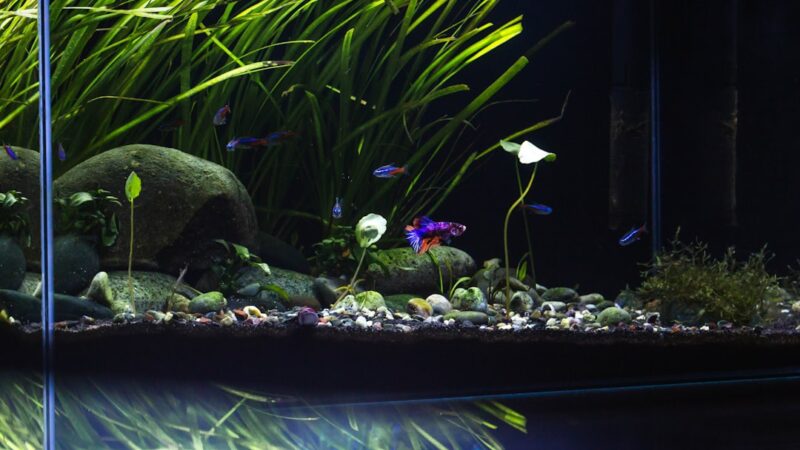
Not every breathtaking planted aquarium requires pressurised gas cylinders, bubble counters, and diffusers. A low tech aquascape with no CO2 injection can be every bit as captivating as a high-tech setup — and for many hobbyists in Singapore, it is the smarter, more sustainable path. At Gensou, our team at 5 Everton Park has designed hundreds of low-tech planted tanks over more than 20 years, and we can confidently say that simplicity, when executed well, produces results that rival anything a CO2-injected tank can offer. This guide sits inside our broader Planted Tank Complete Hub reference.
The appeal is straightforward. Low-tech tanks cost less to set up, demand less daily attention, and are far more forgiving of the occasional missed maintenance session. For busy professionals, families, or anyone who simply wants a living piece of art without the complexity of gas regulation, a low-tech approach is ideal.
This guide covers everything you need to know — from the science behind plant growth without supplemental carbon to the specific species, lighting setups, and fertilisation strategies that make low-tech aquascaping work beautifully in Singapore’s tropical climate.
Table of Contents
- Understanding Low Tech Aquascaping
- Design Principles for Low Tech Layouts
- Lighting for Low Tech Tanks
- Choosing the Right Substrate
- Best Plants for No-CO2 Aquascapes
- Fertilisation Strategy
- Step-by-Step Setup Guide
- Hardscape Considerations
- Managing Algae Without CO2
- Common Mistakes to Avoid
- Frequently Asked Questions
- Start Your Low Tech Journey with Gensou
Understanding Low Tech Aquascaping
Plants need three things to photosynthesise: light, carbon, and nutrients. In a high-tech tank, carbon is supplied through pressurised CO2href=”/co2/”>CO2 injection, which supercharges growth rates. In a low-tech setup, plants rely on the carbon dioxide that is naturally present in the water column — dissolved from atmospheric exchange, fish respiration, and organic decomposition.
This natural CO2 level is significantly lower than what a pressurised system delivers. The key insight of low-tech aquascaping is that you must balance everything else accordingly. If you reduce carbon availability, you must also moderate light intensity and nutrient dosing. When all three inputs are proportionally balanced, plants grow at a slower but perfectly healthy rate, and algae — which thrive on imbalance — stay under control.
The Walstad Method and Beyond
Diana Walstad’s pioneering work popularised the concept of dirt-substrate, low-tech planted tanks. While the full Walstad method (using potting soil capped with gravel) remains a valid approach, modern low-tech aquascaping has evolved. Today, most practitioners use commercial aqua soils or enriched substrates paired with judicious liquid fertilisation, offering more predictable results and cleaner aesthetics.
Design Principles for Low Tech Layouts
Low-tech design rewards patience and restraint. Since plants grow more slowly, your initial layout should be closer to the finished vision than in a high-tech tank where rapid growth fills gaps quickly.
Embrace Texture Over Speed
Without CO2, fast-growing stem plants lose their competitive advantage. This naturally shifts the palette towards textural species — Bucephalandra, Anubias, ferns, mosses, and Cryptocorynes. These plants offer an extraordinary range of leaf shapes, colours, and growth habits that create visual richness without relying on sheer volume.
Work With Hardscape
In low-tech layouts, hardscape plays a more prominent role. Because plant growth is slower and less dense, the rocks and driftwood you choose remain visible for longer. This is an advantage: a well-composed hardscape skeleton carries the design while plants gradually fill in around it.
Plan for Gradual Maturation
A low-tech aquascape typically takes 3–6 months to reach its mature look, compared to 2–3 months for a high-tech setup. Design with this timeline in mind. Place plants slightly closer together than you would in a CO2-injected tank to reduce the visual gap during the growing-in phase.
Lighting for Low Tech Tanks
Light is the single most important variable in a no-CO2 setup. Too much light without sufficient carbon leads directly to algae problems. Too little light and plants stagnate.
| Parameter | Low Tech Recommendation | Notes |
|---|---|---|
| PAR at substrate | 15–40 µmol | Higher end for carpeting plants, lower for shade species |
| Colour temperature | 6500–7000 K | Mimics natural daylight; promotes healthy plant colouration |
| Photoperiod | 6–8 hours daily | Start at 6 hours and increase gradually if no algae appears |
| Ramp up/down | 30-minute sunrise/sunset | Reduces stress on livestock and prevents sudden algae triggers |
In Singapore, many hobbyists place tanks near windows for ambient light. While natural sunlight can supplement your LED, direct afternoon sun through a west-facing window will almost certainly trigger an algae bloom. Position tanks where they receive indirect natural light at most, and rely on your LED for the primary photoperiod.
Choosing the Right Substrate
Substrate choice matters more in a low-tech tank because you cannot compensate for nutrient deficiencies with rapid CO2-driven uptake. Plants in a no-CO2 setup rely heavily on root feeding.
Active Aqua Soils
Products like ADA Amazonia, Tropica Soil, and UNS Controsoil are excellent choices. They provide a rich nutrient base, buffer pH to a slightly acidic range (6.0–6.5), and offer a grain size that promotes healthy root development. For low-tech tanks, these soils can sustain plant growth for 12–18 months before nutrient depletion becomes a concern.
Inert Substrates with Root Tabs
If you prefer sand or gravel for aesthetic reasons, supplement with root tabs inserted every 10–15 cm. This approach works well for Cryptocorynes and Echinodorus but is less effective for carpeting species that benefit from a uniformly rich substrate.
Substrate Depth
Aim for 4–6 cm at the back, sloping down to 2–3 cm at the front. This depth supports root development while creating a pleasing sense of depth when viewed from the front.
Best Plants for No-CO2 Aquascapes
The following species have proven themselves repeatedly in our low-tech client installations across Singapore.
| Plant | Position | Growth Rate | Special Notes |
|---|---|---|---|
| Java Fern (Microsorum pteropus) | Mid-ground / Background | Slow | Attach to hardscape; never bury the rhizome |
| Anubias varieties | Foreground / Mid-ground | Very slow | Attach to wood or rock; tolerates deep shade |
| Bucephalandra | Mid-ground | Slow | Gorgeous leaf patterns; attach to hardscape |
| Cryptocoryne wendtii | Foreground / Mid-ground | Slow–Moderate | May experience crypt melt initially; recovers well |
| Java Moss (Taxiphyllum barbieri) | Attached to hardscape | Moderate | Versatile; creates natural, aged appearance |
| Vallisneria nana | Background | Moderate–Fast | Sends out runners; excellent background filler |
| Hygrophila polysperma | Background | Fast | One of the hardiest stem plants; thrives without CO2 |
| Marsilea hirsuta | Foreground carpet | Slow | Low-growing clover-like carpet; works without CO2 |
| Bolbitis heudelotii | Mid-ground | Slow | African water fern; beautiful translucent leaves |
Plants to Avoid in Low Tech Setups
Demanding carpeting plants like Hemianthus callitrichoides (HC Cuba) and Glossostigma elatinoides struggle without CO2 and high light. Similarly, red stem plants like Rotala macrandra and Ludwigia arcuata typically lose their colour intensity in low-tech conditions. Stick with species rated for low to moderate light and you will have far fewer frustrations.
Fertilisation Strategy
In a low-tech tank, the goal is to provide just enough nutrients to support steady growth without creating excess that feeds algae.
Liquid Fertilisers
Dose an all-in-one liquid fertiliser at half the manufacturer’s recommended rate, once or twice per week. Popular options available in Singapore include Tropica Premium Nutrition, Seachem Flourish Comprehensive, and APT Zero from 2Hr Aquarist (a Singaporean brand, no less).
Root Tabs
For heavy root feeders like Cryptocorynes, Echinodorus, and Vallisneria, insert root tabs near the base of the plant every 2–3 months. This provides localised nutrition directly to the root zone.
The Lean Dosing Approach
In a low-tech environment, lean dosing (providing fewer nutrients than plants can theoretically consume) is safer than rich dosing. If you see signs of deficiency — yellowing leaves, stunted growth, or pinholes — increase your dosing incrementally. It is always easier to add more than to correct an overdose that has triggered an algae bloom.
Step-by-Step Setup Guide
- Plan your layout — Sketch your design on paper or use a tank layout app. Decide on plant placement, hardscape positions, and the overall style (nature, iwagumi, jungle, etc.).
- Prepare the tank — Clean the glass with water only. Place it on a level, sturdy surface away from direct sunlight.
- Add substrate — Pour in aqua soil or your chosen substrate, sloping from front to back. If using a layered approach, place nutrient-rich base layer first, then cap with decorative substrate.
- Place hardscape — Arrange rocks and driftwood in the dry tank. Take your time. Photograph from the front viewing angle and adjust until you are satisfied.
- Mist and plant — Spray the substrate until damp. Plant using aquascaping tweezers, working from foreground to background. Attach epiphytes (Anubias, Java Fern, Bucephalandra) to hardscape using super glue gel or cotton thread.
- Fill slowly — Use a colander or plastic bag to diffuse the water flow. Fill to about 80 per cent initially.
- Install equipment — Fit the filter and heater. Position the light at the correct height.
- Set the photoperiod — Start at 6 hours per day. Use a timer for consistency.
- Begin cycling — Add a bacterial starter if desired. Perform small water changes every 2–3 days during the first month to manage the initial ammonia and nitrite spike from the aqua soil.
- Add livestock after cycling — Once ammonia and nitrite read zero consistently, introduce your chosen fish or shrimp gradually.
Hardscape Considerations
Because hardscape remains more visible in a low-tech layout, your choice of materials carries extra weight.
Driftwood
Driftwood is a natural ally for low-tech tanks. As it decomposes slowly, it releases small amounts of CO2 and organic acids that benefit plants. Spider wood, Malaysian driftwood, and mopani wood are readily available in Singapore. Expect some initial tannin leaching that turns the water tea-coloured — this is harmless and clears with water changes and activated carbon.
Rocks
Dragon stone (ohko) is particularly well-suited for low-tech layouts. Its porous surface provides attachment points for mosses and epiphytes, and it does not significantly alter water chemistry. Seiryu stone is beautiful but can raise GH and KH over time, which may be a consideration if you are keeping soft-water species or shrimp.
Managing Algae Without CO2
Algae is the primary fear of low-tech aquascapers, but it is entirely manageable with the right approach.
Prevention Strategies
- Light discipline — Never exceed 8 hours of light. If algae appears, drop to 5–6 hours and increase gradually once it clears.
- Plant heavily from day one — A well-planted tank outcompetes algae for nutrients. Aim for at least 70 per cent of the substrate covered with plants at setup.
- Regular water changes — Weekly 30 per cent changes dilute excess nutrients and organics.
- Algae-eating crew — Amano shrimp, Otocinclus catfish, and nerite snails are the holy trinity of algae control.
Common Algae Types and Solutions
| Algae Type | Appearance | Cause | Solution |
|---|---|---|---|
| Green dust | Thin green film on glass | New tank, excess light | Reduce photoperiod; wipe glass; patience |
| Hair/thread algae | Long green strands on plants | Nutrient imbalance, excess light | Manually remove; reduce light; add Amano shrimp |
| Black beard algae (BBA) | Dark tufts on hardscape and slow-growing leaves | Fluctuating CO2, poor flow | Spot-treat with liquid carbon; improve circulation |
| Diatoms | Brown coating on glass and substrate | New tank, silicates | Usually resolves on its own; Otocinclus help |
Common Mistakes to Avoid
1. Too Much Light
This is the number one mistake in low-tech aquascaping. Without CO2 to match, high-intensity light simply feeds algae. Start with less light than you think you need and increase slowly.
2. Choosing Demanding Plant Species
No amount of fertiliser will make HC Cuba carpet reliably without CO2. Research each species before purchasing and stick with proven low-tech performers.
3. Inconsistent Maintenance
Low tech does not mean no tech. Skipping water changes for weeks leads to nutrient build-up and algae. Consistency is more important than intensity — a small weekly water change beats a massive monthly one.
4. Overdosing Fertiliser
In a low-tech tank, plants absorb nutrients slowly. If you dose at the same rate as a CO2-injected tank, the excess feeds algae. Start at half the recommended dose and adjust based on plant response.
5. Ignoring Flow and Circulation
Stagnant water creates dead zones where debris accumulates and algae thrives. Ensure your filter output creates gentle circulation throughout the tank, even in a low-tech setup.
Frequently Asked Questions
Can I grow a carpet without CO2?
Yes, but your options are limited. Marsilea hirsuta and Marsilea crenata can form a low carpet without CO2, though growth will be slow — expect 3–6 months for full coverage. Monte Carlo can also work without CO2 under moderate lighting, but results vary. For a guaranteed lush carpet, CO2 injection remains the more reliable path.
Do I need a special light for low tech aquascaping?
You do not need an expensive high-end light. A basic LED fixture rated for planted tanks with a colour temperature of 6500–7000 K and adjustable brightness is sufficient. Many budget LEDs available at aquarium shops along Serangoon North or online in Singapore perform admirably for low-tech setups. The key is being able to dial down the intensity if needed.
How often should I dose fertiliser in a low tech tank?
Once or twice per week with an all-in-one liquid fertiliser at half the standard dose is a good starting point. If your tank has a rich aqua soil substrate, you may not need liquid fertiliser at all during the first 2–3 months, as the soil releases nutrients directly to the roots. Watch your plants for signs of deficiency — yellowing, pinholes, stunted tips — and adjust accordingly.
Is liquid carbon a substitute for CO2 injection?
Products like Seachem Flourish Excel and API CO2 Booster provide a limited carbon source through glutaraldehyde. They can give a modest boost to plant growth and help control certain algae (particularly BBA), but they do not replicate the effect of pressurised CO2. Think of liquid carbon as a helpful supplement, not a replacement. Overdosing can harm sensitive plants like Vallisneria and certain mosses, so use with care.
Start Your Low Tech Journey with Gensou
A beautiful planted aquarium does not require complex equipment or a chemistry degree. With the right plant selection, balanced lighting, and consistent maintenance, a low-tech aquascape can bring nature into your Singapore home or office with minimal fuss.
At Gensou, we have spent over 20 years perfecting the art of aquascaping at our studio in 5 Everton Park. We offer curated low-tech plant packages, beginner-friendly equipment bundles, and personalised advice to help you succeed on your first attempt.
Get in touch to discuss your low-tech aquascape project, explore our shop for plants and supplies, or discover our custom aquarium design service for a turnkey solution.
Related Reading