
Koi Angelfish Care Guide: Orange and White Pattern
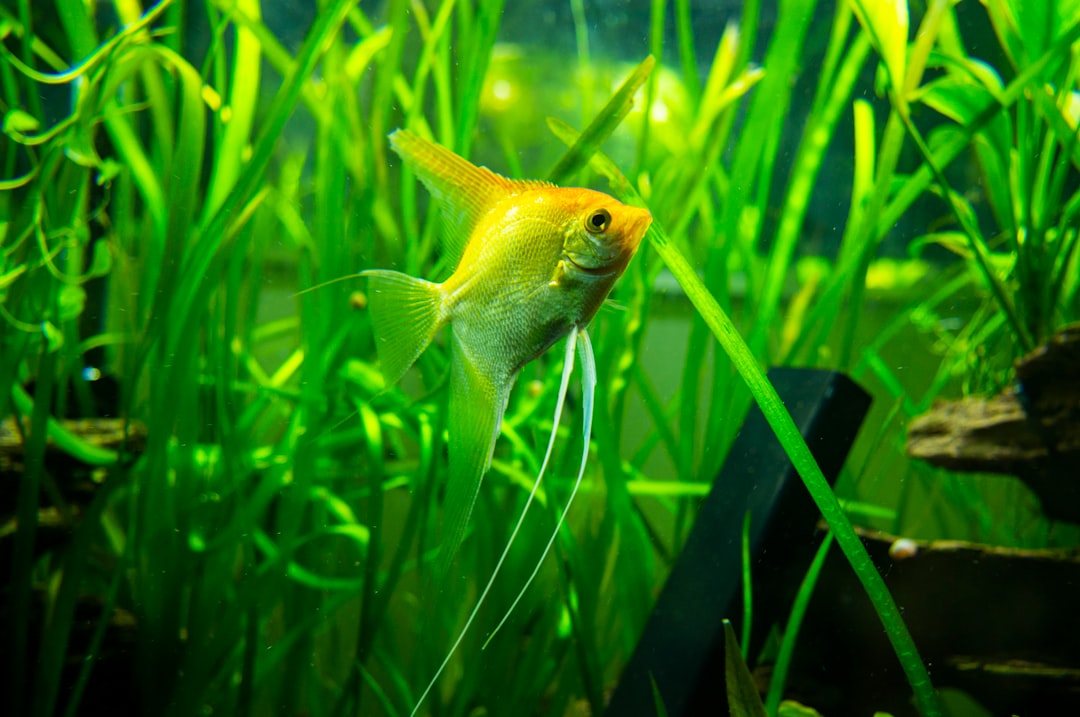
Few fancy angelfish get as much attention as a well-marked koi. Orange head crowns, inky black marbling, and a silver-white body mirror the patterns of Japanese nishikigoi in miniature. This koi angelfish care guide from Gensou Aquascaping in Everton Park, Singapore explains the gold-marble genetics behind the pattern, water and diet needs, and how to pick a young fish whose colour will hold as it matures. Every variant here is still Pterophyllum scalare — a selectively bred form of the same species native to the Amazon.
Quick Facts
- Scientific name: Pterophyllum scalare (koi colour form)
- Genetics: gold (g) allele combined with heterozygous marble (M) — orange intensifies with age and diet
- Adult size: 13-15 cm body length, 20-24 cm fin-to-fin
- Minimum tank: 200 litres, 50 cm tall
- Water: pH 6.5-7.5, GH 3-10, 26-30 degC
- Diet: omnivore, colour-enhancing foods with astaxanthin and spirulina
- Lifespan: 8-10 years
Koi Pattern Genetics
Koi angels are genetically gold marble — one copy of the gold allele (g/g) on top of heterozygous marble (M/+). The gold gene lifts the silver background to orange-yellow; the marble overlays black patches. Head crown intensity (the red-orange cap around eyes and forehead) is partly diet-driven; astaxanthin-rich feeds deepen the colour over two to three months.
Picking a Juvenile That Will Hold Colour
Juveniles often show little crown — this develops with age and nutrition. Look for active fish with at least some yellow tint on the head and clean, black marbling. Avoid washed-out specimens or those with grey body tones. Good stock from Malaysian farms arrives at most Singapore LFS weekly. Budget $12-25 SGD per juvenile and up to $60 SGD for high-grade show fish.
Tank Size and Layout
A 100 x 45 x 45 cm tank suits a pair or trio. Aquascape with driftwood spires, broad-leaf plants for spawning sites, and enough open mid-water column for the angels to glide without fin damage. Dark sand substrate makes the orange crown pop visually.
Water Parameters
Koi angels are hardy in Singapore PUB tap water after dechlorination. Target pH 6.8-7.4, GH 3-8, temperature 26-28 degC. Stable parameters beat chasing specific numbers — a weekly 25 percent water change and a quality canister filter do most of the work.
Diet and Colour Enhancement
Colour-enhancing foods deliver the signature crown. Rotate Hikari Saki-Hikari Fancy Koi floating pellets, NLS Thera-A, and frozen mysis with vitamin dosing. Twice-weekly bloodworms provide protein. Feed two small portions daily — overfeeding causes bloat and makes the fish look washed out.
Tank Mates and Temperament
Peaceful in a community of appropriately sized fish. Good companions include rummynose tetras, larger rasboras, Bolivian rams, Corydoras, and bristlenose plecos. Avoid neon tetras (snack-sized for a mature angel) and any fin-nipper. During breeding, a bonded pair will defend a surprisingly large area; a separate breeding tank simplifies management.
Breeding Koi Angels
Koi x koi crosses produce roughly 100 percent gold-marble offspring, with variation in crown intensity driven by the marble allele distribution. Crosses to silver introduce wild-type alleles and dilute the orange. Pairs spawn every 10-14 days on vertical surfaces. Free-swimming fry take crushed flake and live baby brine shrimp readily.
Related Reading



