
Kuhli Loach Care Guide: The Quirky Bottom Dweller
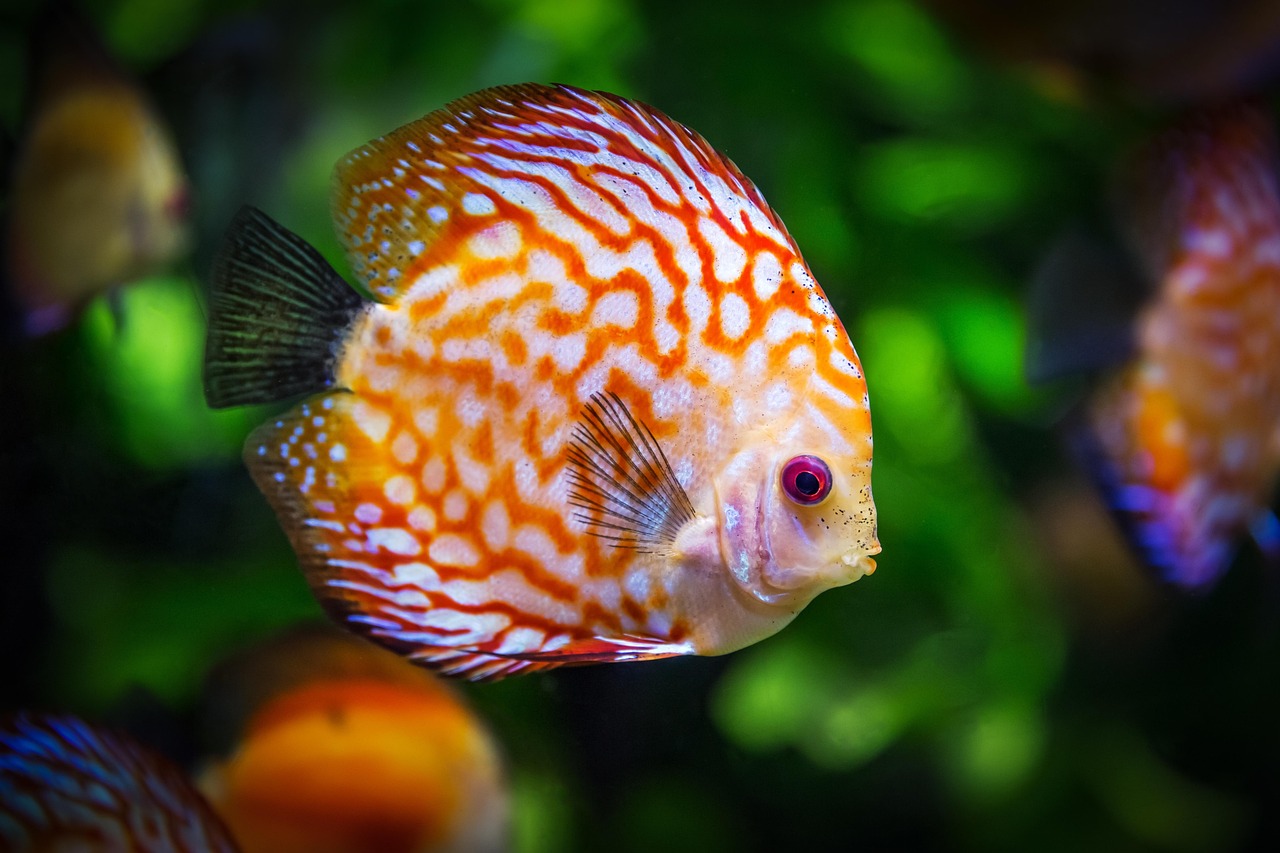
The kuhli loach (Pangio kuhlii) is one of the most endearing bottom-dwelling fish in the freshwater hobby. With their eel-like bodies, distinctive banding and charmingly shy personalities, these small loaches bring life to the lower reaches of your aquarium where many other fish simply do not venture. Native to the slow-moving streams and rivers of Southeast Asia, including parts of the Malay Peninsula, kuhli loaches are naturally suited to Singapore’s warm climate, making them an excellent choice for local hobbyists who prefer not to run a chiller. This guide sits inside our broader Tropical Fish Species Master Index reference.
Appearance and Varieties
Kuhli loaches have a slender, elongated body that typically reaches 7-10 cm in length at maturity. Their most recognisable feature is the series of dark brown to black vertical bands running along a salmon-pink to yellowish body. The banding pattern varies between individuals, and no two kuhli loaches are exactly alike.
Several closely related species are sold under the “kuhli loach” label in Singapore fish shops:
- Pangio kuhlii (Banded Kuhli Loach): The classic variety with distinct dark bands on an orange-pink body. Most commonly available.
- Pangio semicincta: Very similar to P. kuhlii but with bands that do not fully encircle the body. Often sold interchangeably.
- Pangio oblonga (Black/Java Kuhli Loach): A solid dark brown to black body without banding. Less common but equally charming.
- Pangio myersi (Giant Kuhli Loach): Slightly larger with thicker bands. Occasionally appears in local shops.
All these species share essentially the same care requirements, so you can mix them in the same tank without concern. They have small barbels around the mouth used for sensing food in the substrate, and tiny, almost vestigial scales embedded in their skin, which makes them more sensitive to medications than fully scaled fish.
Behaviour and Social Needs
Kuhli loaches are primarily nocturnal, spending most of the daytime hidden among plants, driftwood and rocks. As evening approaches, they become active, emerging to scavenge the substrate for food. This crepuscular and nocturnal behaviour is perfectly normal and not a sign of stress.
These are social fish that should be kept in groups. A minimum of five to six is recommended, though groups of eight or more truly bring out their natural behaviour. In larger groups, kuhli loaches become noticeably bolder, spending more time visible during the day and sometimes forming amusing “loach piles” where several individuals tangle together in a favourite hiding spot.
A solitary kuhli loach will spend virtually all its time hidden and may become stressed, leading to a weakened immune system and shorter lifespan. If you currently keep just one or two, consider adding more to the group.
Tank Setup and Substrate
The most important consideration for kuhli loach care is substrate choice. These fish spend their lives in contact with the bottom of the tank, and they actively burrow into and sift through the substrate while foraging.
Substrate
Fine sand is the ideal substrate for kuhli loaches. They will bury themselves partially or completely in soft sand, and watching their little heads poke out is one of the great pleasures of keeping them. Coarse gravel or sharp-edged substrates can damage their delicate barbels and unscaled skin, leading to infections.
If you are running a planted tank with aquasoil, a sand foreground area gives your kuhli loaches a comfortable zone to forage. Many aquascapers in Singapore create a natural-looking layout with aquasoil in the planted areas and a river sand or cosmetic sand transition in the foreground, which works perfectly for these loaches.
Hiding Spots
Provide plenty of hiding places. Driftwood with nooks and crannies, stacked stones with gaps, coconut shells, PVC pipe sections, and dense planting all serve as shelter. The more hiding options available, the more secure your kuhli loaches will feel, and paradoxically, the more often you will see them out in the open.
Tank Size
A group of six kuhli loaches can be comfortably housed in a 60-litre tank, though larger is always better. Given their small bioload and peaceful nature, they are excellent additions to community tanks of 80 litres and above.
Escape Prevention
Kuhli loaches are notorious escape artists. They can squeeze through remarkably small gaps, including filter intake slits, overflow gaps and poorly fitted lids. Ensure your tank has a tight-fitting cover and that any openings (for filter pipes, wires) are blocked with foam or mesh. Cover filter intakes with a pre-filter sponge to prevent the loaches from entering the filter housing, a surprisingly common occurrence.
Water Parameters
Kuhli loaches are adaptable fish, and their preferred conditions align beautifully with typical Singapore aquarium setups.
| Parameter | Ideal Range | Notes |
|---|---|---|
| Temperature | 24-30°C | Singapore ambient temperatures of 28-31°C fall right in their comfort zone |
| pH | 5.5-7.0 | Slightly acidic to neutral; they adapt well to PUB tap water |
| GH | 3-10 dGH | Soft to moderately hard water |
| KH | 1-8 dKH | Low to moderate carbonate hardness |
| Ammonia/Nitrite | 0 ppm | Scaleless fish are especially sensitive to ammonia |
| Nitrate | Below 20 ppm | Keep low with regular water changes |
Because kuhli loaches lack full scale coverage, they are more susceptible to poor water quality than many other fish. Consistent maintenance and stable parameters are more important than hitting a specific number. Avoid sudden parameter swings, particularly after large water changes.
A noteworthy advantage for Singapore keepers: kuhli loaches do not require a heater. Our tropical climate keeps tanks well within their preferred temperature range year-round, saving you one piece of equipment and the associated electricity cost.
Feeding
Kuhli loaches are omnivorous scavengers that will eat a variety of foods. Because they feed at the bottom and are most active at night, feeding strategy matters as much as food choice.
- Sinking pellets and wafers: The staple diet. Algae wafers, shrimp pellets and bottom-feeder tablets all work well. Drop them in shortly before lights-out for best results.
- Frozen foods: Bloodworms, brine shrimp and daphnia are eagerly accepted. Frozen bloodworms are a particular favourite and are widely available at Singapore aquarium shops.
- Live foods: Tubifex worms, blackworms and microworms provide excellent nutrition and stimulate natural foraging behaviour.
- Leftover food: Kuhli loaches will clean up uneaten food that sinks to the bottom, but do not rely on scraps as their sole diet.
Feed once daily, ideally at dusk or after lights-out. If you are concerned that your kuhli loaches are not getting enough food in a busy community tank, target-feed by dropping food near their favourite hiding spots after the lights go off.
Tank Mates
Kuhli loaches are completely peaceful and will not bother any tank mate, including shrimp and snails. The main concern is choosing tank mates that will not bother them.
Excellent companions:
- Small tetras (ember, neon, cardinal, green neon)
- Rasboras (harlequin, chili, strawberry)
- Corydoras catfish (they occupy similar niches but coexist peacefully)
- Otocinclus catfish
- Small peaceful gouramis (honey gourami, sparkling gourami)
- Cherry shrimp and Amano shrimp
- Mystery snails and nerite snails
Avoid:
- Large cichlids or aggressive fish
- Large bottom dwellers that may compete aggressively for territory
- Fish known to nip or harass (tiger barbs in small numbers, for example)
Breeding
Breeding kuhli loaches in captivity is uncommon and largely accidental. They are egg scatterers, and in the wild, breeding is triggered by seasonal changes in water conditions, particularly the onset of monsoon rains that soften and cool the water.
Hobbyists who have successfully bred kuhli loaches report that it typically occurs in mature, heavily planted tanks with a large group of loaches, soft water, and sometimes after a significant water change with cooler, softer water that mimics rainfall. The greenish eggs are scattered among plant roots and floating plants. The adults do not provide parental care and will eat eggs they encounter.
If you notice tiny, thread-like baby loaches in your tank, consider it a happy accident and a sign that your tank conditions are excellent. Provide dense plant cover (especially floating plants and java moss) to give fry hiding places and access to the microorganisms they feed on initially.
Handling and Precautions
There are a few special considerations to bear in mind with kuhli loaches:
- Medication sensitivity: As scaleless fish, kuhli loaches are sensitive to copper-based medications and many common fish treatments. Always use medications at half the recommended dose, or better yet, consult with an experienced aquarist before treating a tank containing kuhli loaches.
- Salt sensitivity: Do not use aquarium salt in a tank with kuhli loaches. They tolerate salt poorly compared to fully scaled fish.
- Netting: Kuhli loaches have small, sharp sub-orbital spines near their eyes that can get tangled in fine mesh nets. Use a container or cup to catch them instead of a net whenever possible.
- Tank moves: When breaking down or moving a tank, check the substrate and filter thoroughly for hidden kuhli loaches. They burrow deep and can easily be overlooked.
Kuhli loaches are genuinely delightful fish that reward patient keepers with increasingly bold and entertaining behaviour over time. Their minimal space requirements, tolerance for Singapore’s climate and peaceful temperament make them one of the best bottom-dwelling choices for planted community tanks.
Looking to create the ideal planted tank for kuhli loaches and other tropical community fish? Contact Gensou for professional custom aquarium design and maintenance services in Singapore.
Frequently Asked Questions
Why do I never see my kuhli loaches?
Kuhli loaches are naturally nocturnal and shy, especially in small groups. The most effective way to see them more often is to increase your group to at least six, ideally eight or more. Provide plenty of hiding spots (counterintuitively, more hiding places means more visible loaches), and feed at dusk when they begin their active period. Over time, established kuhli loaches in a secure environment become increasingly bold.
Do kuhli loaches eat shrimp?
Kuhli loaches generally coexist peacefully with adult shrimp, including cherry shrimp and Amano shrimp. However, they may opportunistically eat very small shrimplets if they encounter them. If you are breeding shrimp, dense plant cover and moss provide refuges for baby shrimp. Most keepers in Singapore successfully maintain both species together without significant predation issues.
How long do kuhli loaches live?
With proper care, kuhli loaches can live 10-15 years in captivity, making them a surprisingly long-lived commitment for such a small fish. Cases of kuhli loaches reaching the upper end of that range are well documented. Their longevity is another reason to provide them with appropriate group sizes and good conditions from the outset.
Can kuhli loaches live in a tank without sand?
While kuhli loaches can survive on smooth gravel, they thrive on fine sand, which allows them to express their natural burrowing behaviour. If your planted tank uses aquasoil, consider adding a sand section in the foreground or along one side. Avoid rough or sharp substrates entirely, as these damage the loaches’ delicate skin and barbels, leading to bacterial infections.
Related Reading
- How to Breed Kuhli Loach: Triggers and Fry Survival Tips
- Clown Loach Care Guide: The Gentle Giant That Clicks
- Clown Loach Growth Rate and Tank Size: Planning for Adult Size
- How to Breed Dwarf Chain Loach: Ambastaia Sidthimunki Spawning Tips
- Dwarf Chain Loach Care Guide: Tiny, Social and Snail-Hungry



