
How to Breed Licorice Gourami: Blackwater Mouthbrooders
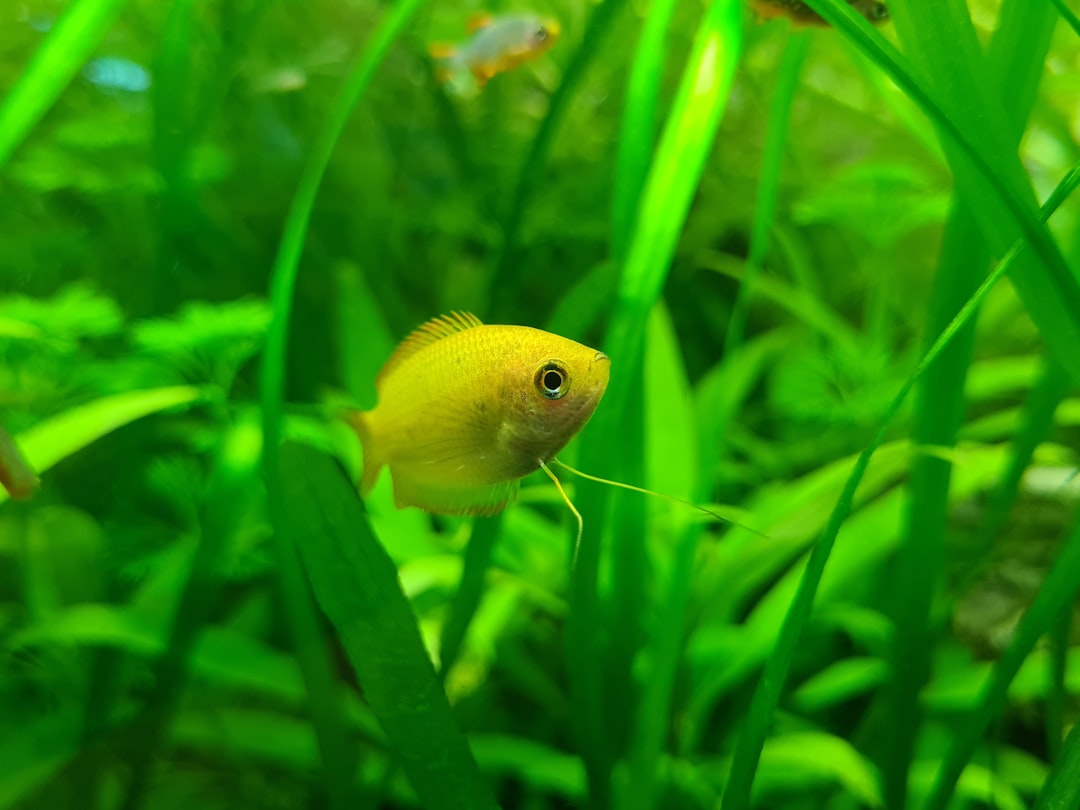
Few nano fish offer the breeding challenge and fascination of Parosphromenus species. If you want to breed licorice gourami, you need patience, pristine blackwater conditions and a solid understanding of their unique mouthbrooding behaviour. This guide from Gensou Aquascaping at 5 Everton Park, Singapore draws on over 20 years of hands-on experience to walk you through each stage of the process.
Understanding Licorice Gourami Reproduction
Licorice gouramis are paternal mouthbrooders, meaning the male incubates the eggs inside his mouth for roughly 10 to 14 days. During this period he will not eat. The female initiates courtship, but the male does the heavy lifting once spawning is complete. Recognising this division of labour is essential before you attempt breeding.
Setting Up a Dedicated Breeding Tank
A 20-litre nano tank works perfectly. Keep lighting dim; floating plants such as Salvinia natans or Riccia fluitans help diffuse light from above. Add a thin layer of leaf litter (Indian almond or ketapang leaves) and a small clay cave or film canister as a spawning site. Filtration should be gentle, an air-driven sponge filter rated for tanks under 30 litres is ideal.
Avoid bright substrates. A bare bottom or a thin bed of dark sand keeps the fish relaxed and makes it easier to spot fry later.
Water Parameters for Blackwater Breeding
This is where many hobbyists stumble. Licorice gouramis originate from highly acidic peat swamp forests in Peninsular Malaysia and Borneo. Target a pH between 4.0 and 5.5, with GH below 2 and KH at 0. Singapore’s PUB tap water is soft (GH 2-4) but its pH sits around 7, so you will need to use reverse osmosis water remineralised lightly with a GH conditioner, plus botanicals to drive pH down.
Temperature should sit between 24 and 27 degrees C. In Singapore’s climate, a small fan blowing across the surface or air conditioning in the room can keep things in range without a chiller.
Conditioning the Pair
Feed live or frozen foods two to three times daily for at least two weeks before introducing the pair to the breeding tank. Daphnia, baby brine shrimp and micro worms trigger spawning condition faster than dry foods alone. You will notice the male’s colours intensify, bands becoming sharply defined and fins displaying iridescent blue highlights.
Spawning Behaviour and Egg Transfer
Courtship begins when the male displays under or near the cave entrance. The pair embraces in a typical labyrinth-style wrap, releasing a small clutch of 10 to 40 eggs. Within moments the male gathers the eggs into his mouth. At this point, remove the female to prevent stress to the brooding male. Keep the tank covered and dark; disturbance can cause him to swallow or spit out the clutch prematurely.
Caring for Fry After Release
After 10 to 14 days, the male releases fully formed fry roughly 3 to 4 mm long. They are tiny but free-swimming immediately. First foods should be infusoria or Paramecium cultures for the first five days, followed by freshly hatched brine shrimp nauplii. Growth is slow; expect the fry to reach 1 cm only after about eight weeks.
Perform small water changes of 10 percent every two days using aged blackwater of matching parameters. Sudden shifts in pH or TDS above 50 ppm can be fatal at this stage.
Common Mistakes to Avoid
Overcrowding the breeding tank with tankmates is the number one cause of failure. Even peaceful shrimp can harass a brooding male. Bright lighting discourages spawning entirely. Another frequent error is using tap water directly; Singapore’s chloramine treatment must be neutralised, and the pH is far too high for these fish without further adjustment.
Where to Source Licorice Gouramis in Singapore
Healthy Parosphromenus species occasionally appear at specialist shops around Serangoon North Avenue 1 and through hobbyist groups on Carousell. Expect to pay between $8 and $15 per fish depending on the species. P. deissneri, P. linkei and P. harveyi are the most commonly available. Quarantine new arrivals for at least two weeks in blackwater conditions before introducing them to your breeding setup.
Related Reading
- How to Breed Chocolate Gouramis: Mouthbrooding and Blackwater Tips
- How to Breed Honey Gouramis: Bubble Nests and Fry Care
- How to Breed Pearl Gouramis: Bubble Nests and Fry Raising
- How to Breed Sparkling Gouramis: Bubble Nests in Nano Tanks
- How to Breed Amano Shrimp: The Challenging but Rewarding Process



