
Pearl Gourami Care Guide: The Elegant Centrepiece Fish
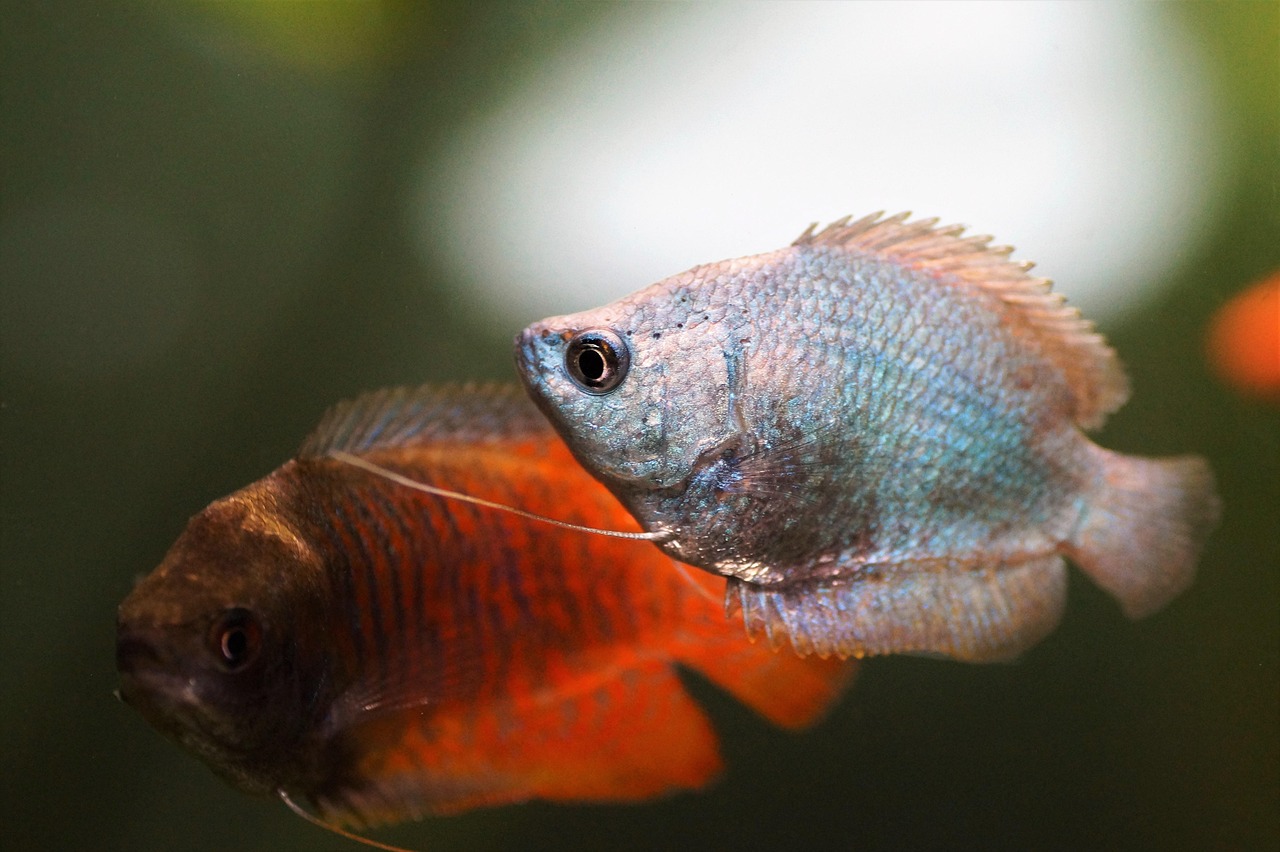
If there were a single fish that perfectly embodies elegance in the freshwater aquarium, the pearl gourami (Trichopodus leerii) would be a strong contender. Also known as the lace gourami or mosaic gourami, this species displays a breathtaking pattern of iridescent, pearl-like spots scattered across its entire body, set against a warm brown base with a distinctive dark horizontal stripe. When a male is in breeding condition, his throat and chest flush a vivid orange-red — a sight that never fails to impress.
Beyond their beauty, pearl gouramis are peaceful, hardy and perfectly sized for medium community tanks. They lack the disease susceptibility that plagues dwarf gouramis, making them one of the most reliable centrepiece fish available to Singapore aquarists. Here is everything you need to know.
Appearance and Patterning
The pearl gourami’s defining feature is the mosaic of white, pearl-like spots that covers virtually every part of the fish — body, fins and even the face. These spots catch the light as the fish moves, creating a shimmering, almost iridescent effect that is particularly stunning under gentle aquarium lighting.
The base body colour is a warm silver-brown, with a bold, dark horizontal stripe running from the snout through the eye to the base of the tail. The fins are large and flowing, especially in males, and display the same pearl spotting as the body. Fully grown pearl gouramis reach 10-12 cm, making them a substantial presence in a community tank without being so large as to dominate.
Pearl gouramis also possess the characteristic gourami feature of long, thread-like pelvic fins that function as sensory organs. These modified fins are constantly in motion, probing and tasting the environment — a behaviour that is endlessly fascinating to watch.
Male vs Female
Sexing pearl gouramis is relatively straightforward once the fish reach maturity.
| Feature | Male | Female |
|---|---|---|
| Throat/Chest | Deep orange-red, especially when breeding | Pale, no orange colouration |
| Dorsal Fin | Longer, more pointed, trailing edge | Shorter, rounded |
| Body Shape | Slightly slimmer | Fuller, rounder belly |
| Overall Colour | More intense patterning | Slightly less vivid but still beautiful |
The orange-red breast of a breeding male is one of the most striking colour displays in the freshwater hobby. It deepens in intensity when the male is courting a female or building a bubble nest, providing a living spectacle in your aquarium.
The Labyrinth Organ
Pearl gouramis, like all members of the suborder Anabantoidei, possess a labyrinth organ — an accessory breathing structure that allows them to extract oxygen directly from atmospheric air. You will regularly see your pearl gourami rise to the surface for a quick breath.
This adaptation has practical implications for tank setup:
- Surface access: Ensure the surface is not completely covered by floating plants. Leave gaps for the fish to breathe comfortably
- Warm air layer: The air above the water should ideally be warm and humid to prevent damage to the labyrinth organ. A glass lid achieves this naturally — and in Singapore’s climate, the ambient humidity already helps
- Gentle surface agitation: While some movement is fine, aggressive surface disruption from strong filters can make breathing laboured. Keep current mild
Tank Size and Setup
Pearl gouramis are larger and more active than dwarf gouramis. They need more space to thrive and look their best.
- Minimum: 80 litres for a single fish or pair
- Recommended: 120-150 litres (90 cm long tank) for a group with community fish
- Ideal: 200+ litres for a stunning centrepiece display
Tank length matters more than height. A 90 cm long tank provides the swimming space pearl gouramis need to display their natural behaviour and show off their finnage.
Aquascaping for Pearl Gouramis
Pearl gouramis originate from densely vegetated, slow-moving waters in Southeast Asia — Thailand, Malaysia and Indonesia. Replicating this environment produces the most natural behaviour and best colours.
- Dense background planting: Tall plants like Vallisneria, Hygrophila and Rotala create a sense of security
- Midground features: Driftwood with Java fern and Anubias attached provides structure and hiding spots
- Floating plants: Frogbit, water lettuce or Salvinia diffuse lighting and encourage natural behaviour. Pearl gouramis are visibly more relaxed under dappled light
- Open swimming space: Leave the front-centre of the tank open for the fish to cruise and display
- Dark substrate: A dark substrate brings out the pearl gourami’s colours far better than a light-coloured one
If you would like a professionally designed aquascape built around pearl gouramis as the focal species, our custom aquarium design service can create something truly special.
Water Parameters
| Parameter | Ideal Range | Singapore Tap Water |
|---|---|---|
| Temperature | 24-28°C | 28-32°C (within range; fan for hot months) |
| pH | 6.0-7.5 | ~7.0-8.0 (driftwood and botanicals help lower) |
| GH | 5-15 dGH | Generally suitable |
| KH | 3-8 dKH | Adequate |
| Ammonia/Nitrite | 0 ppm | Ensure full cycling |
Pearl gouramis are considerably hardier than dwarf gouramis and tolerate a wider range of conditions. Singapore’s tap water, treated with a quality conditioner to neutralise chloramine, is suitable without major adjustment. Adding driftwood and Indian almond (ketapang) leaves — readily available locally — naturally softens the water and lowers pH, creating conditions closer to the species’ wild habitat.
Weekly water changes of 25-30% maintain good conditions. Pearl gouramis are sensitive to rapid parameter swings rather than the specific values, so consistency is more important than achieving a perfect number.
Feeding
Pearl gouramis are unfussy omnivores that accept virtually all common aquarium foods. A varied diet keeps them healthy and enhances their spectacular colouration.
- Staple: Quality tropical flakes or slow-sinking pellets
- Protein: Frozen bloodworms, brine shrimp, daphnia and mosquito larvae — two to three times weekly
- Vegetable: Spirulina flakes, blanched peas, small pieces of blanched zucchini
- Live food: If available, live foods elicit the most natural feeding behaviour and are excellent conditioning food before breeding
Pearl gouramis feed primarily at the surface and midwater. They are not aggressive feeders, so ensure they are not being outcompeted by faster tank mates at feeding time. Feeding at multiple points in the tank can help all fish get their share.
Tank Mates
Pearl gouramis are one of the most peaceful gourami species, making them excellent community fish. Their calm temperament allows them to coexist with a wide range of species.
Excellent Companions
- Harlequin rasboras — a classic Southeast Asian biotope combination
- Neon and cardinal tetras — their schooling behaviour complements the gourami’s stately presence
- Corydoras catfish — peaceful bottom-dwellers that fill a different niche
- Kuhli loaches — shy and harmless
- Cherry barbs — peaceful and colourful
- Bristlenose plecos — practical algae control without conflict
- Small to medium rasboras (chili, lambchop, scissortail) — excellent schooling companions
Exercise Caution
- Other gouramis: Male pearl gouramis can be mildly territorial towards other gourami species. In tanks under 120 litres, keep only one male gourami of any species
- Active, boisterous fish: Giant danios, Buenos Aires tetras and similar hyperactive species can stress pearl gouramis
Avoid
- Tiger barbs and serpae tetras — notorious fin-nippers that will shred the gourami’s flowing fins
- Large cichlids — too aggressive
- Bettas — territorial conflict between labyrinth fish
Breeding and Bubble Nests
Pearl gourami breeding is a beautiful process and achievable for dedicated hobbyists. Like other gouramis, males construct floating bubble nests and guard the eggs.
Conditioning
Feed the breeding pair with high-protein foods — live or frozen bloodworms, brine shrimp and daphnia — for two to three weeks before spawning. The male’s orange breast will intensify dramatically when he is in breeding condition.
The Spawning Process
- The male builds a large bubble nest among floating plants, often incorporating plant matter for structure
- He courts the female with elaborate fin displays and colour intensification
- The pair embraces beneath the nest; the female releases eggs which float upward into the bubbles
- The male collects any stray eggs and places them in the nest
- Spawning can produce 200-500 eggs in a single session
- Remove the female after spawning — the male becomes protective and may attack her
Raising Fry
Eggs hatch in 24-48 hours. The male continues to guard the nest and returns fallen fry. Once fry are free-swimming (around day three to four), remove the male. Fry are very small and require infusoria or liquid fry food for the first week, then newly hatched baby brine shrimp. Growth is steady, and young fish begin showing pearl patterning at around six to eight weeks.
Pearl Gouramis in Planted Tanks
Pearl gouramis are one of the best fish for planted aquascapes. They are completely plant-safe — they will not eat or uproot healthy plants. Their calm swimming style means they do not disturb delicate stem plant arrangements, and their iridescent patterning creates a stunning contrast against green foliage.
In an Amano-style or Dutch-style planted tank, a pair of pearl gouramis provides a living focal point that draws the eye without dominating the aquascape. Their tendency to hover among the plants, probing with their thread-like feelers, creates a natural and captivating scene.
For aquarists choosing between pearl gouramis and dwarf gouramis for a planted setup, the pearl gourami wins on hardiness, temperament and longevity, despite needing a slightly larger tank.
Frequently Asked Questions
Are pearl gouramis better than dwarf gouramis?
For most community setups, yes. Pearl gouramis are hardier, less prone to disease (they do not suffer from DGIV), more peaceful and longer-lived than dwarf gouramis. Their main disadvantage is size — they need a larger tank (minimum 80 litres vs 40 litres for dwarf gouramis). If you have the space, pearl gouramis are the superior choice.
How many pearl gouramis can I keep together?
In a 120-litre tank, a trio of one male and two females works beautifully. In larger tanks (200+ litres), you can keep a small group with multiple males, provided there is sufficient space and plant cover to establish territories. In tanks under 100 litres, a single specimen or a male-female pair is best.
Do pearl gouramis jump?
Pearl gouramis are not strong or persistent jumpers, but they can and occasionally will jump, particularly when startled. A lid or cover glass is recommended. This also maintains the warm, humid air layer above the water surface that benefits their labyrinth organ.
What is the lifespan of a pearl gourami?
With good care, pearl gouramis live five to eight years in captivity — some aquarists report specimens reaching ten years. This longevity, combined with their beauty and peaceful nature, makes them an exceptionally rewarding long-term aquarium resident.
The pearl gourami is, in our experience, one of the finest freshwater aquarium fish available. If you are looking for a centrepiece fish that combines beauty, personality and reliability, look no further. Visit Gensou at 5 Everton Park to see our current stock, or contact us for advice on building a community tank around these magnificent fish.
Related Reading
- How to Breed Pearl Gouramis: Bubble Nests and Fry Raising
- Pearl Gourami Tank Mates: Peaceful Community Pairings
- How to Breed Celestial Pearl Danios: Galaxy Rasbora Fry Guide
- Celestial Pearl Danio Care Guide: Galaxy Rasbora in Nano Tanks
- Celestial Pearl Danio vs Ember Tetra: Which Nano Fish to Choose



