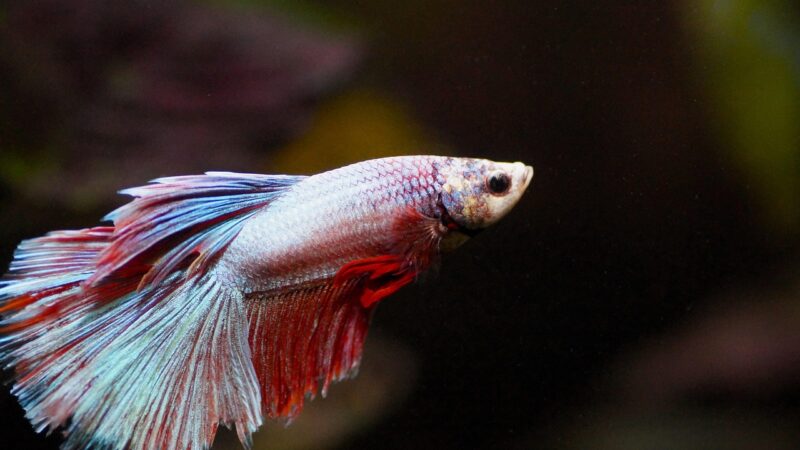
Peat Swamp Wild Betta Breeding Setup Guide
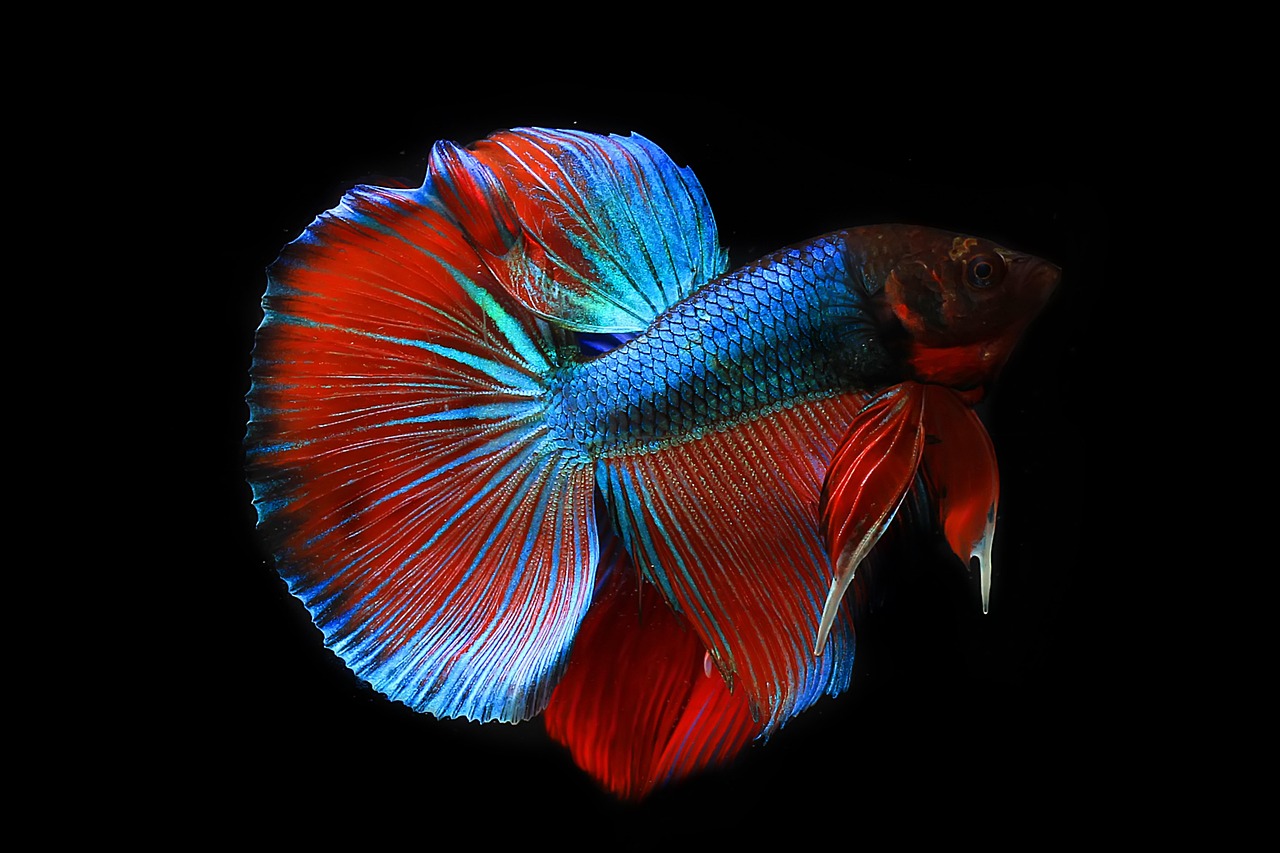
Wild Betta species from Peninsular Malaysia, Sumatra and Borneo evolved in dark, acidic peat swamp water with conductivity under 20 µS/cm and pH below 5. This peat swamp wild betta breeding setup guide from Gensou Aquascaping at 5 Everton Park is based on years of pugnax, imbellis, albimarginata and macrostoma spawns in Singapore, where native peat swamp analogues once existed before urbanisation. A 60-litre tank with a tight-fitting lid is the minimum; labyrinth fish need the humid air layer above the water to develop.
Why Peat Swamp Is Not Just Acidic Water
Peat swamp is a specific chemistry: tannins, humic acids, fulvic acids, near-zero carbonate hardness, very low mineral content, and stable low pH between 4.0 and 5.5. Most hobby “blackwater” setups hover at pH 5.5 to 6.0 and 50 to 80 µS/cm, which is not peat swamp. True peat swamp chemistry requires RO water, aggressive tannin loading, and patience. Our Southeast Asian peat swamp biotope guide covers the broader scape.
Water Preparation From PUB Tap
PUB tap at 90 µS/cm is already soft but carries chloramine and sits well above pH 7. Use 100 percent RO water remineralised to roughly 30 µS/cm with a pinch of Salty Shrimp GH+ for mineral traces, then acidify through botanicals and peat. Never chase pH with acid buffers; the controlled acidification through tannins is part of what triggers spawning in wild Betta species.
Substrate and Leaf Litter Loading
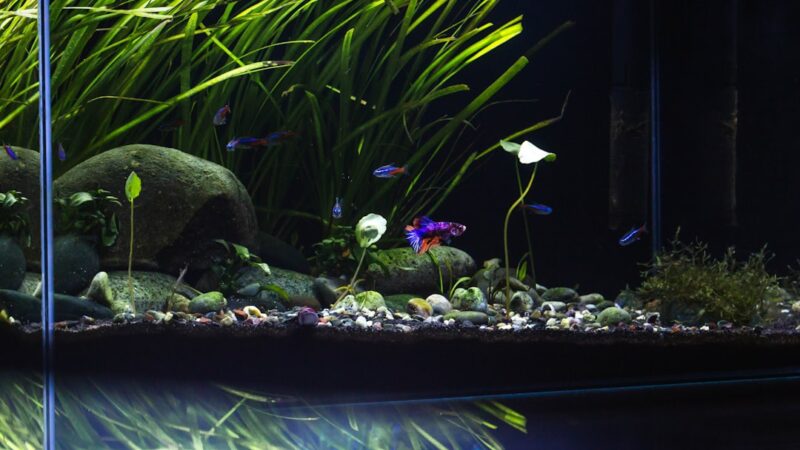
Use 2 to 3 cm of pool filter sand or a bare bottom covered with leaf litter. Load the tank with a thick layer of Indian almond leaves, oak leaves, and banana leaves until the substrate is almost invisible. Layer should be 3 to 4 cm thick. Add alder cones, Ketapang seed pods and a mesh bag of peat granules in the filter. The leaf layer is where mouthbrooding males retreat between holds.
Hardscape and Hiding Structure
Place two or three small driftwood pieces creating overlapping horizontal gaps. Tangled root systems mimic the flooded forest floor. Do not overbuild; wild Betta pairs need line-of-sight territories, not mazes. Leave open floor space between leaves for nuptial displays. Add a few handfuls of Java moss floating on the surface for fry cover if breeding mouthbrooders like Betta macrostoma.
Lighting and the Humid Air Layer
Light at 10 to 20 PAR at substrate is plenty; most wild Bettas prefer shaded water. A simple LED strip on a 6-hour photoperiod keeps plants alive without bleaching the tannins. Tank lid must be tight; wild Bettas are prolific jumpers and labyrinth fish need warm, humid air between water surface and lid glass. A 1 to 2 cm air gap is optimal; anything larger and the humid layer dissipates.
Species-Specific Breeding Strategies
Betta imbellis and splendens are bubble-nest spawners; the male builds a floating nest under a leaf or Indian almond, the female deposits eggs, and the male tends the nest solo. Betta pugnax, macrostoma, albimarginata and channoides are mouthbrooders; the male holds fertilised eggs in his buccal cavity for 10 to 20 days. Our wild betta breeding guide covers species-by-species strategy.
Conditioning and Pair Introduction
Feed live blackworms, daphnia, mosquito larvae and occasional frozen bloodworms for three to four weeks before expecting a spawn. Wild Bettas are intolerant of pellet-only diets during conditioning; colour and spawning readiness both suffer. Introduce the female to the male’s tank in a glass divider for 48 hours, then remove the divider when the pair are visibly interested. Expect a spawn within five to fourteen days.
Temperature and Singapore Ambient
Wild Betta species tolerate 24 to 28 degrees. HDB ambient of 28 to 30 degrees during the day is the upper edge of the comfortable range; at 30 degrees, mouthbrooding males sometimes swallow their brood in the first three days. A clip fan across the surface or an AC-cooled room is the SG-specific intervention that genuinely helps. Chiller is unnecessary if you can hold the room at 27 to 28.
Fry Management Post-Release
Bubble-nest fry are tiny and need infusoria for the first week, transitioning to microworms and baby brine shrimp by day seven. Mouthbrooder fry emerge larger and accept baby brine shrimp immediately. Remove the female from bubble-nest spawns after egg deposition; the male tends the nest alone and will chase her off. Mouthbrooder pairs tolerate cohabitation through the hold, but the female should be moved to a separate tank before fry release.
Water Changes Without Stripping Tannins
Change 10 percent weekly with pre-prepared water matched to tank temperature and tannin load. Store refill water in a container with leaf litter for 48 hours before use so the new water carries similar humic content. Sudden tap-water refills crash the acidic balance and stress holding males. Test conductivity weekly rather than pH; KH is so low that pH drifts meaningfully with small changes.
What Separates Success From Failure
The single most common failure is running pH 5.5 to 6.0 and expecting wild Bettas to spawn; many species simply will not. The second is overfeeding and crashing water quality. The third is impatience; wild Betta projects take months to settle and reward builders who leave the tank alone. Budget four to six months from setup to first raised brood.
Related Reading