Pond UV Clarifier Sizing Guide: Wattage to Pond Volume
Green water in a tropical pond appears with the speed of monsoon mould — one warm sunny week and a previously clear koi pond turns into pea soup. Getting your pond UV clarifier sizing guide right at design stage prevents a fortnight of squinting at fish you cannot see. This breakdown from Gensou Aquascaping at 5 Everton Park covers the wattage maths, flow rate windows, and the practical adjustments tropical Singapore conditions demand. Expect honest numbers, not the inflated coverage figures stamped on UV unit boxes.
What a UV Clarifier Actually Does
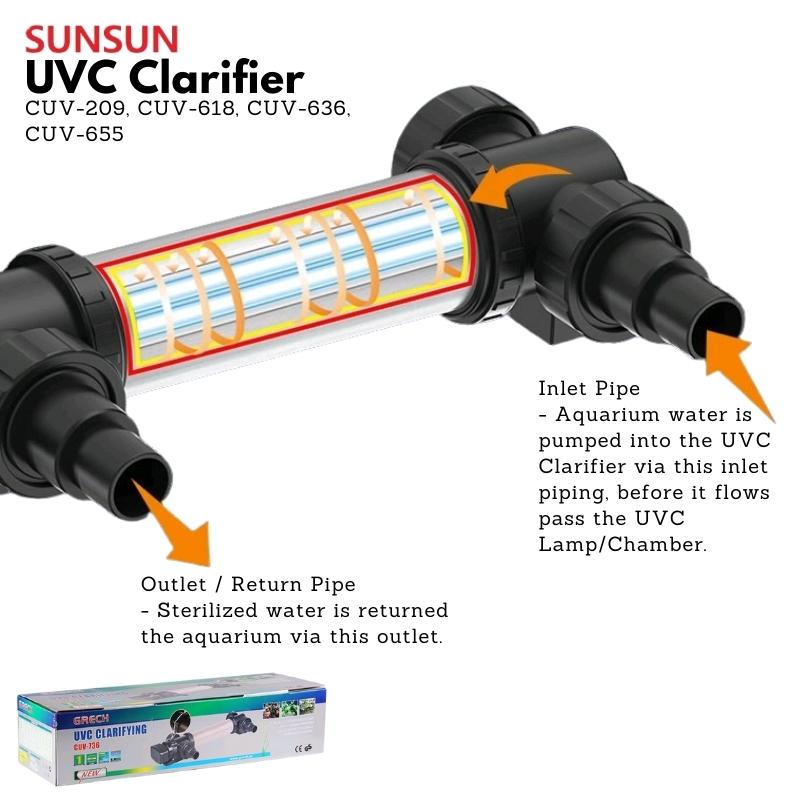
A UV clarifier kills free-floating single-celled algae and some suspended bacteria as water passes through a UV-C lamp chamber. It does not address string algae, blanketweed, biofilm on rockwork, or parasites at clarifier-grade dwell times. UV-C at 254 nm denatures algal DNA; the algae cells then clump and settle out or get caught by your mechanical filter. Without adequate mechanical polishing downstream, dead algae drift back into the water column.
Wattage per Litre Baseline
The European baseline of 1 watt UV per 1,000 litres works for temperate ponds with limited sun and four-season algae bloom windows. Tropical Singapore ponds need 2 watts per 1,000 litres minimum, and 3 watts per 1,000 litres for ponds receiving direct sun for four or more hours daily. A 5,000 litre pond in full sun therefore needs a 15 watt clarifier as a starting point, not the 8 watt unit the box recommends.
Flow Rate as the Hidden Variable
Wattage is meaningless without correct flow rate. UV dose equals lamp output multiplied by contact time. Push water through too fast and even a 55 watt unit fails to clear green water. The rule of thumb is one full pond turnover per two hours through the UV. For a 5,000 litre pond, that is 2,500 litres per hour through the clarifier — typically sized using a dedicated UV bypass loop rather than the main return.
Inline vs Submerged Units
Inline UV units sit in the return plumbing after the main filter and process polished water — the ideal scenario, since suspended sediment shadows the lamp and reduces effective dose. Submerged pond UVs hang in the pond itself with integrated impellers; they are easier to install but less efficient because raw pond water carries debris that blocks UV penetration. For ponds above 3,000 litres, choose inline. Read our best pond UV clarifier green water roundup for specific models tested locally.
Quartz Sleeve Maintenance
The quartz sleeve between lamp and water fouls within 6-8 weeks in tropical conditions. A film of biofilm and mineral scale blocks 30-50 per cent of UV output. Service the sleeve quarterly minimum: drain the unit, remove the sleeve, soak in 5 per cent vinegar for an hour, rinse, and reinstall. Annual lamp replacement is not optional — UV-C output drops to 60 per cent of new at 8,000 hours regardless of whether the lamp still glows blue.
Sizing Worked Examples
A 2,000 litre balcony tub pond in partial shade: 8-11 watt unit at 1,000 litres per hour flow. A 4,000 litre courtyard pond in dappled shade: 18 watt at 2,000 litres per hour. A 10,000 litre landed-house display pond in full sun: 36-55 watt at 4,500-5,000 litres per hour. Always size up by 25 per cent if the pond receives more than five hours of direct sun, and add another 25 per cent if heavily stocked with koi above 1,500 grams per cubic metre.
Plumbing Considerations
Use 32 mm or 40 mm rigid PVC for pond UV inlet and outlet, never garden hose. Hose kinks reduce flow and create dead zones. Install isolating ball valves on both sides for serviceability. Mount the UV horizontally above water level so air bubbles do not trap inside the chamber and reduce dwell time. Our pond skimmer installation SG guide shows the typical layout integration.
When UV Becomes Counterproductive
UV kills beneficial nitrifying bacteria in the water column and free-floating zooplankton. In planted natural ponds with daphnia or shrimp populations you want preserved, run UV intermittently — switch on for 6 hours daily during algae blooms, off otherwise. Permanently running UV in a wildlife or planted pond removes the food chain base that keeps the system self-balancing.
Electrical and Safety Notes
UV ballasts run hot and live near water. Mount the ballast at least 1 metre above the highest possible water level, plug into an RCD-protected outlet, and weatherproof all junctions. Singapore monsoon downpours flood unprotected installations every November-January. Budget $30-50 SGD for a proper outdoor enclosure rather than relying on the bag the unit shipped in.
Cost Expectations in SGD
Entry-level 11 watt inline UV units start around $80-110 SGD. Reputable 36 watt units from Atlantic, Aqua Ultraviolet, or Tetra Pond run $250-400 SGD. Replacement lamps cost $30-60 SGD annually. Factor an additional $40-60 SGD per year for replacement quartz sleeves if cleaning damages the original.
Combining UV With Other Clarification
UV alone struggles in heavily fish-loaded ponds. Pair UV with a pressurised pond filter rated for 1.5x your stocking, a surface skimmer to remove leaves before they decompose, and seasonal partial water changes. For full coverage of mechanical and biological staging, see our pond bog filter DIY build guide as a complementary nutrient sink.
Related Reading