
Rainbow Hornet Chalice Coral Care Guide: Lineage and Light
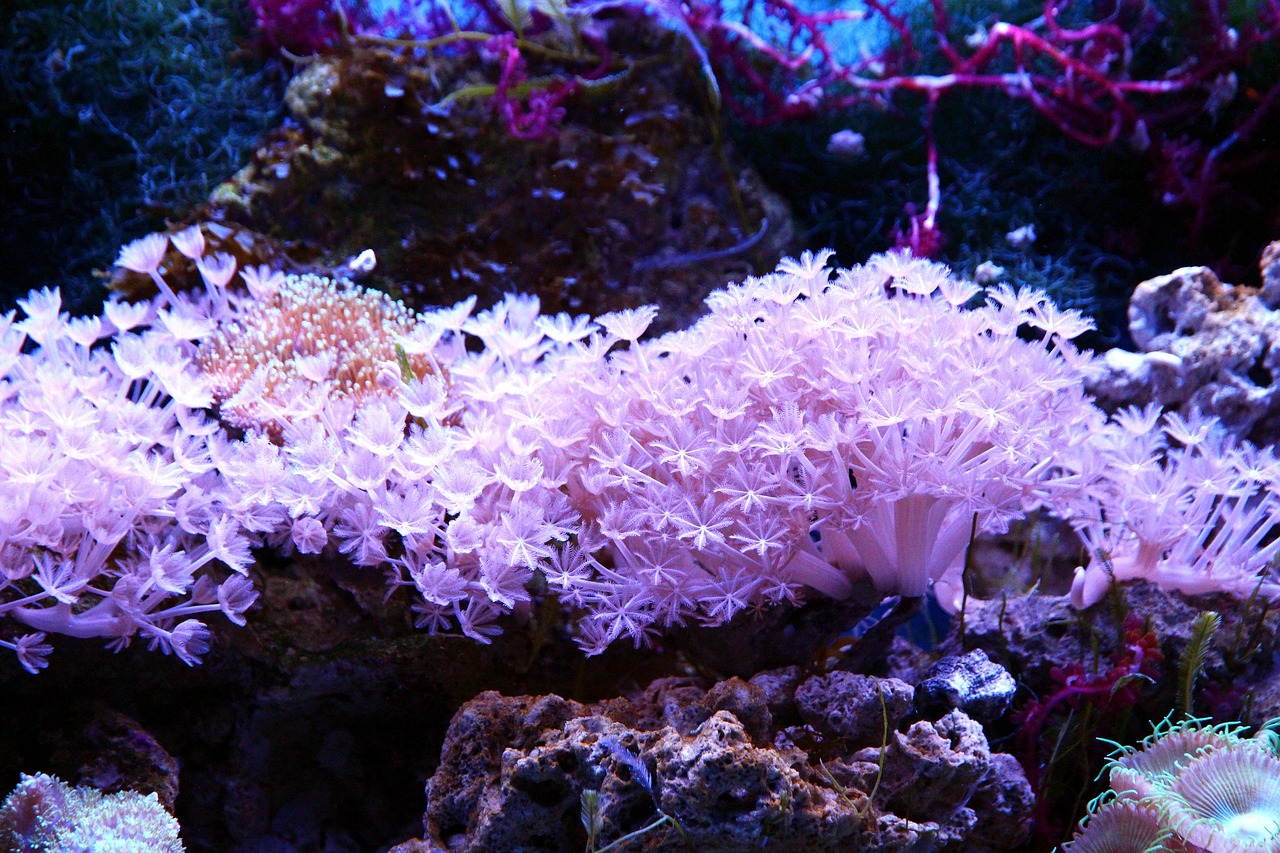
Rainbow Hornet is one of the most instantly recognisable chalice morphs in the hobby — bright orange eyes against a blue-green base with red-pink chalice rims — and its continued scarcity in Singapore traces to the single named mother colony lineage that defines genuine frags. This rainbow hornet chalice coral care guide from Gensou Aquascaping at 5 Everton Park covers the placement, lighting and feeding decisions that hold Rainbow Hornet colour over the long term, and explains why documented provenance matters when a 2 cm frag regularly trades for $300 to $600.
What Rainbow Hornet Actually Is
Rainbow Hornet is an Echinophyllia species chalice, a line-bred morph developed in the US reef trade circa 2013 to 2015 by a small group of collectors. The mother colony produces encrusting growth with distinctive colour zonation: orange central eyes, green body tissue, blue fringe and red-pink outer rim. Every genuine frag in circulation descends from that single lineage. Refer to our chalice coral care reference for general context.
Verifying a Genuine Frag
Rainbow Hornet frags should display:
- Orange polyp eyes with visible yellow centres under actinic
- Green to blue-green encrusting tissue
- Red-pink outer rim developing within 3 to 6 months on frags
- Lineage chain from a US collector or reef farm
Without documented provenance, treat a bright chalice labelled Rainbow Hornet as a lookalike. Mystic Sunset, Miami Hornet and Jason Fox Homewrecker are common mislabels. The collector morph piece covers the broader verification approach.
Lighting Requirements
Chalices in general, and Rainbow Hornet specifically, colour best under moderate light, 70 to 130 PAR, with heavy 420 to 460 nm blue content. Too much light causes the green body to brown and the orange eyes to bleach; too little and the red rim fails to develop. Place frags on middle to lower rockwork, not near the top. Our reef LED comparison covers fixtures that hold chalice colour.
Flow and Water Parameters
Low to moderate flow is ideal — 10 to 20x turnover per hour, indirect. Direct high flow damages the delicate tissue ridge at the chalice rim and accelerates tissue recession. Position the frag where the flow is steady but gentle; a bare pocket in the back third of the rockwork often works best in 50 to 150 litre nano reefs.
Target alkalinity 8 to 8.5 dKH, calcium 420 to 440 ppm, magnesium 1350 to 1400 ppm, nitrate 3 to 8 ppm, phosphate 0.04 to 0.08 ppm, temperature 25 to 26 degrees. Chalices react badly to alkalinity swings — keep dKH stable to within 0.3 over a week. Our calcium alkalinity stability piece covers the dosing discipline.
Placement on the Rockwork
Rainbow Hornet encrusts outward rather than upward, so give a flat surface with at least 8 cm of clearance in each direction from other corals. Epoxy the frag plug to a flat rock face rather than a vertical wall; the growth pattern establishes faster on horizontal surfaces. Avoid direct contact with aggressive neighbours — chalice warfare can kill a $400 frag within a month.
Feeding for Growth
Target-feed Reef Roids, Coral Frenzy or PolypLab once or twice a week during lights-off transition. Chalices extend feeding tentacles 90 minutes after blue-only mode begins; drop food directly onto the polyp eyes and observe tentacle closure. A 2 cm frag with regular feeding typically doubles surface area in 4 to 6 months. Without target feeding, growth slows by half.
Dipping and Quarantine
Chalices carry acoel flatworms and nudibranchs that specifically target chalice tissue. Dip every new frag using the Bayer and CoralRx protocol, quarantine for 3 to 4 weeks, and inspect weekly under 10x magnification for pest eggs along the rim. Acoel infestation ends a colony quickly once established.
Singapore Reef Context
Ambient 29 to 31 degree room temperatures make chiller discipline non-negotiable. Rainbow Hornet browns visibly above 27 degrees and can release zooxanthellae above 28. Run a titanium-element chiller (Hailea, Daeil) with reliable set points at 25.5 degrees. Plan for power cuts with battery backup on the controller and pump — a six-hour outage during monsoon has ended collector colonies before. Review the chiller selection guide.
Compatibility
Keep separated from aggressive LPS sweepers (Euphyllia ancora, Galaxea) by at least 12 cm. Chalices themselves can sting smaller zoas and palys that encroach, so manage placement carefully. Reef-safe fish choices matter — avoid angelfish that nip, large tangs that bump rockwork, and any wrasse with a reputation for harassing corals.
Pricing and Sourcing
Genuine 1 cm to 2 cm Rainbow Hornet frags trade at $250 to $600 at Singapore collector-tier reef shops and private sellers. Larger 4 cm frags with defined rim colour reach $800 to $1,500. Lineage-documented frags command the premium; without documentation the same visible morph drops to $100 to $200. Plan acquisition as a capital purchase, not an impulse buy.
Long-Term Colour Holding
Rainbow Hornet colouration deepens over the first 12 to 18 months in a stable system. The red rim emerges after 4 to 6 months, orange eyes intensify at 8 to 12 months, and the characteristic blue-green base stabilises by month 18. Pressure to see “final colour” in the first quarter kills many collector purchases — give the coral time under consistent parameters, and the colour develops on its own timeline.
Related Reading



