
Red Eared Slider Care Guide Singapore: Indoor Pond Setup
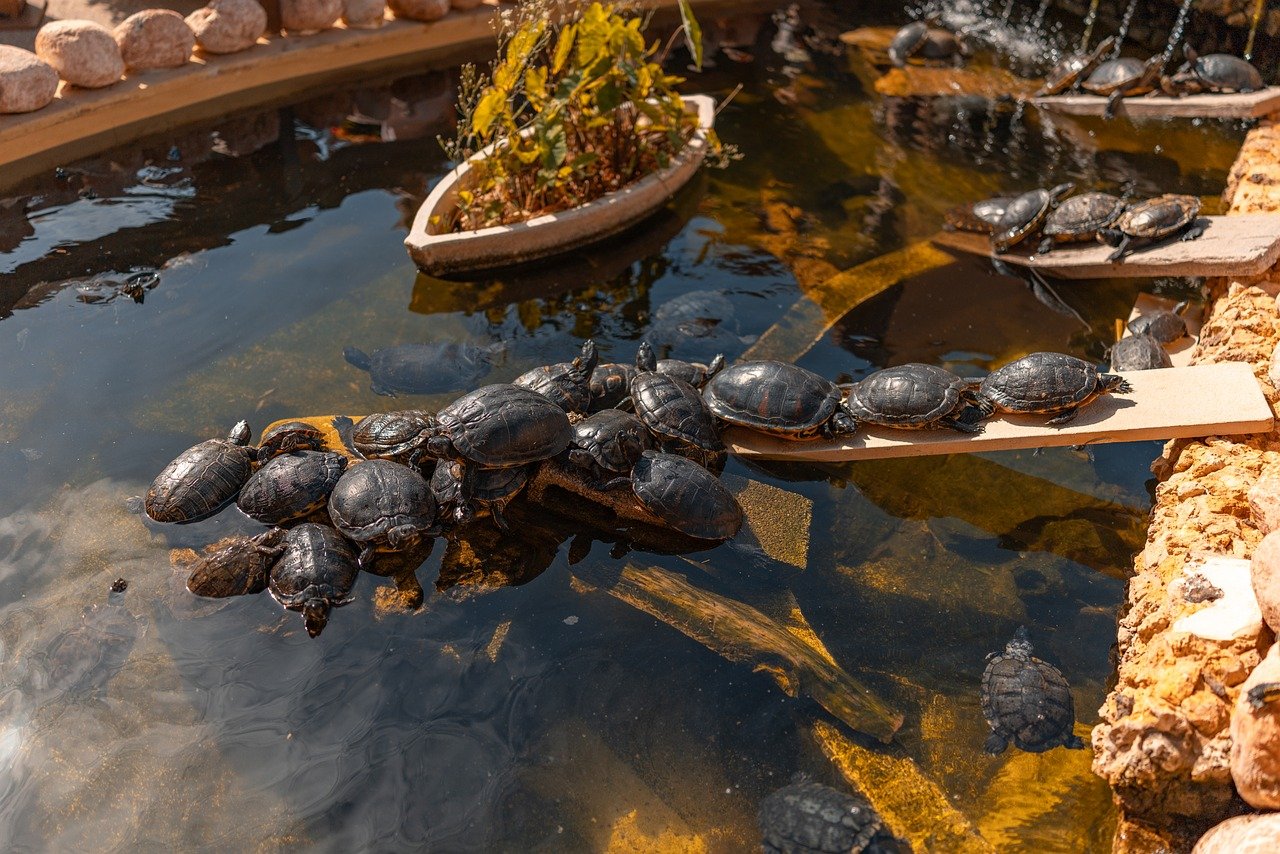
A 50-cent coin sized hatchling becomes a 25 cm dinner plate within five years, which is why the red eared slider care guide singapore conversation always begins with adult size, not cuteness. Trachemys scripta elegans is listed as one of the world’s worst invasive species, and Singapore’s drains and reservoirs already carry the consequences of decades of releases. This guide from Gensou Aquascaping in Everton Park covers an indoor pond setup that gives a slider a proper life — and keeps it out of waterways where it does not belong.
Quick Facts
- Adult size 20-30 cm; expected lifespan 25-40 years with good husbandry
- Minimum 400 litres for one adult; 600+ litres for a pair
- UVB lighting is non-negotiable for shell and bone health
- Basking spot 32-35°C, water 24-28°C, ambient Singapore room temperature suits
- Filtration sized to 2-3x the system volume per hour minimum
- HDB pet rules under NEA do not specifically restrict turtles, but condo MCSTs may
- Releasing into local waterways is illegal under the Wildlife Act and devastates native ecology
Why This Species Demands Commitment
Red-eared sliders are sold cheaply and outgrow their starter tanks within 18 months. Owners who underestimate the long-term commitment have historically released them into Bedok Reservoir, MacRitchie, and HDB drains, where they outcompete native species like the Malayan box turtle. Buying one means committing to four decades of care or arranging legal rehoming through a society like ACRES — never the canal.
Indoor Pond Sizing
The classic 60 cm tank from a starter kit is unsuitable beyond the first year. A single adult needs a footprint of at least 120 cm by 60 cm with 30-40 cm water depth, putting volume at around 250-300 litres of water plus a basking platform above. A 2-foot custom tank or a converted plastic pond liner sat on a reinforced timber frame both work for HDB living rooms, provided floor loading is checked against your unit’s structural drawings.
Indoor ponds with low walls and large surface areas suit sliders better than tall aquariums because turtles use horizontal swimming room far more than vertical depth.
Basking Platform and UVB
Sliders bask to thermoregulate and to drive vitamin D3 synthesis through UVB exposure. The platform must be fully out of the water, large enough for the entire turtle to dry off, and warmed to 32-35°C by an overhead basking bulb. UVB output must come from a dedicated reptile UVB tube — Arcadia T5 12% or ZooMed PowerSun — placed within 30 cm of the basking surface and replaced every 12 months even if it still emits visible light.
Without UVB, sliders develop metabolic bone disease and shell pyramiding within a year. The cheap basking lamps sold in pet shops produce heat but no usable UVB; check the box for explicit UVB output figures before buying.
Water Temperature in Singapore
Ambient Singapore water sits comfortably in the 26-29°C range that sliders prefer, so heaters are rarely needed. The challenge is the reverse — keeping water from overheating during prolonged sun on south-facing flats. A clip fan over the surface during the hottest months and shading the tank from direct afternoon light keeps water within range without a chiller.
Filtration for High Bioload
Turtles produce roughly three times the waste of an equivalent fish biomass, so filtration is sized accordingly. A canister rated for 2-3 times the actual water volume per hour is the minimum, and pairing two canisters or adding a sump dramatically improves stability. Mechanical media catches the large faecal pellets, biological media handles ammonia, and weekly 30-40% water changes remain non-negotiable regardless of filtration capacity.
Diet Across Life Stages
Hatchlings are heavily carnivorous, taking pellets, bloodworm, and small fish. Adults shift toward 50-60% plant matter — duckweed, water lettuce, romaine, dandelion greens — with the balance from quality turtle pellets and occasional protein. Overfeeding protein in adults causes shell pyramiding and kidney stress. Feed adults every other day, juveniles daily, and remove uneaten food within 30 minutes to protect water quality.
Substrate and Decor Choices
Bare bottom or large river rocks are the safest substrates because sliders dig and swallow gravel. Decor should be heavy and stable; turtles bulldoze anything light. Live plants are usually eaten or destroyed, though water lettuce and water hyacinth can survive as floating snacks if replenished regularly.
Singapore Housing Considerations
NEA’s HDB pet rules focus on dogs and do not specifically prohibit turtles, so red-eared sliders are legal to keep in HDB units. Condominiums often have separate MCST by-laws that may restrict reptiles or large tanks; check your management’s pet policy before committing. Floor loading for a 400-litre indoor pond approaches 500 kg loaded, which falls within HDB structural limits but warrants placement near a load-bearing wall rather than mid-room.
The Release Problem
Releasing a red-eared slider into Singapore waterways is illegal under the Wildlife Act and ecologically destructive. Released sliders carry salmonella, displace native turtles, and prey on native fish and amphibians. If you can no longer keep your slider, contact ACRES or rehome through verified hobbyist communities — never let it loose. Penalties under the Wildlife Act include fines up to $5,000 for first offences.
Common Health Problems
Shell rot appears as soft white patches and stems from poor water quality or inadequate basking. Respiratory infections present as bubbles from the nose, lethargy, and lopsided swimming, usually triggered by chilly water or insufficient UVB. Eye swelling indicates vitamin A deficiency from a pellet-heavy diet. All three need an exotic vet — Singapore has several practising specifically with reptiles, and treatment within a week of symptoms gives the best outcomes.
Long-Term Commitment Reality Check
A red-eared slider purchased today will likely outlive at least one renovation, possibly a marriage, and certainly the original tank setup. Costs across a 30-year lifespan run into thousands of dollars for tanks, lighting, electricity, food, and vet visits. If that arithmetic gives pause, consider a smaller native species or aquatic invertebrates instead.
Related Reading
Aquascape for Turtle Tank
Aquascape for Turtle Tank Semi Aquatic
Best Aquarium for HDB Flat
Aquarium for Condo Singapore
How to Move Aquarium to New HDB Flat



