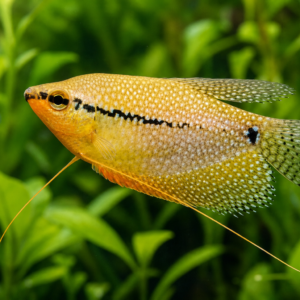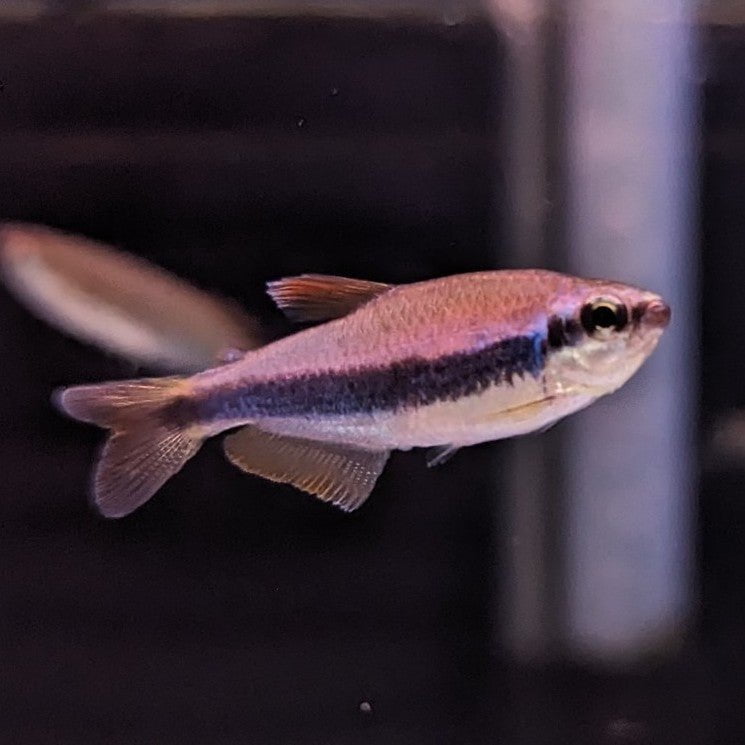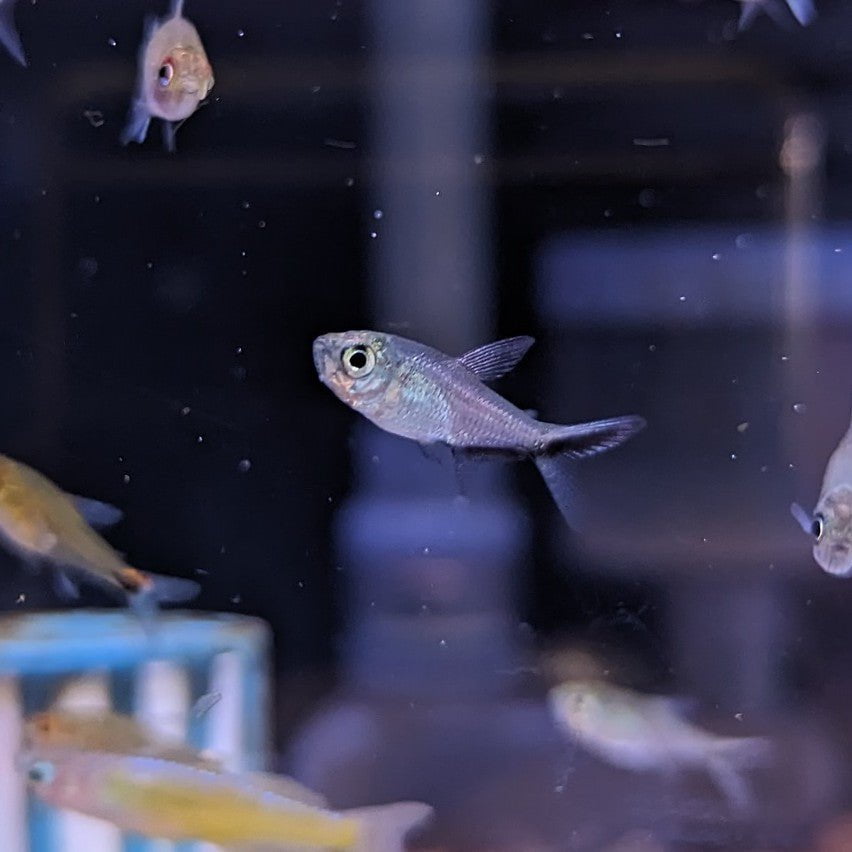
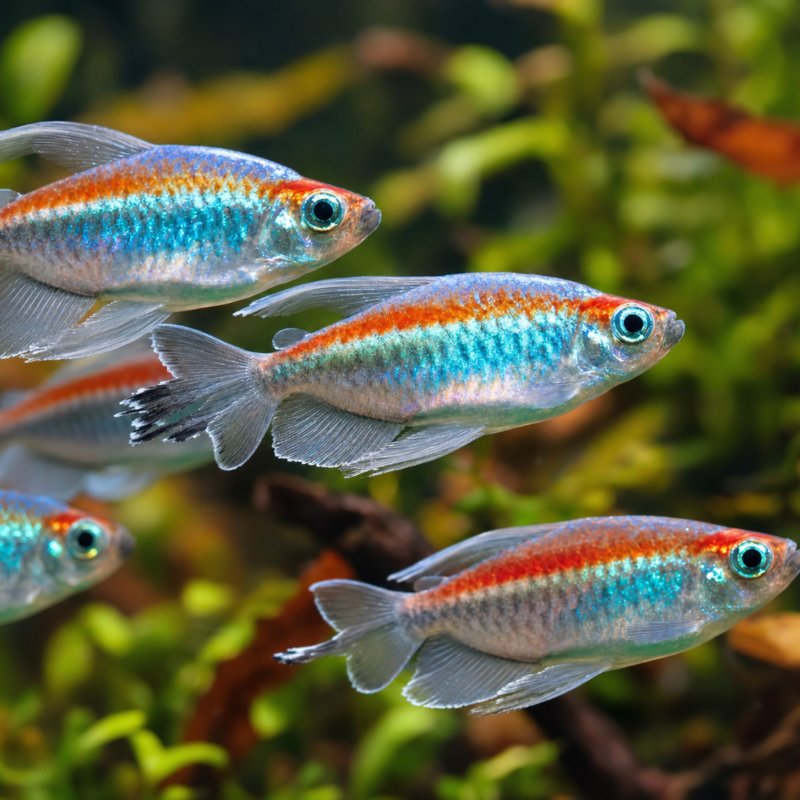
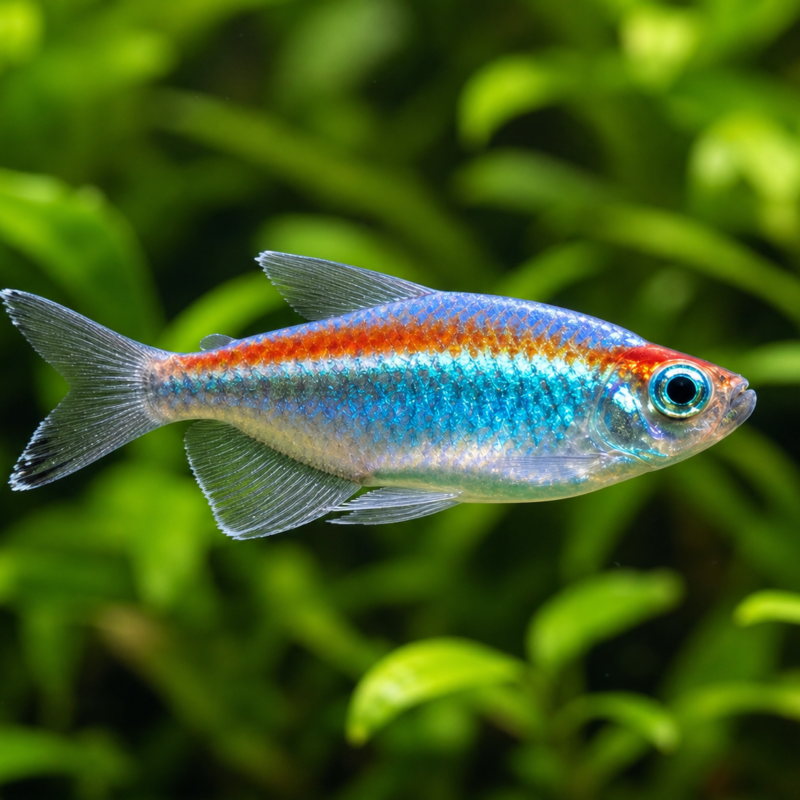
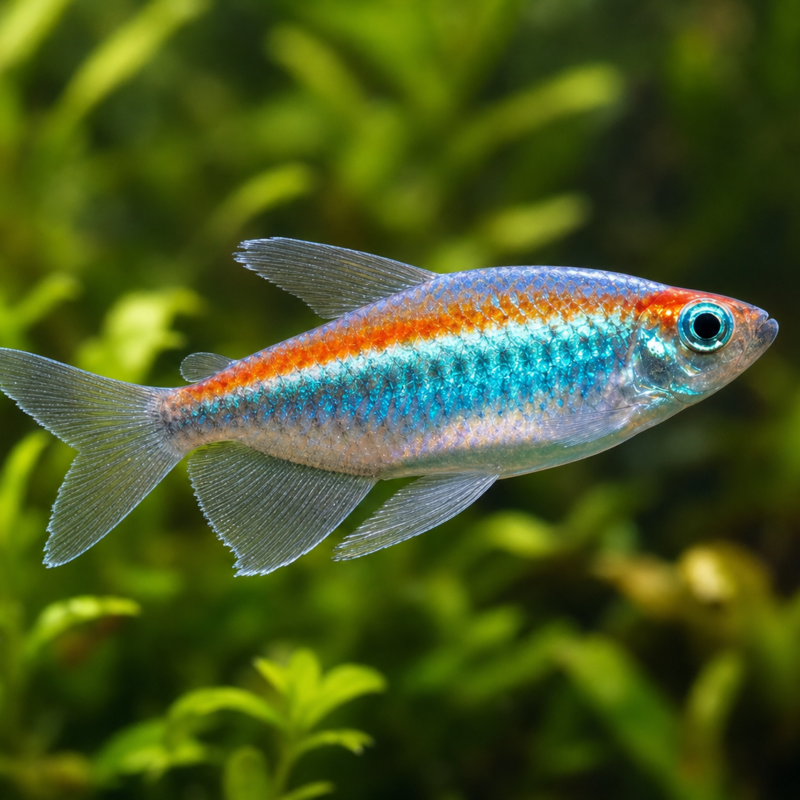
Congo Tetra
Phenacogrammus interruptus · Peaceful · Intermediate care
Africa's showpiece tetra — a big, deep-bodied shoaler that shimmers turquoise, gold and violet, with males trailing elegant flowing fins. Spectacular in a spacious planted tank.
At a glance
Species profile Phenacogrammus interruptus
Origin
Congo River basin, Central Africa
Family
Alestidae (African tetra family)
Adult size
Up to 8.5 cm (3.3 in)
Diet
Flake, pellets, frozen and live foods plus some plant matter (Omnivore)
Temperament
Peaceful
Swimming level
Middle
Minimum group
6+ (shoaling)
Lifespan
3-5 years
Minimum tank
150 L (40 gal)
Water type
Freshwater
Size to scale
8.5 cm adult length, shown to scale against an iPhone 15 Pro (14.66 cm).
Natural range
Where it comes from — Africa
Congo River basin, Central Africa
Water
Singapore tap water vs its needs
Hardness: Soft to medium-hard (4-18 dGH).
In the aquarium
How it lives in the tank
Swims in the middle of the tank
Keep in a group of 6+
Sensitivity Index — Moderate
Adaptable, but happiest with stable parameters in a matured tank.
Our own read on how forgiving this species is of water changes — not a formal standard.
Keeping & care
What this fish needs
Family
About the Alestidae family African tetra family
Alestidae are the African tetras (characins), a family of freshwater fish native to Africa, ranging from small schooling species to large predatory tigerfish (Hydrocynus). The aquarium members are mid-sized, active, schooling fish with the characteristic tetra body shape and often striking iridescence; the Congo tetra (Phenacogrammus interruptus) is by far the best-known. They are peaceful, hardy shoalers that do best in groups and prefer soft, slightly acidic, warm water with open swimming space and some planting.
Keep in a group of six or more in a roomy tank with soft, slightly acidic, warm water (around 24-26 C), gentle flow, open swimming room, and planting for cover; their fine trailing fins can be nipped, so avoid boisterous or fin-nipping tankmates.
Breeding
Egg-scattererThe aquarium species are egg-scatterers that give no parental care. Conditioned in soft, slightly acidic water, a pair or small group scatters eggs among fine-leaved plants or spawning mops, with adults removed afterward to stop them eating the eggs; the eggs typically hatch after several days. Congo tetras have been bred in captivity but are considered moderately challenging and are not as free-spawning as many South American tetras.
Feeding
Recommended food
Compatibility
Best tankmates
Community