
Tropheus Annectens Care Guide: Goby Cichlid Cousin
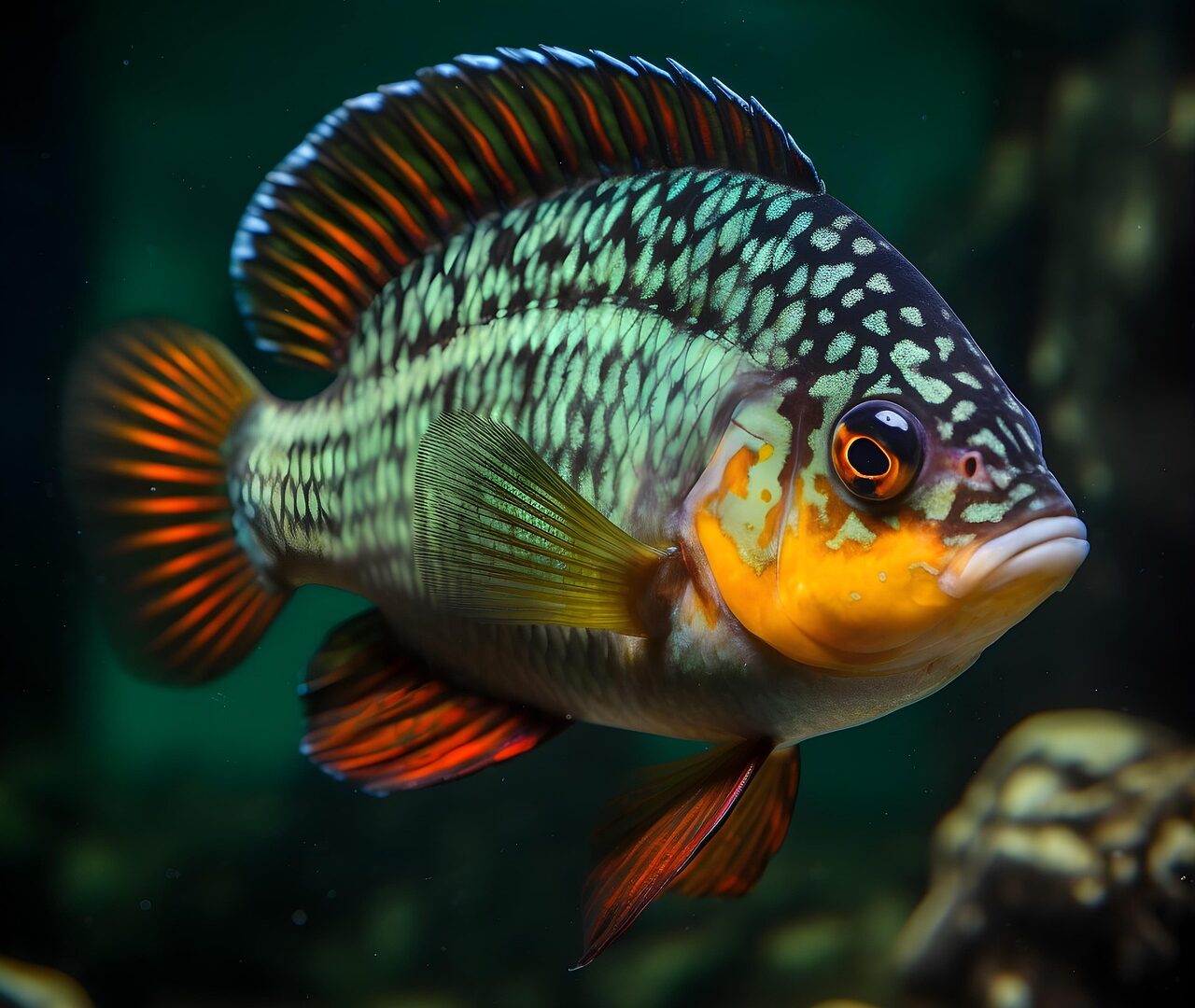
Often grouped with the goby cichlids of genus Spathodus and Eretmodus in older literature, Tropheus annectens is a small, surge-zone Tanganyika cichlid that sits awkwardly between the classic Tropheus group and the true goby cichlids. A practical tropheus annectens care guide recognises its preference for very high oxygen, very stable parameters and a colony structure closer to Eretmodus than to T. moorii. This guide from Gensou Aquascaping at 5 Everton Park covers what we have learned setting up annectens tanks for Singapore Tanganyika specialists, including the surge-tank lighting and flow setup that lets them thrive.
Where Annectens Fits Taxonomically
First described by Boulenger in 1900, Tropheus annectens inhabits the very shallow surge zone along the northwest Tanganyika shoreline near Uvira and the Burundi coast. Adults reach 10 to 12 cm, smaller than most Tropheus, with grey-brown bodies and a faint banded pattern that intensifies during display. Behaviour is closer to a goby cichlid: pair-forming rather than full colony, with biparental brood care after spawning. This makes the species a useful bridge for keepers transitioning from Tanganyika shell-dwellers to full Tropheus colonies.
Tank Size and Group Structure
Unlike the strict colony approach for T. moorii and T. polli, annectens does best in groups of six to ten fish in a 120 to 150 cm tank around 300 to 450 litres. Pairs eventually form and defend small territories along the rock face. Singapore HDB keepers can comfortably run a 120 cm setup in a living room with proper structural placement near a load-bearing wall. The smaller footprint makes annectens one of the more practical Tanganyika options for apartment dwellers.
Hardwater Chemistry and PUB Tap
Maintain pH 8.6 to 9.0, kH 16 to 19 and GH 11 to 14 to match Tanganyika baseline. Singapore tap water at GH 2 to 4 needs full remineralisation using a buffered cichlid mineral mix at every water change, layered over an aragonite or crushed coral substrate. The gh kh aquarium guide covers test protocols, and our calcium chloride remineralise guide details the dosing recipe. Stability beats perfection; weekly drift triggers more problems than steady operation slightly off target.
Surge-Zone Aquascape
Annectens lives in the shallowest 1 to 3 metres of Tanganyika where wave action constantly oxygenates the water. Replicate this with a high-flow setup using lava rock or texas holey rock arranged in low rounded mounds rather than tall stacks. Leave significant open sand foreground for grazing patrols. Our lake tanganyika rocky shore setup covers the layout principles, and aquascape using lava rock only hardscape shows how to keep weight manageable.
Filtration and Oxygen Saturation
Surge-zone fish demand exceptional dissolved oxygen, ideally 8 mg/L or higher. Run a large canister such as Eheim 2080 plus a powerhead aimed at the rock face to break the surface aggressively. Wave makers from the reef hobby work well; the best aquarium canister filter guide covers main filter options. An air-driven sponge as backup adds insurance against power failure. Annectens crashes rapidly when oxygen drops below 6 mg/L, faster than other Tropheus.
Diet and Feeding Strategy
Annectens grazes aufwuchs in the wild, the algae-and-microfauna film on rocks, and shares the Tropheus intolerance for high-protein foods. Stick to spirulina-based flake, NLS Algaemax pellets, blanched courgette and weekly Repashy Soilent Green. Feed small portions twice daily; food should clear in under two minutes. Our tropheus bloat prevention care guide covers warning signs and emergency response, and the spirulina flake food comparison guide rates locally available brands.
Cooling for Singapore Climate
Tanganyika sits at 24 to 27°C while ambient HDB temperatures climb to 30°C. A 400 litre annectens tank needs at least a 1/4 HP chiller; consider 1/3 HP if the tank sits in direct afternoon sun or runs intense lighting. The chiller sizing singapore climate guide works through BTU calculation. Budget around $600 to $1,000 SGD for an appropriate unit.
Tank Mates and Compatibility
Annectens shares its habitat with Eretmodus goby cichlids, small synodontis catfish and Tanganyikan killifish. Compatible tank mates include Synodontis petricola and S. lucipinnis, both small enough to share space without territorial conflict. Avoid larger Tropheus species that outcompete annectens for grazing territory and food. The lake tanganyika featherfin synodontis guide covers safe synodontis options.
Sourcing in Singapore
Annectens shows up irregularly at C328 Clementi and through specialist Carousell breeders, priced around $40 to $80 per juvenile depending on F-grade and locality. Wild-caught fish above $100 occasionally surface; quarantine these particularly carefully. Ask vendors to confirm scientific name in writing since older shop labels sometimes confuse annectens with similar-looking species. Our c328 clementi aquarium shop guide tracks shipment patterns.
Quarantine and Pair Formation
New annectens need three to four weeks in a separate quarantine tank with matched parameters and a prophylactic metronidazole round to clear latent Hexamita. After introduction to the display, watch for pair-bonding behaviour over the following months; once a pair forms they will defend a small territory and may spawn given proper diet and stable water. The aquarium metronidazole treatment guide covers dosing, and the freshwater quarantine protocol new fish details the four-week workflow.
Related Reading



