
20 Gallon Community Tank Stocking Recipes: 5 Proven Combinations
A 20 gallon tank (roughly 75 litres) sits in the sweet spot for Singapore hobbyists — big enough to hold a small shoal plus a feature species, small enough to fit a TV console in an HDB living room. The five 20 gallon community tank stocking recipes below are pulled from tanks we have set up and maintained at Gensou Aquascaping at 5 Everton Park, and each has run trouble-free for well over a year in local conditions. Expect soft PUB water (GH 2-4), an ambient of 28-30 °C without a heater, and a standard 60 cm footprint.
Quick Facts
- Tank volume: 75 litres (20 US gallons), typical 60x30x40 cm footprint
- Realistic bioload: 18-24 small fish plus one centrepiece or a pair
- Filtration: hang-on-back or small canister rated 300-400 L/h
- Singapore tap water suits most soft-water community species after dechlorination
- Budget: $180-$350 for livestock, depending on recipe and source
- Maintenance: 30% weekly water change, light pruning if planted
- Heater optional — only needed if ambient drops below 24 °C
Bioload Planning Before You Stock
Skip the old inch-per-gallon rule. It misreads body mass and ignores activity level — a Congo tetra and a neon tetra are not the same fish at the same length. We plan 20 gallon community tank stocking recipes around three tiers: one bottom layer, one mid-water shoal, and one surface or centrepiece species. Stay under roughly 60 cm of combined adult fish length and keep at least a third of the water column visibly empty when the shoal is still.
Mature the filter on seeded media for three weeks before adding any fish. In our shop we run new customer tanks on used sponge squeezed into the filter chamber, which shortens cycling to about ten days. Ammonia and nitrite must read zero before stocking, nitrate under 20 ppm.
Recipe One: Classic South American Planted
Ten cardinal tetras (Paracheirodon axelrodi), six pygmy corydoras (Corydoras pygmaeus), one honey gourami pair, and ten cherry shrimp. This is the tank most local beginners should start with. Cardinals handle 28-30 °C better than neons, pygmy cories shoal mid-water rather than grovel at the bottom, and the honey gouramis give you a centrepiece without cichlid aggression.
Plant heavily with Cryptocoryne wendtii, Bucephalandra, and a moss-covered spiderwood. Mulm in the cryptocoryne roots feeds the cories. Feed crushed flake, frozen daphnia twice a week, and a sinking wafer at night.
Recipe Two: Southeast Asian Shoal Tank
Twelve harlequin rasboras, six kuhli loaches, one sparkling gourami trio, and a small clean-up crew of nerite snails. Everything is native to peninsular Malaysia and Indonesia, so local shops like C328 Clementi and the Pasir Ris farms always have good stock at $2-$4 per fish.
Use a 2-3 cm fine sand substrate so the kuhlis can burrow without cutting their barbels. Add Indian almond leaves to drop pH toward 6.5 — the sparklings will spawn in surface bubbles under floaters like Salvinia. This is a quiet, contemplative scape rather than a busy one.
Recipe Three: Colourful Nano Showpiece
Fifteen chili rasboras (Boraras brigittae), eight celestial pearl danios, six amano shrimp, and one Thai micro crab colony if you can source them. Tiny fish only — no centrepiece — but the colour density at feeding time is remarkable. Budget roughly $180 all in.
Keep the scape simple: dragon stone, a carpet of Monte Carlo, and no tall stems that break sightlines. Chili rasboras colour up on a darker substrate and a blackwater tint. Feed frozen cyclops and powdered micro pellets; anything larger than 1 mm goes uneaten.
Recipe Four: Active Midwater Shoal
Eight rummynose tetras, six sterbai corydoras, one pair of German blue rams, and ten amano shrimp. The rummynoses move as a tight unit — fantastic in a wider scape — and sterbais handle 28-29 °C, which standard peppered cories do not. Rams are the centrepiece but need stable parameters, so this recipe suits a keeper past their first six months.
Run a CO2 system if you want the reds to pop. Weekly 40% changes keep nitrate under 15 ppm, which the rams demand. Avoid pairing rams with angelfish in this footprint — territorial overlap is guaranteed.
Recipe Five: Livebearer Family Tank
Six endler livebearers (male only to control population), six panda corydoras, eight neon tetras, and a pair of bristlenose plecos. The only recipe here that tolerates harder water, so it suits condos fed by point-of-use softeners set to moderate. Fry from accidental female endlers are a bonus feeder food rather than a problem.
Add a piece of cholla wood for the plecos to rasp. This is the easiest of the five recipes to maintain and a strong pick for a family with children old enough to help with feeding.
Filtration, Flow, and Lighting
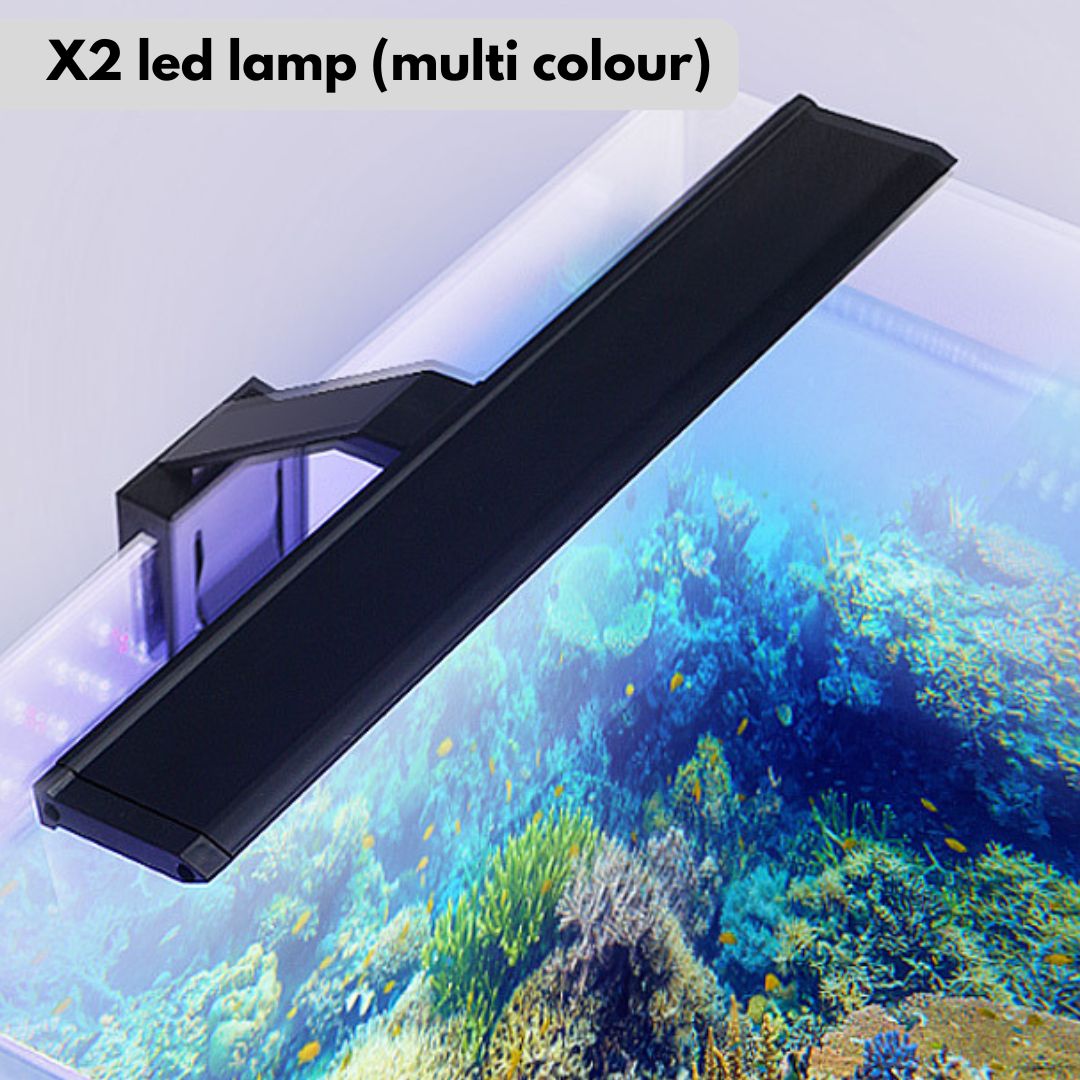
An Oase BioMaster 250 or an AquaClear 50 both work well. Aim for four to six tank turnovers an hour, broken up by plants and hardscape so no fish gets pinned against glass. LED at 30-40 PAR at substrate is enough for low to medium-light plants; push to 60 PAR only with CO2.
Drop a small Tunze nano stream or a cheap wavemaker behind the hardscape if flow feels dead in the back corners. Stagnant pockets are where hair algae starts.
Feeding and Long-Term Health
Feed twice a day, five days a week, and fast one day. Rotate three staples — a quality flake, frozen bloodworm or daphnia, and a sinking wafer — rather than hammering one pellet brand. In Singapore’s humidity, decant flake into 50 ml airtight jars and keep the bulk tub in the fridge; six-month-old open flake is a common cause of HITH in rams and angels.
Related Reading
- Beginner Community Tank Stocking Guide
- Aquarium Stocking Guide
- Best Community Tank Fish
- How to Choose Fish for a Community Tank
- Best Fish Tank 10 Gallon Setup Guide
Final Word
Pick one recipe and commit — mixing species from two recipes is how most 20 gallon community tanks fail by month six. Come by 5 Everton Park if you want us to look at your stocking list before you buy; we would rather spend fifteen minutes on a sensible plan than a month treating aggression wounds.



