
How to Create Depth in Your Aquascape: Perspective Tricks
How to Create Depth in Your Aquascape: Perspective Tricks
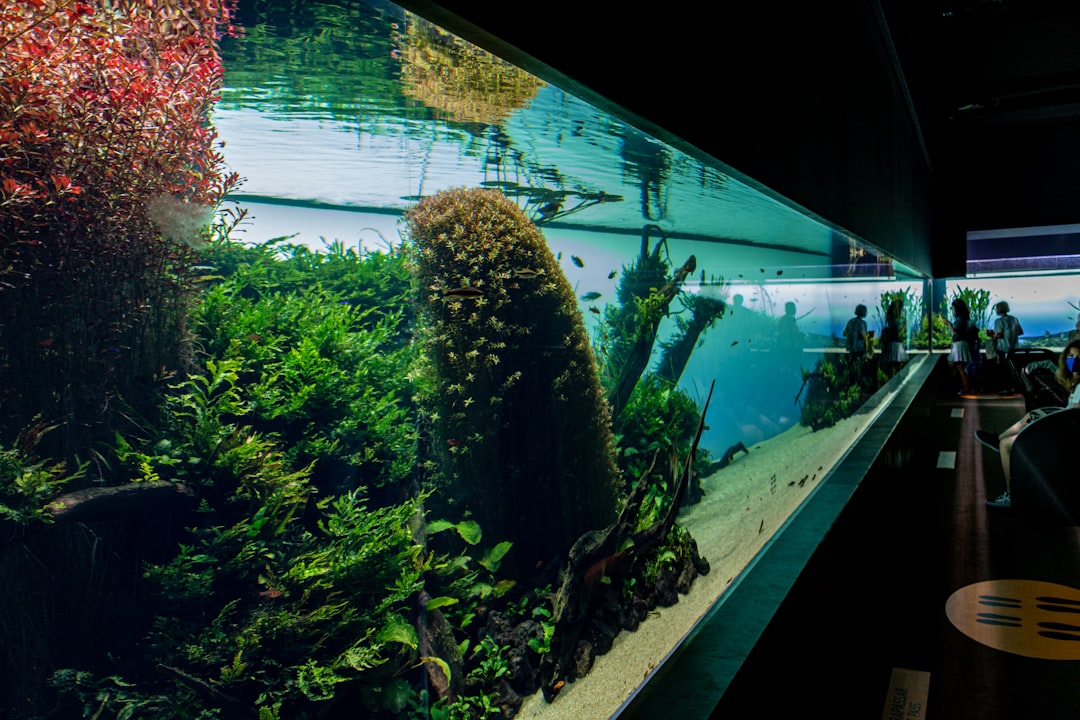
One of the defining qualities that separates a beginner aquascape from a competition-level layout is the illusion of depth. A well-executed 60cm tank can look like a vast underwater landscape stretching into the distance, while a poorly planned 120cm tank can look flat and lifeless. The difference is not tank size or expensive equipment — it is understanding how perspective works and applying a handful of proven techniques.
These tricks borrow directly from landscape photography, theatrical set design, and traditional painting. Once you understand the principles, you will see depth opportunities in every tank you create.
Why Depth Matters
An aquarium is a rectangular box with limited front-to-back distance — typically 30 to 45 cm in standard tanks. Without deliberate design choices, the viewer’s eye sees a flat wall of plants and rocks. Creating depth transforms this box into a three-dimensional scene that draws the eye inward, creates focal points, and produces the captivating sense of looking into a miniature landscape.
Depth is especially valuable in smaller tanks. If you are working with a 60cm or nano aquascape in a Singapore HDB flat where space is limited, these techniques let you achieve visual impact that belies the tank’s actual dimensions.
Substrate Slope: The Foundation
The single most important depth technique is sloping your substrate higher at the back and lower at the front. This is the foundation that every other technique builds upon.
A flat substrate creates no sense of distance. A slope of at least 5–8 cm difference between front and back (more in larger tanks) tilts the “ground plane” so the viewer naturally perceives the back as being further away. The slope also exposes more of the background planting and hardscape, preventing taller elements from hiding behind shorter foreground features.
Practical tips for maintaining slopes:
- Use substrate retainers (plastic mesh or stone barriers) behind the visible foreground to prevent soil from flattening over time.
- Place lava rock or pumice chunks under the substrate in the back half to add height without using excessive amounts of expensive aqua soil.
- Pack the soil firmly in elevated areas and plant carpet species quickly to bind the substrate with roots.
Scale Gradation: Small in the Back
Our brains judge distance partly by the relative size of objects. Distant objects appear smaller. You can exploit this by deliberately placing smaller rocks, thinner pieces of driftwood, and finer-textured plants toward the back of the tank, with larger elements in the front and midground.
For hardscape, this means selecting rocks of different sizes from the same stone type and arranging them so the largest pieces sit in the foreground or mid-ground, with progressively smaller pieces receding toward the back. The size difference does not need to be dramatic — even a subtle gradation tricks the eye effectively.
For plants, use broad-leaved species in the foreground and mid-ground (Anubias, Bucephalandra), transitioning to fine-leaved species in the background (Rotala, Myriophyllum, pearl grass). The finer the background foliage, the more distant it appears.
Converging Lines
Parallel lines appear to converge as they recede into the distance — think of railway tracks narrowing toward the horizon. You can create this effect in your aquascape using hardscape placement.
Arrange pieces of driftwood or rows of stones so they angle inward from front to back. Two branches pointing toward a central vanishing point in the rear of the tank create a powerful sense of depth. Substrate paths that narrow toward the back achieve the same effect.
This technique pairs beautifully with the triangle layout, where converging hardscape lines draw the eye to a focal point.
Colour Gradation
In nature, distant objects appear lighter and less saturated due to atmospheric haze. Underwater, this effect is created by water column absorption. You can mimic this in your aquascape:
- Dark foreground: Use dark-coloured substrate, dark stones, or shadow-casting hardscape in the front.
- Lighter background: Place lighter-coloured rocks, brighter green plants, or pale sand toward the back.
- Background panel: A frosted white or light blue background film behind the tank enhances the sense of atmospheric distance.
Conversely, a solid black background creates a void that suggests infinite depth. This works particularly well with dark, moody hardscape layouts where the eye loses track of where the tank ends and the darkness begins.
Texture Gradation
Coarse textures appear close; fine textures appear distant. Apply this to both plants and hardscape:
- Foreground: Coarse-textured carpets like Marsilea, pebbles, or rough stone.
- Midground: Medium-textured plants and mid-sized hardscape details.
- Background: Fine-leaved stems like Rotala rotundifolia or Micranthemum ‘Monte Carlo’ grown tall, creating a soft, distant-looking mass of foliage.
Moss applied to background hardscape also contributes a fine, soft texture that recedes visually compared to sharp, detailed foreground elements.
Light and Shadow Zones
Strategic use of light and shadow adds three-dimensional depth to your aquascape. Overhanging driftwood or floating plants create shadow zones beneath them, providing contrast against brightly lit open areas.
Position your strongest light over the midground focal point, allowing the edges and background to fall into slightly lower light. This not only creates depth but also mimics the natural light gradation in a forest stream or riverbed.
In practical terms:
- Choose lighting with adjustable intensity or use a dimmer to create gradual falloff toward the tank edges.
- Tall background plants naturally create dappled shadow on the substrate below, adding visual complexity.
- Avoid perfectly uniform lighting across the entire tank — some variation in brightness creates a more dynamic, three-dimensional scene.
Negative Space
One of the hardest lessons for beginners is that empty space is not wasted space. Negative space — areas of open water, bare substrate, or unplanted zones — gives the eye somewhere to rest and creates contrast with densely planted or hardscaped areas.
A completely filled tank, no matter how beautiful the individual plants, feels claustrophobic and flat. An area of clean sand or open water in the foreground draws the eye through it and into the planted background, creating a journey through the layout.
Negative space is especially important in smaller tanks. In a 60cm aquascape, leaving one-third of the visible area relatively open makes the planted areas look more lush and the overall composition more balanced.
The Path or River Effect
A path of contrasting substrate (typically white sand against dark soil) that winds from the front to the back of the tank is one of the most effective depth techniques. As the path narrows toward the rear (using converging lines), the viewer instinctively follows it into the distance.
The path does not need to be straight. A gentle S-curve is even more effective, as it creates the sense of a meandering river disappearing around a bend. Border the path with low plants (Staurogyne repens, Monte Carlo) or small stones to define its edges clearly.
For added realism, the substrate in the “path” can transition from coarse sand in the foreground to finer sand at the back, reinforcing the texture gradation principle.
Practical Examples
60cm Tank: Maximising Depth in a Small Space
With only about 30 cm of front-to-back depth, every technique counts:
- Slope substrate from 2 cm at the front to 10 cm at the back.
- Use a single prominent stone in the foreground midground, with two smaller stones placed higher and further back.
- Plant Eleocharis parvula (fine hairgrass) in the background for its delicate, distance-suggesting texture.
- Create a narrow sand path from front centre, tapering as it curves toward the back corner.
- Use a frosted white background film to lighten the rear.
90cm Tank: Layered Depth
More space allows for distinct foreground, midground, and background layers:
- Slope substrate from 3 cm at front to 15 cm at back, with a visible “hill” in one rear corner.
- Place a large piece of driftwood extending from the midground toward the back, creating converging lines.
- Foreground: open sand with a few small pebbles. Midground: Bucephalandra on stones, Anubias on wood. Background: dense Rotala and Ludwigia.
- Allow the driftwood to cast shadows across the sand foreground, creating light and shadow contrast.
- Leave one side more open than the other, creating asymmetry and a natural sight line into the depth.
Frequently Asked Questions
Can I create depth in a cube or portrait-style tank?
Yes, though the techniques need adapting. In cube tanks with equal depth and width, substrate slopes and converging lines work well. Portrait tanks (tall and narrow) benefit more from vertical depth — cascading plants, hanging driftwood, and height variation in the hardscape. Vertical negative space (open water above the scape) is the equivalent of horizontal negative space in standard tanks.
Does background colour affect depth perception?
Significantly. A light or frosted background creates atmospheric depth, making the back of the tank feel further away. A black background creates a sense of infinite void. A printed nature background usually flattens the scene because the eye recognises it as a flat image. For maximum depth illusion, frosted white or gradient backgrounds are most effective.
How do I prevent my substrate slope from collapsing?
Use physical barriers hidden behind the foreground substrate — plastic mesh strips, thin acrylic dividers, or rows of lava rock. Plant carpet species as quickly as possible after setup; their root networks bind the soil within weeks. Avoid bottom-dwelling fish that dig aggressively until the slope is well-established and held by plant roots.
Do these depth techniques work for reef and marine tanks?
Many of the same principles apply. Rock structures that are taller at the back with open space in front, colour gradation from dark base rock to lighter corals, and strategic lighting all create depth in marine aquascapes. The path effect can be achieved with sand channels between rock formations.
Create Stunning Aquascapes with Expert Guidance
Mastering depth and perspective transforms your aquascape from a planted box into a captivating underwater landscape. At Gensou Aquascaping, our team has over 20 years of experience designing layouts that maximise visual impact in any tank size. Whether you need a custom aquarium designed from scratch or advice on improving your current setup, we are here to help.
Visit us at 5 Everton Park or get in touch to discuss your aquascaping vision.
Related Reading



