Aquascaping With Stem Plants Only: Colour, Speed and Drama
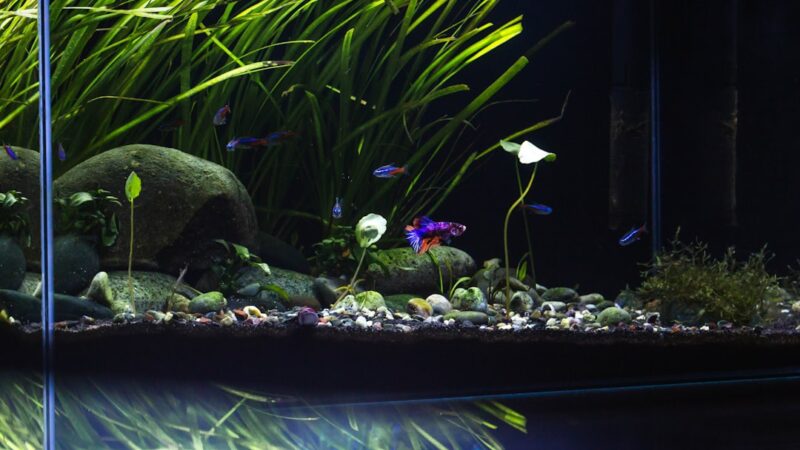
This aquascape stem plants only guide is for hobbyists who want maximum colour, rapid growth and the satisfaction of sculpting a living wall of foliage. At Gensou Aquascaping, based at 5 Everton Park in Singapore, we regularly build stem-only layouts for clients who enjoy the hands-on trimming and shaping that these plants demand.
Why Choose a Stem-Only Layout
Stem plants grow vertically and branch freely, allowing you to create dense hedges, colour gradients and dramatic backgrounds that change shape between trims. Unlike hardscape-focused layouts, a stem-only tank shifts its appearance every week as plants grow, giving you a living canvas to reshape continuously. The fast growth rate of most stems also means they absorb large quantities of nutrients, making them excellent at outcompeting algae when conditions are balanced. For hobbyists who enjoy active tank management rather than set-and-forget stability, stems deliver unmatched engagement.
Essential Equipment
Stem-heavy tanks are almost always high-tech setups. You will need pressurised CO2href=”/co2/”>CO2 injection at 1 to 2 bubbles per second for a 60-litre tank, scaling up for larger volumes. A drop checker should show a consistent lime green during the photoperiod. Lighting should deliver at least 50 to 80 micromoles of PAR at the substrate, achievable with quality LEDs such as the Chihiros WRGB II or Twinstar Series. A nutrient-rich substrate like ADA Amazonia or Tropica Aquarium Soil supports initial root development, though stems primarily feed from the water column. Budget roughly SGD 300 to SGD 600 for lighting, CO2 and substrate for a 60-litre setup in Singapore.
Selecting Your Stem Species
The key to a stunning stem-only tank is choosing species with contrasting colours, leaf shapes and growth habits. For reds, consider Rotala rotundifolia H’ra, Ludwigia super red and Alternanthera reineckii mini. Green options include Rotala green, Bacopa caroliniana and Pogostemon erectus. For mid-tones and unusual textures, Limnophila hippuridoides offers purple tips while Myriophyllum mattogrossense provides feathery contrast. Plan for at least five to seven different species to achieve visual interest across the layout.
Layout Principles for Stem Tanks
Arrange species in groups of at least 10 to 15 stems per cluster for visual impact. Place taller, faster-growing species like Rotala wallichii and Hygrophila pinnatifida towards the back. Mid-height species like Ludwigia and Pogostemon fill the middle ground. Shorter or slower stems like Rotala indica and Staurogyne repens can serve as the foreground transition, though they will still need periodic trimming. Create a gradual slope from front to back and vary the height of each group to avoid a flat, hedge-like appearance. Leave a small open area of substrate or low growth at the front for depth perception.
Fertilisation Strategy
Stem plants are heavy feeders. Dose a comprehensive liquid fertiliser daily or follow the Estimative Index method with weekly dosing and a large water change. Nitrogen, phosphorus, potassium and trace elements must all be available in sufficient quantities. Iron is particularly important for red colouration; if your reds are turning pale or green, increase iron dosing. Products like APT Complete, Tropica Premium Nutrition and ADA Brighty series are all available in Singapore at prices from SGD 15 to SGD 40 per bottle. Monitor nitrate and phosphate weekly to confirm plants are consuming what you supply.
Trimming and Maintenance
Expect to trim every 7 to 14 days in a well-running stem tank. Use sharp, long-handled scissors to cut stems cleanly. For most species, cut at approximately two-thirds of the desired final height; the stems will branch from the cut point and grow back denser. After several rounds of trimming, the lower portions become woody and bare. At this point, uproot the old stems, replant the healthy tops and discard the bottoms. This replanting cycle keeps the tank looking fresh and prevents lower leaves from dying off due to shading.
Common Challenges
Algae on lower leaves is the most frequent issue and usually results from insufficient CO2 or light not penetrating through the upper canopy. Thinning overly dense clusters improves light distribution. Melting after planting is normal for tissue culture stems; they typically recover within one to two weeks. In Singapore’s warm climate, stem growth can be explosive during cooler months and slightly slower when room temperatures exceed 30 degrees, so adjust fertiliser dosing seasonally.
Making It Work in Singapore
Air conditioning helps maintain stable temperatures between 24 and 26 degrees, which many red stems prefer for optimal colouration. If running the tank without air conditioning, choose heat-tolerant species like Rotala rotundifolia, Ludwigia repens and Hygrophila polysperma, which handle 28 to 30 degrees without significant decline. A chiller is an option for dedicated hobbyists but adds SGD 200 to SGD 500 to the setup cost. Visit Gensou Aquascaping at 5 Everton Park for stem plant sourcing, layout consultations and trimming workshops.
Related Reading