
How to Aquascape for Killifish: Surface Cover and Breeding Mops
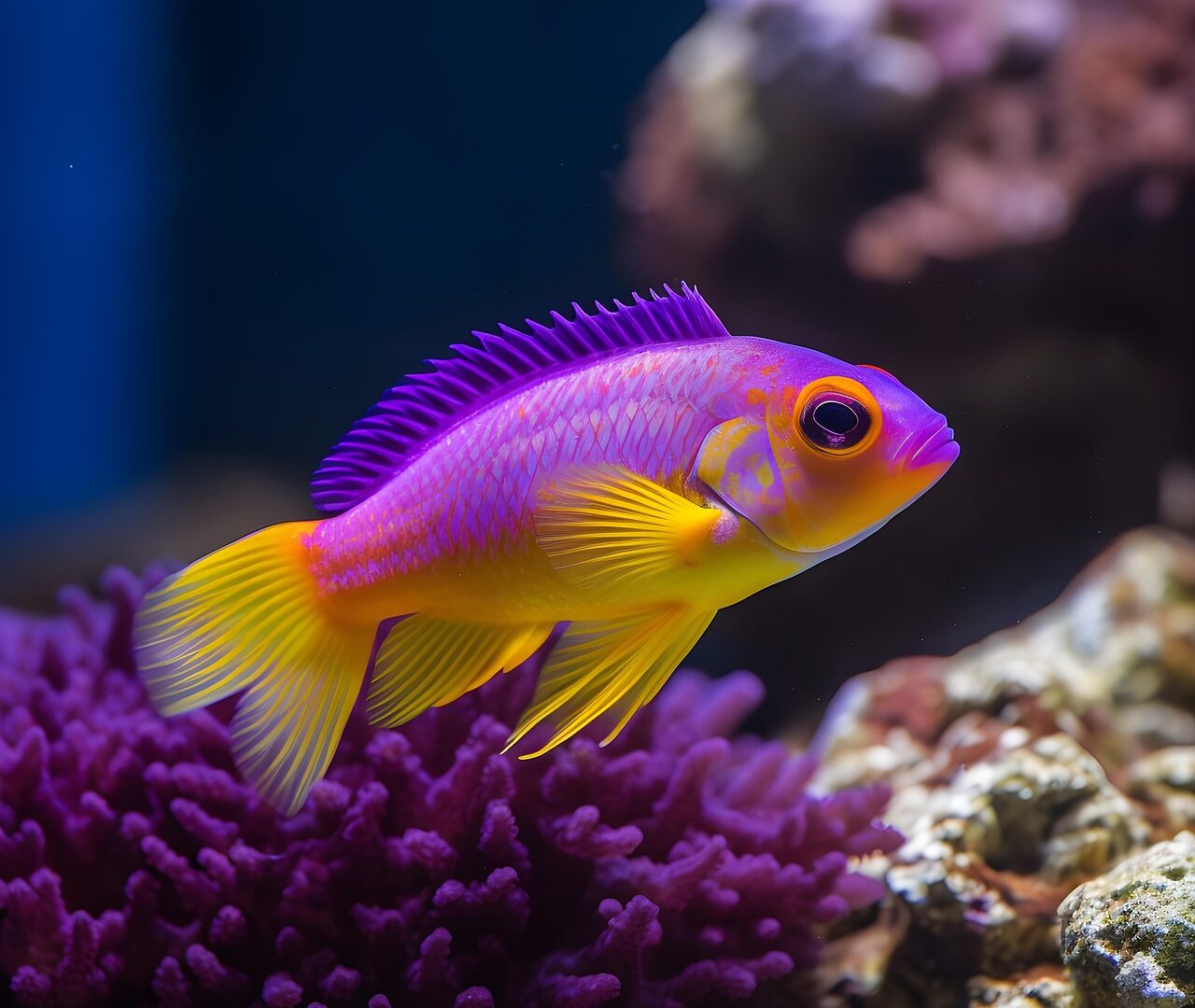
Killifish are among the most brilliantly coloured freshwater fish alive, yet they remain niche compared to tetras and bettas. A proper aquascape killifish tank guide accounts for their unique behaviours: surface dwelling, egg scattering and a preference for dim, plant-dense environments. Gensou Aquascaping in Singapore has designed killifish setups for dedicated hobbyists, and the layouts differ considerably from mainstream planted tanks.
Understanding Killifish Habits
Most popular killifish species, such as Aphyosemion, Nothobranchius and Fundulopanchax, spend the majority of their time in the upper third of the water column. They are ambush predators of small insects at the surface and egg scatterers that deposit among fine-leaved plants or peat substrate. Aquascape design should cater to these instincts, providing dense surface cover, fine-textured plants and subdued lighting.
Tank Size and Dimensions
Killifish are small, typically 4-7 cm, and do not need large tanks. A 30-45 litre nano tank works well for a pair or trio. Wider tanks with lower water levels suit their surface-oriented lifestyle better than tall, narrow designs. A 45 x 30 x 25 cm tank holding roughly 30 litres is a popular choice among killifish keepers in Singapore and fits comfortably on a desk or bookshelf in an HDB flat.
Floating Plants as the Centrepiece
Surface cover is non-negotiable. Floating plants like Salvinia minima, Amazon frogbit and red root floaters provide the shaded, secure environment killifish demand. Dense root systems hanging from the surface double as spawning sites for many species. Cover roughly 60-70% of the surface, leaving some open patches for feeding and gas exchange. The dangling roots also create a visually striking canopy effect when viewed from the front.
Submerged Plant Choices
Fine-leaved plants mimic the vegetation killifish breed in naturally. Java moss, Christmas moss and Taxiphyllum barbieri attached to small pieces of driftwood give egg-scattering species ideal deposition sites. Ceratopteris thalictroides, water sprite, can grow both rooted and floating, bridging the lower and upper zones beautifully. Cryptocoryne parva makes a subtle foreground that does not compete for attention with the fish above.
Breeding Mops as Decor
Yarn breeding mops are a killifish staple. While not “natural,” dark green or brown acrylic yarn mops blend surprisingly well among live plants. Attach floating mops to suction cups at the surface for top-spawning species, or weight bottom mops with a small stone for substrate spawners. Hobbyists who breed killifish commercially keep multiple mops in each tank and collect eggs weekly. Even if breeding is not your goal, mops add texture and give fish additional shelter.
Lighting, Substrate and Hardscape
Keep lighting dim. Killifish come from shaded forest streams and seasonal pools, not open sun. A low-output LED or a standard light partially blocked by floating plants achieves the right mood. Dark substrate, either fine black sand or dark aquasoil, makes killifish colours glow by contrast. For Nothobranchius breeders, a peat moss or coco fibre substrate layer allows natural egg burial. Hardscape should be minimal: a few small pieces of driftwood and perhaps a dried leaf or two for tannins.
Water and Maintenance in Singapore
Most killifish prefer soft, slightly acidic water at pH 6.0-7.0 and GH 2-8. Singapore tap water falls right in this range after dechlorination, making our local supply nearly perfect for these fish. Temperature should sit at 22-26°C, which is cooler than ambient room temperature here. A small clip-on fan blowing across the surface can drop tank temperature by 2-3°C through evaporative cooling. Weekly 20-30% water changes and gentle sponge filtration keep conditions stable without creating the strong currents killifish dislike.
Related Reading



