Minimalist Aquascaping With One Plant Species: Pure Simplicity
In a hobby obsessed with plant diversity and complex layouts, choosing just one species feels radical. Yet a minimalist one plant aquascape guide reveals that restraint often produces the most powerful visual impact. A single plant species, repeated across the entire tank, creates unity, rhythm and a sense of calm that multi-species jungles rarely achieve. At Gensou Aquascaping in Singapore, some of our most-photographed client installations use exactly this approach.
The Philosophy Behind One-Species Design
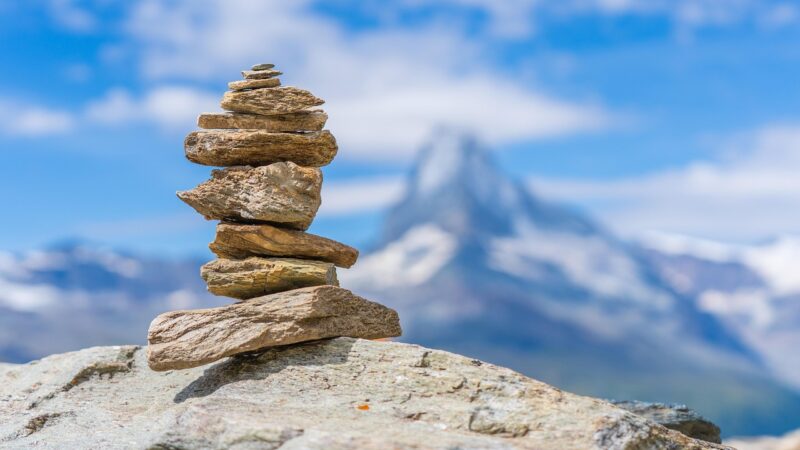
Minimalism in aquascaping borrows from Japanese and Scandinavian design principles: remove everything that does not serve a purpose. When you eliminate species variety, the eye focuses on form, texture and the interplay between plant and hardscape. There is no visual competition, no colour clashes and no mismatched growth rates to manage. The result is a tank that looks intentional from day one.
Choosing the Right Species
Not every plant works in isolation. The ideal candidate grows densely, has interesting leaf shape or colour and tolerates a range of conditions. Eleocharis acicularis, dwarf hairgrass, creates carpeted meadows. Hemianthus callitrichoides (HC Cuba) forms lush green mats over contoured substrate. Bucephalandra species offer dark, textured leaves on hardscape. Anubias nana petite provides slow-growing, low-maintenance coverage. Each creates a completely different mood despite the shared one-species rule.
Hardscape as the Co-Star
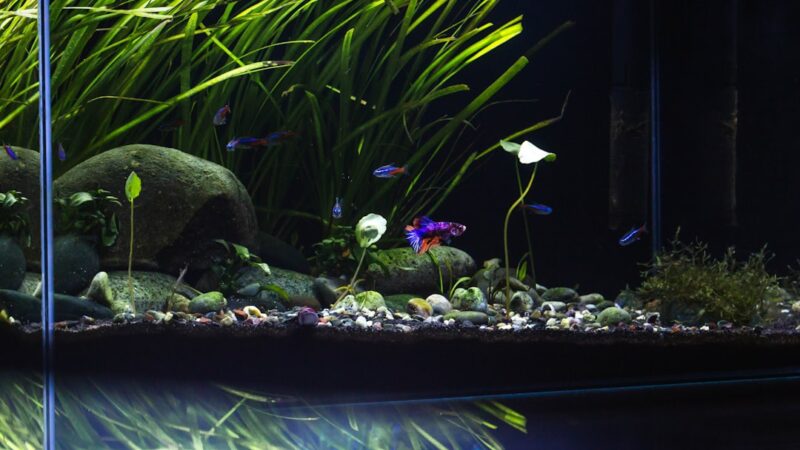
With only one plant, hardscape carries equal visual weight. Select stones or wood with strong character: interesting grain, dramatic angles or unusual colour. Dragon stone with its pitted surface pairs beautifully with a moss carpet. Spiderwood’s branching structure contrasts elegantly against a uniform Bucephalandra foreground. Spend extra time on stone placement, as any imbalance becomes obvious when the plant layer is uniform.
Layout Techniques
For carpeting species, plant in a grid pattern 2-3 cm apart and let runners fill the gaps over four to six weeks. Slope the substrate from 3 cm at the front to 8-10 cm at the rear for depth. For epiphytes like Anubias or Bucephalandra, glue them in clusters of varying density across the hardscape, leaving some stone or wood exposed for contrast. Odd numbers of clusters, three or five, create more natural arrangements than even groupings.
Lighting and CO2 Decisions
Match your tech level to the species chosen. HC Cuba demands high light at 80-120 PAR and pressurised CO2 to carpet properly. Anubias and java fern thrive under low light with no CO2 at all. This is one of the great advantages of single-species design: you optimise conditions for exactly one plant, eliminating the compromises that multi-species tanks force. In Singapore, where electricity costs add up, a low-tech one-plant tank can run on a basic LED and still look stunning.
Maintenance Simplified
Trimming is straightforward because every plant responds identically to the same cut. Carpet species get mowed uniformly with curved scissors. Stem plants get topped at the same height. Epiphytes need only occasional removal of old leaves. Dosing is simpler too, since you only need to meet one species’ nutritional demands. Weekly water changes of 20-30%, a consistent light schedule and a single fertiliser routine are all this tank requires.
Making Minimalism Interesting
The risk of a one-plant tank is monotony. Combat this by introducing elevation changes in the substrate, varying the density of planting across zones and using negative space deliberately. A carpet that thins out toward one corner, mimicking a natural clearing, adds visual tension. Hardscape positioned off-centre using the rule of thirds breaks symmetry. Fish selection matters too: a tight school of ember tetras or a trio of Otocinclus adds movement without cluttering the design. In the end, minimalism is not about having less; it is about making what you have count.
Related Reading