
How to Breed Neon Tetras: Soft Water, Dim Light and Patience
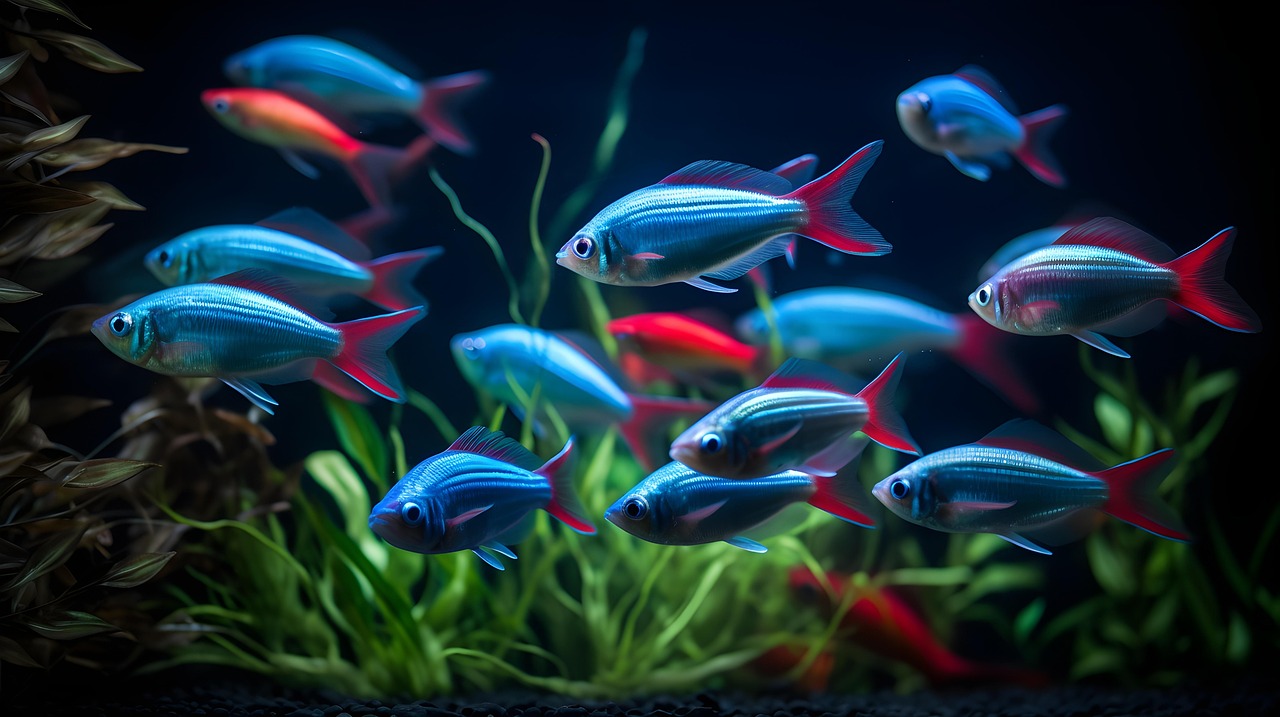
Breeding neon tetras at home is one of the hobby’s more satisfying challenges. Paracheirodon innesi may be the world’s most popular tropical fish, yet relatively few hobbyists attempt spawning them because the fry are tiny, light-sensitive and demanding about water chemistry. This breed neon tetra guide from Gensou Aquascaping at 5 Everton Park, Singapore, breaks the process into manageable steps so you can raise your own shimmering school from eggs.
Conditioning the Breeding Pair
Start with healthy adults aged between 8 and 12 months — old enough to be sexually mature but still in their reproductive prime. Separate males and females for two weeks and feed generously with live or frozen daphnia, baby brine shrimp and micro worms. Males are slimmer with a straighter blue stripe, while ripe females appear noticeably rounder when viewed from above. Conditioning improves egg quality and quantity; expect 60-120 eggs from a well-prepared female.
Setting Up the Breeding Tank
A bare-bottom 20-30 litre tank works perfectly. Cover the base with a mesh grid or layer of glass marbles to let eggs fall through and away from the parents, who will eat them given the chance. Add a clump of fine-leaved Java moss or a spawning mop as an egg-catching surface. Filtration should be a gentle air-driven sponge filter — nothing powerful enough to suck up eggs or fry. Crucially, keep the tank dark or very dimly lit. Neon tetra eggs and newly hatched fry are photosensitive; bright light destroys the eggs within hours.
Water Chemistry: The Key to Success
This is where most attempts succeed or fail. Neons breed in extremely soft, acidic water — aim for a pH of 5.5-6.0, GH below 2 and a temperature of 24-25 °C. Singapore’s tap water, while soft at GH 2-4, still needs further softening and acidifying. Mix tap water with RO or distilled water at roughly a 1:3 ratio, then lower pH using Indian almond leaf extract or peat filtration. Boil and cool peat moss, then drip the tannin-rich water into the breeding tank over several days. The amber tint also mimics the blackwater streams of the neon tetra’s native Amazonian habitat.
Spawning Triggers and Process
Introduce the conditioned pair to the breeding tank in the evening. Spawning typically occurs at first light the following morning, so a faint dawn simulation — a nightlight left on in an adjacent room — can help trigger activity. The male chases the female through the moss, and she scatters adhesive eggs among the fine leaves. Once you notice eggs or the pair has stopped activity, remove the adults immediately. A single spawning session usually lasts one to two hours.
Egg Incubation and Hatching
Fertile eggs are tiny, translucent spheres roughly 0.7 mm in diameter. They hatch in 22-26 hours at 24 °C. Add a few drops of methylene blue (one drop per 10 litres) to prevent fungal growth on unfertilised eggs. Keep the tank covered with dark cloth or cardboard to block ambient light — even indirect sunlight through a window can harm the developing embryos. Resist the temptation to check constantly; stable darkness is more important than observation at this stage.
Feeding and Raising Fry
Newly hatched fry survive on their yolk sac for about 48 hours. Once free-swimming, they need infusoria or commercially prepared liquid fry food for the first five to seven days — their mouths are too small for anything else. After a week, introduce freshly hatched baby brine shrimp (Artemia nauplii) and microworms. Growth is slow; neon fry take roughly 8-10 weeks to develop their characteristic blue and red stripe. Gradually increase light levels as the fry grow, and begin small daily water changes of 10% using matched chemistry water from week two onward.
Common Mistakes to Avoid
Rushing water chemistry is the most frequent error. Dropping pH abruptly stresses adults and can halt spawning entirely — make adjustments over days, not hours. Overfeeding fry clouds the water and spikes ammonia, which is lethal in such a small volume. Feed tiny amounts three to four times daily and siphon uneaten food carefully with airline tubing. Finally, do not mix fry from different spawns in one grow-out tank too early, as size differences lead to predation among siblings.
Is Home Breeding Worth It?
Commercially, neon tetras sell for $0.50-1.00 each in Singapore, so breeding them is not a money-making venture. The reward is the experience itself — watching eggs the size of a pinhead transform into iridescent fish over three months is genuinely fascinating. Once you master neons, you will have the water chemistry skills to tackle more challenging species. For supplies like sponge filters, spawning mops and RO water, the team at Gensou Aquascaping can point you in the right direction.
Related Reading



