
Black Neon Tetra Care Guide: Understated Elegance
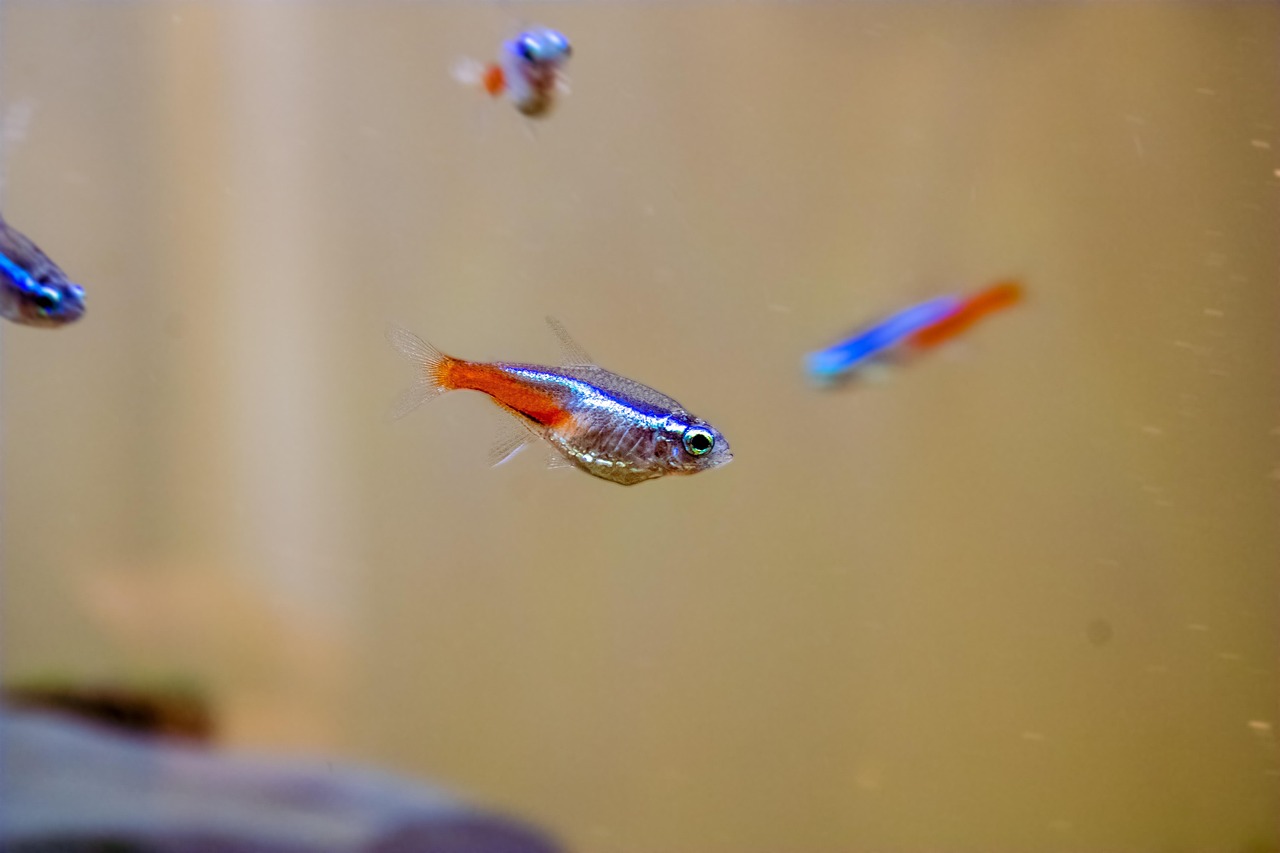
The black neon tetra (Hyphessobrycon herbertaxelrodi) is one of the hobby’s most elegant yet underrated community fish. With a striking black and white-gold horizontal stripe running the length of its body, this small South American tetra offers understated beauty that complements planted aquariums beautifully. Despite the name, the black neon tetra is not closely related to the common neon tetra and is, in many ways, the superior choice for Singapore aquarists. This guide sits inside our broader Tropical Fish Species Master Index reference.
About Black Neon Tetras
Native to the Paraguay River basin in Brazil, the black neon tetra was first described in 1961, named after the renowned aquarist and author Herbert Axelrod. It belongs to the family Characidae but sits in a different genus from the neon tetra (Paracheirodon innesi). The shared “neon” name is a marketing convenience rather than a taxonomic relationship.
What makes black neon tetras particularly appealing for Singapore fishkeepers is their hardiness. They are more tolerant of warmer water, wider pH ranges and varying water conditions than true neon tetras, which often struggle in Singapore’s consistently warm temperatures. If you have tried neon tetras and found them prone to disease, the black neon tetra may be the answer.
Appearance
Black neon tetras grow to approximately 4 cm in length. Their colouration is subtle but striking:
- A bright white or yellowish-gold iridescent stripe runs horizontally from the eye to the caudal peduncle
- Directly below this, a bold black stripe of equal width runs parallel
- The upper body is an olive-green to brownish tone
- The eye features a distinctive red-orange upper half
- Fins are mostly transparent
The contrast between the bright upper stripe and the deep black lower stripe is what gives this fish its visual punch. Males and females look similar, though females tend to be slightly larger and plumper when carrying eggs.
The colouration deepens and becomes more vivid with maturity and good conditions. Fish kept in dark-substrate tanks with ample plant cover display noticeably richer colours than those in bare setups.
Tank Requirements
Black neon tetras are small schooling fish that do not require large tanks, but they do need company:
| Requirement | Recommendation |
|---|---|
| Minimum tank size | 60 litres |
| School size | 8-10 minimum (12+ ideal) |
| Tank shape | Longer tanks preferred over tall |
| Filtration | Gentle to moderate flow |
| Lighting | Moderate (subdued lighting enhances colour contrast) |
| Substrate | Dark sand or soil (strongly recommended) |
As schooling fish, black neon tetras should always be kept in groups. A solitary black neon or a group of three will be stressed and will not display natural behaviour. In groups of ten or more, they form a cohesive, moving shoal that is mesmerising to watch.
Decorate the tank with driftwood, smooth stones and live plants. Floating plants that diffuse overhead light help bring out the fish’s best colours and make them feel more secure. Leave open areas in the middle and front for swimming.
Water Parameters for Singapore
This is where the black neon tetra truly shines as a Singapore-friendly species:
| Parameter | Ideal Range | SG Tap Water |
|---|---|---|
| Temperature | 22-28 C | 28-32 C (ambient) |
| pH | 5.5-7.5 | 6.5-7.5 |
| GH | 2-15 dGH | 1-4 dGH |
| KH | 1-8 dKH | 1-3 dKH |
Black neon tetras tolerate warmer water significantly better than regular neon tetras. While 28 C is at the upper end of their ideal range, they handle it without the chronic health issues that plague neon tetras at the same temperature. In Singapore’s ambient conditions of 28-30 C, black neon tetras remain healthy, active and colourful.
They are also far more tolerant of pH and hardness variation. Singapore’s soft, slightly acidic tap water suits them well, and they adapt to a range of conditions without complaint. Treat tap water with a chloramine-neutralising conditioner before use, as PUB uses chloramine in water treatment.
Maintain clean water through weekly 20-25% water changes. Black neon tetras are hardy but still appreciate good water quality.
Feeding
Black neon tetras are undemanding eaters that accept virtually any appropriately sized food:
- Staple: high-quality micro pellets or crushed flake food
- Frozen foods: baby brine shrimp, daphnia, cyclops and micro bloodworms
- Live foods: baby brine shrimp, daphnia, micro worms (excellent for conditioning)
- Supplementary: spirulina-based foods for plant matter
Feed two to three times daily in small amounts. Their mouths are small, so ensure food is appropriately sized. Crushed flake works well for this reason. Vary the diet regularly to maintain health and colour.
Tank Mates
Black neon tetras are peaceful and make excellent community fish. Their calm temperament means they coexist happily with a wide range of species:
- Other small tetras (cardinal tetras, rummy-nose tetras, ember tetras)
- Rasboras (harlequin, lambchop, chili)
- Corydoras catfish (a classic combination)
- Small peaceful gouramis (honey gourami, sparkling gourami)
- Dwarf cichlids (Apistogramma, rams)
- Otocinclus catfish
- Cherry shrimp and Amano shrimp
Avoid large or aggressive fish that may view black neons as prey. Also avoid very boisterous species that may outcompete them for food or stress them with hyperactive behaviour.
Black neon tetras are excellent companions for shrimp. They are small-mouthed and non-predatory enough that even adult cherry shrimp are generally safe, though tiny shrimplets may occasionally be eaten.
Breeding
Breeding black neon tetras is achievable for the dedicated hobbyist. They are egg scatterers and do not provide parental care.
To breed black neon tetras:
- Set up a separate breeding tank (30-40 litres) with fine-leaved plants or spawning mops
- Use soft, acidic water (pH 5.5-6.5, GH below 4 dGH)
- Dim the lighting or cover the tank sides
- Condition a pair with live and frozen foods for two weeks
- Introduce the pair in the evening; spawning typically occurs at dawn
- Remove the adults immediately after spawning, as they will eat the eggs
Eggs hatch in 22-26 hours. Fry are tiny and require infusoria or commercially prepared liquid fry food for the first week, followed by newly hatched brine shrimp. Keep the fry tank dark initially, as the eggs and young fry are sensitive to light.
Black Neons in Planted Tanks
Black neon tetras are a planted tank aquascaper’s dream fish. Their dark colouring creates a stunning contrast against lush green plant growth, and they never damage plants. This is a species that makes an aquascape look better simply by being present.
Particularly effective combinations include:
- Carpeting plants: a school of black neons swimming above a bright green carpet of Hemianthus callitrichoides or Eleocharis is a classic aquascaping image
- Stem plant backgrounds: the dark bodies stand out beautifully against red and green stem plants
- Moss-covered hardscape: black neons weaving through moss-draped driftwood creates a natural, jungle-like scene
- Blackwater setups: in tannin-stained water with botanicals, their iridescent stripe glows vividly
For aquascaping competitions and display tanks, black neon tetras are a reliable choice precisely because their understated colouration complements rather than competes with the aquascape itself.
Frequently Asked Questions
Are black neon tetras better than neon tetras for Singapore?
In most cases, yes. Black neon tetras tolerate Singapore’s warm ambient temperatures significantly better than regular neon tetras, which often suffer from chronic health issues and shortened lifespans at 28-30 C. Black neons are hardier, more disease-resistant and adapt to a wider range of water conditions. They are the more sensible choice for unchilled Singapore aquariums.
How many black neon tetras should I keep?
A minimum of eight, but ten to twelve or more is ideal. Like all schooling fish, black neon tetras display natural behaviour, better colour and reduced stress in larger groups. A group of three or four will appear nervous and pale. In a suitably sized tank, a large school is always more visually impressive than a small one.
Do black neon tetras nip fins?
No. Black neon tetras are among the most peaceful community fish available. They do not nip fins and pose no threat to long-finned species like bettas (provided the betta is not aggressive toward them) or slow-moving fish. Their gentle nature makes them suitable for virtually any peaceful community setup.
Can I keep black neon tetras with cherry shrimp?
Yes. Black neon tetras are excellent shrimp-safe fish for the most part. Adults are small-mouthed and non-predatory enough that mature cherry shrimp are generally left alone. Very tiny newly born shrimplets may occasionally be eaten, but in a well-planted tank with adequate moss and hiding spots, cherry shrimp populations thrive alongside black neon tetras.
Add Understated Elegance to Your Aquascape
Black neon tetras are proof that beauty does not need to be loud. Their refined colouration and peaceful nature make them ideal for planted tanks and community setups alike. If you are looking to create a stunning planted aquarium featuring these elegant tetras, contact us at Gensou or visit our studio at 5 Everton Park. We offer custom aquarium design and professional maintenance to keep your setup looking its absolute best.
Related Reading
- Long-Fin Black Neon Tetra Care Guide: Flowing Dark Elegance
- Black Phantom Tetra Care Guide: Dark Elegance in Schools
- Black Skirt Tetra Care Guide: Bold Shape and Easy Keeping
- Cardinal Tetra vs Neon Tetra: Which Red Stripe Schooler to Choose
- Celestial Pearl Danio vs Neon Tetra: Which Is Right for You?



