How to Aquascape for Clown Killifish: Surface Nano Design
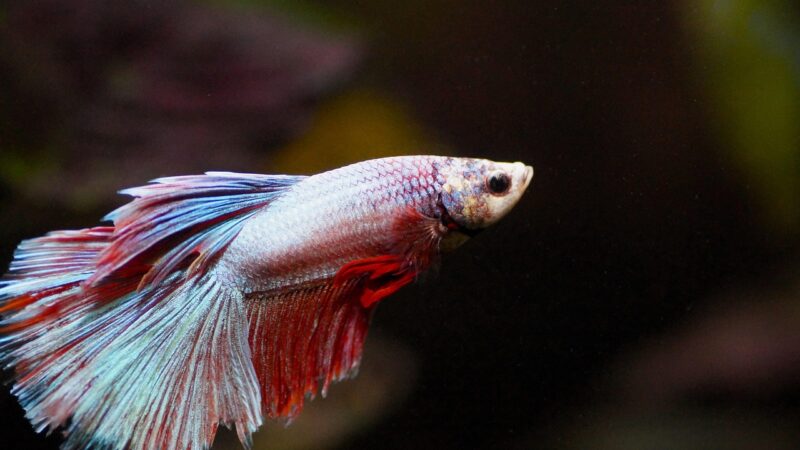
The clown killifish — Pseudepiplatys annulatus — is one of the most visually striking nano fish available to Singapore aquarists: boldly striped in cream and black with a vivid orange-tipped tail, rarely exceeding 3.5 cm. These West African surface dwellers have very specific habitat preferences that, when translated into an aquascape, produce one of the most charming small tank designs possible. This guide from Gensou Aquascaping at 5 Everton Park, Singapore covers the essentials of how to aquascape a nano tank for clown killifish, matching the design to the fish’s biology.
Understanding Clown Killifish Habitat
P. annulatus originates from slow-moving, heavily vegetated rainforest streams and pools in Guinea, Sierra Leone, and Liberia. The water there is extremely soft (GH 0–2), acidic (pH 5.5–6.8), darkly tannin-stained, and very shallow — often just 15–30 cm deep. Floating plants cover most of the surface, leaving patches of open water between dense mats. These fish are strictly surface dwellers: they feed at the surface, spawn under floating leaves, and rarely venture to the lower third of even a shallow tank. Every design decision for the clown killifish aquascape should serve this surface-oriented lifestyle.
Tank Size and Shape
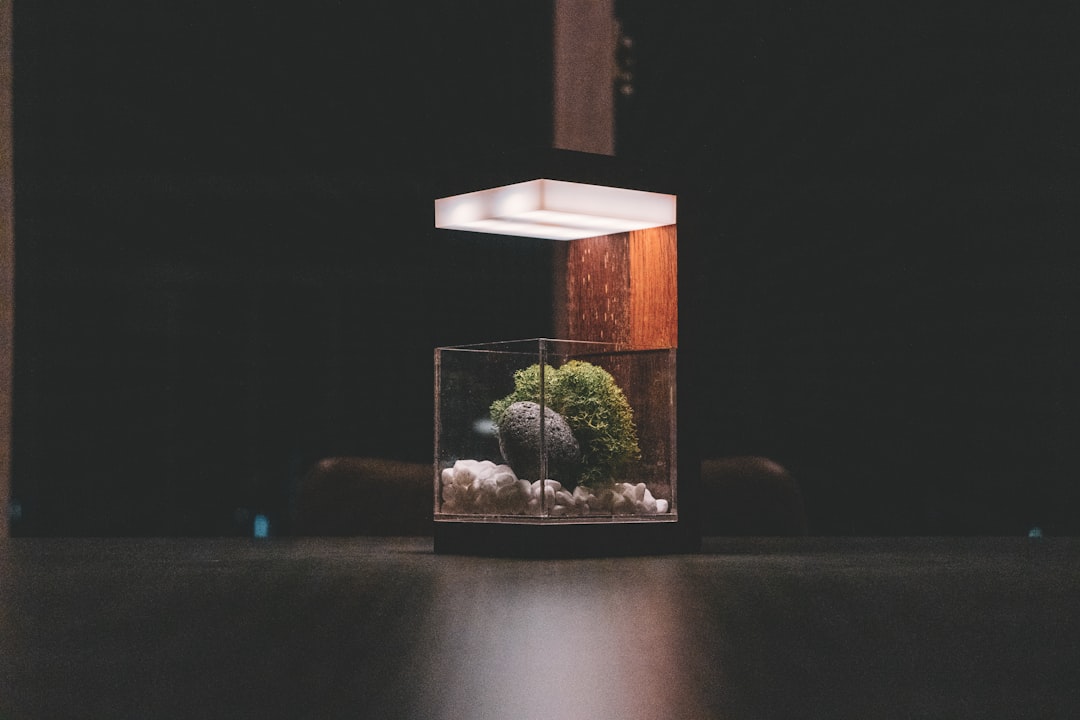
Clown killifish do best in small, shallow tanks where they can be observed easily at close range and where surface territory is meaningful relative to the tank’s total volume. A 30–45 cm nano tank in the 15–30 litre range is ideal. Standard cube tanks (30 × 30 × 30 cm) work well; shallower tanks at 20 cm height are even more appropriate to the species. Avoid tall tanks — a 40 cm deep tank is functionally wasted for a fish that uses only the top 10 cm. A lid is essential: clown killifish are notorious jumpers. A secure glass or acrylic cover with no gaps wider than 5 mm is non-negotiable.
Floating Plants: The Key Design Element
Floating plants are not optional decoration for this aquascape — they are the primary habitat element. Salvinia natans or Salvinia minima are perfect: small enough to look proportionate in a nano tank, textured enough to create visual interest, and growing at a rate manageable in a low-light setup. Riccia fluitans left to float in mats mimics the dense aquatic moss aggregations common in West African forest streams. Leave 30–40% of the surface open for the fish to access air and feed.
Clown killifish spawn under floating leaves — the male will court the female beneath a floating plant fragment. Floating plants are therefore directly related to breeding success.
Submerged Planting: Texture and Scale
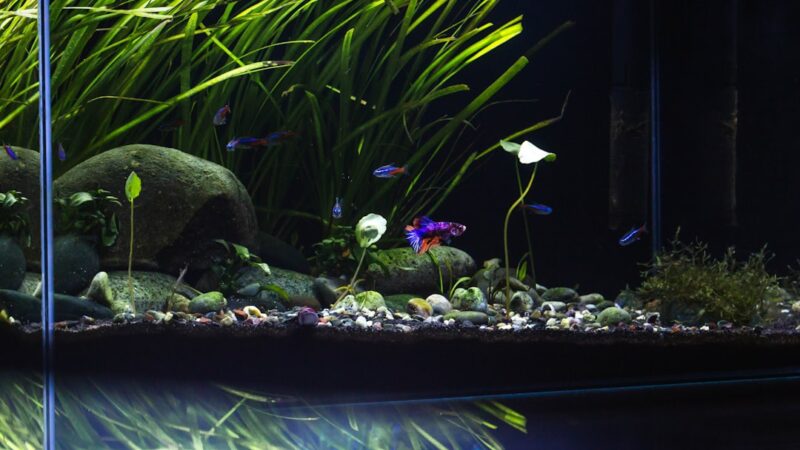
Any submerged planting should use micro-scale species that do not visually overpower small fish. Taxiphyllum barbieri (java moss) on small driftwood twigs is an excellent choice — it provides spawning substrate and looks naturalistic without scale distortion. Small Anubias varieties (Anubias petite, ‘Pinto’) on thumbnail-sized pebbles add foreground interest. Avoid large-leaved plants that make the fish look smaller than they are. The entire submerged portion of the layout should feel like a miniature forest floor viewed at magnification.
Water Chemistry and Tannins
Clown killifish prefer soft, acidic water — conditions achievable in Singapore by using 100% RO water or by mixing RO with a small proportion of PUB tap water (the PUB supply is already soft at GH 2–4). Target GH 1–3, pH 5.5–6.5. Tannin staining from Indian almond leaves (1 leaf per 20 litres) or a small bag of dried catappa bark in the filter creates the amber-tinted water these fish associate with home. The tannin-stained, dark-bottomed aesthetic also makes the fish’s colours more vivid — their cream-and-black striping and orange tails pop against a dark background and amber water in a way they simply do not in clear, bright water.
Flow: Keep It Minimal
Clown killifish evolved in still to barely moving water. A nano sponge filter — or a small internal filter with the outlet directed at the side wall to break up flow — is all that is needed. The flow at the surface should be imperceptible; even gentle ripple will drive these fish away from their preferred hanging position directly below floating plant cover. A small air stone connected to a quiet nano air pump provides oxygenation without surface disruption. Keep the filter completely hidden behind plants or inside a cave formed from driftwood to maintain the clean, natural look of the aquascape.
Lighting and Observation
Low light — 15–25 PAR at water surface — suits this setup. Intense lighting encourages floating plant overgrowth and can stress fish that have evolved in dappled rainforest light. A 5–6 watt nano LED lamp on a 8-hour photoperiod is sufficient to keep floating plants healthy and fish comfortable. Observe the tank from the side at fish level, not from above — clown killifish viewed from the side with their vivid tails outstretched against tannin-tinted water is one of the most beautiful sights in nano fishkeeping. At Gensou Aquascaping, we consider this tank style one of our strongest recommendations for hobbyists who want breeding success, stunning aesthetics, and a genuinely manageable maintenance workload all in a single small-footprint setup.
Related Reading
- How to Aquascape for Celestial Pearl Danios: Galaxy Rasbora Nano
- How to Aquascape for Exclamation Point Rasboras: Dense Nano Jungle
- How to Aquascape for Forktail Rainbowfish: Pseudomugil Nano Display
- How to Aquascape for Killifish: Surface Cover and Breeding Mops
- How to Aquascape for Licorice Gouramis: Ultra Soft Blackwater Nano

emilynakatani
Still Have Questions About Your Tank?
Drop by Gensou Aquascaping — most walk-in questions get answered in under 10 minutes by someone who has set up hundreds of tanks.
5 Everton Park #01-34B, Singapore 080005 · Open daily 11am – 8pm