
Exclamation Point Rasbora Care Guide: Brigittae Nano Gem
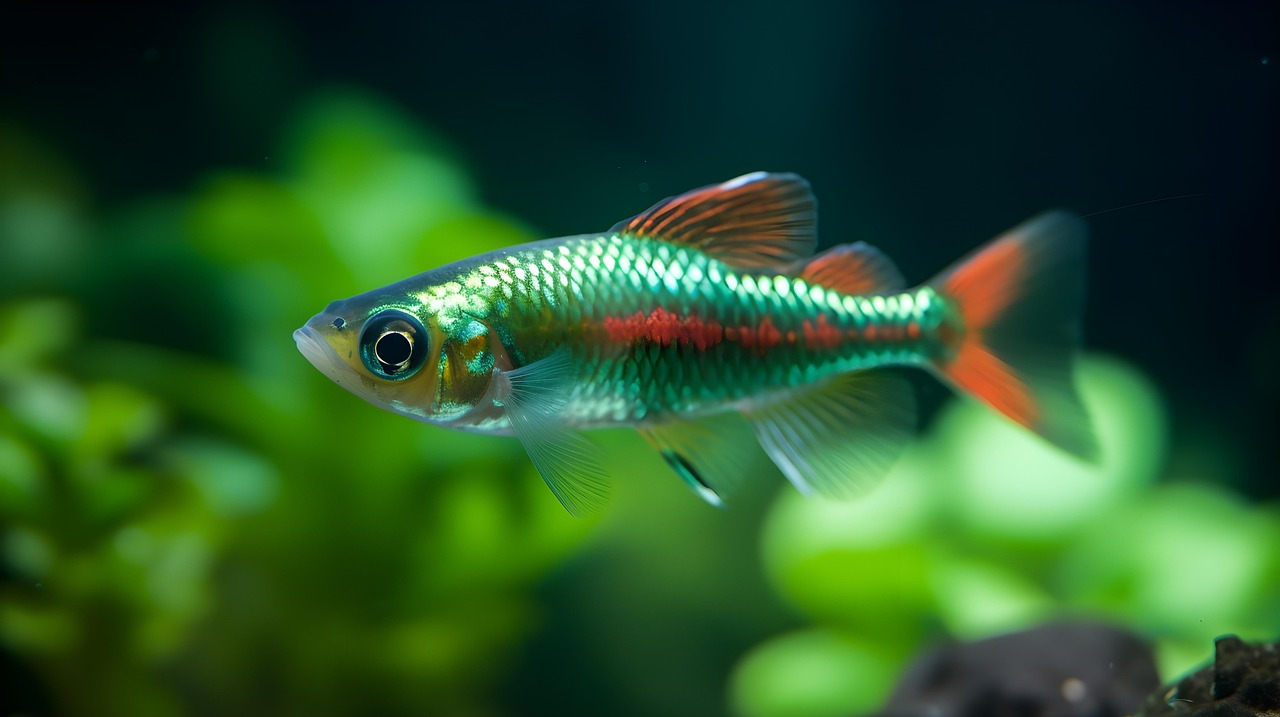
At barely 2 cm long, Boraras brigittae — commonly known as the Exclamation Point Rasbora or Chilli Rasbora — packs more colour per centimetre than almost any other freshwater fish available to Singapore hobbyists. The vivid scarlet body, punctuated by a bold black lateral spot pattern that gives the species its common name, makes a shoal of twenty an extraordinary spectacle in a nano planted tank. This exclamation point rasbora care guide from Gensou Aquascaping at 5 Everton Park, Singapore covers everything you need to keep them healthy and displaying their best colour. This guide sits inside our broader Tropical Fish Species Master Index reference.
Tank Size and Setup
Despite being nano fish, Exclamation Point Rasboras do best in tanks of at least 30 litres — the footprint matters more than height, as they prefer midwater to upper levels. A 45 × 30 cm footprint allows a proper shoal of 15–20 fish, which is the minimum to see schooling behaviour and bold colour in all individuals. Dense planting is essential: Rotala stems, java moss, and floating Salvinia replicate the shaded peat swamp edges they come from. Dark substrate (black sand or aqua soil) makes their red colouration appear twice as intense.
Water Parameters
This species originates from Borneo’s blackwater streams — naturally very soft and acidic. Aim for pH 5.5–7.0, GH below 6, and temperature 24–28°C. Singapore’s PUB tap water (GH 2–4) is a reasonable base; add Indian almond leaves or alder cones to lower pH and release tannins. The water will tint a tea colour — embrace it, as it mimics the natural environment and seems to reduce stress and improve colouration noticeably. Avoid hard, alkaline water; colours will fade and the fish become lethargic.
Feeding
Their tiny mouth means standard community food is often too large. Use micro-pellets (0.2–0.5 mm), powdered or crushed flake, and crucially, live or frozen microfoods: baby brine shrimp nauplii, vinegar eels, daphnia, and micro-worms all suit the mouth size perfectly. Feed twice daily in small amounts — whatever is consumed in 2–3 minutes. A diet heavy in live food dramatically improves colour saturation and triggers breeding behaviour. At Gensou, we have observed the red intensifying visibly within a week of switching to a live-food-heavy regimen.
Shoaling and Social Behaviour
Never keep fewer than ten together. Below that threshold, individuals are shy, hide constantly, and lose colour. In groups of 15 or more, males compete openly — displaying flared fins and intensified colouration in the midwater, creating the shimmering scarlet effect that makes this species famous. Females are slightly paler and rounder-bodied. Adding new individuals to an established shoal is straightforward; these fish are non-territorial and rarely aggressive.
Compatible Tank Mates
Their small size makes them vulnerable to any fish that can fit them in its mouth — which is most community fish. Safe companions include other Boraras species, Pygmy Corydoras (C. pygmaeus or C. hastatus), Otocinclus, and small Caridina or Neocaridina shrimp. Chocolate Gouramis are sometimes recommended as tank mates, but monitor carefully — particularly at feeding time. Avoid any fish above 4 cm that shows predatory interest.
Health and Disease
Exclamation Point Rasboras are prone to velvet (Oodinium) in tanks with fluctuating temperature or poor water quality. Watch for a golden dust-like sheen under raking light. They are also sensitive to copper-based medications — always check ingredient lists before treating any tank they inhabit. Quarantine all new fish in a separate tank for two to three weeks before introduction. Ich is less common than velvet but still possible; treat with heat (raise to 30°C gradually over 48 hours) rather than copper or malachite green.
Breeding in the Home Aquarium
Breeding occurs readily in well-maintained tanks. Eggs are scattered among fine-leaved plants or java moss and receive no parental care. In a species-only tank with dense planting, some fry will survive naturally. For deliberate breeding, set up a 10-litre tank with a mesh base, java moss, and water from the main tank. Feed adults heavily on live food, then move a conditioned pair in the evening. Remove adults after two days. Eggs hatch in 24–36 hours; fry require infusoria or paramecia initially. A successful spawn in Singapore adds meaningfully to the local supply of captive-bred stock, which is always in demand.
Related Reading
- How to Breed Exclamation Point Rasboras: Tiny Eggs, Big Patience
- Exclamation Point Rasbora Care Guide: Boraras Urophthalmoides
- How to Aquascape for Exclamation Point Rasboras: Dense Nano Jungle
- How to Breed Chili Rasboras: Micro Spawners in Soft Water
- Chili Rasbora vs Ember Tetra: Tiny Red Nano Fish Compared



