
Aquascaping With Floating and Epiphyte Plants Only: No Substrate Planting
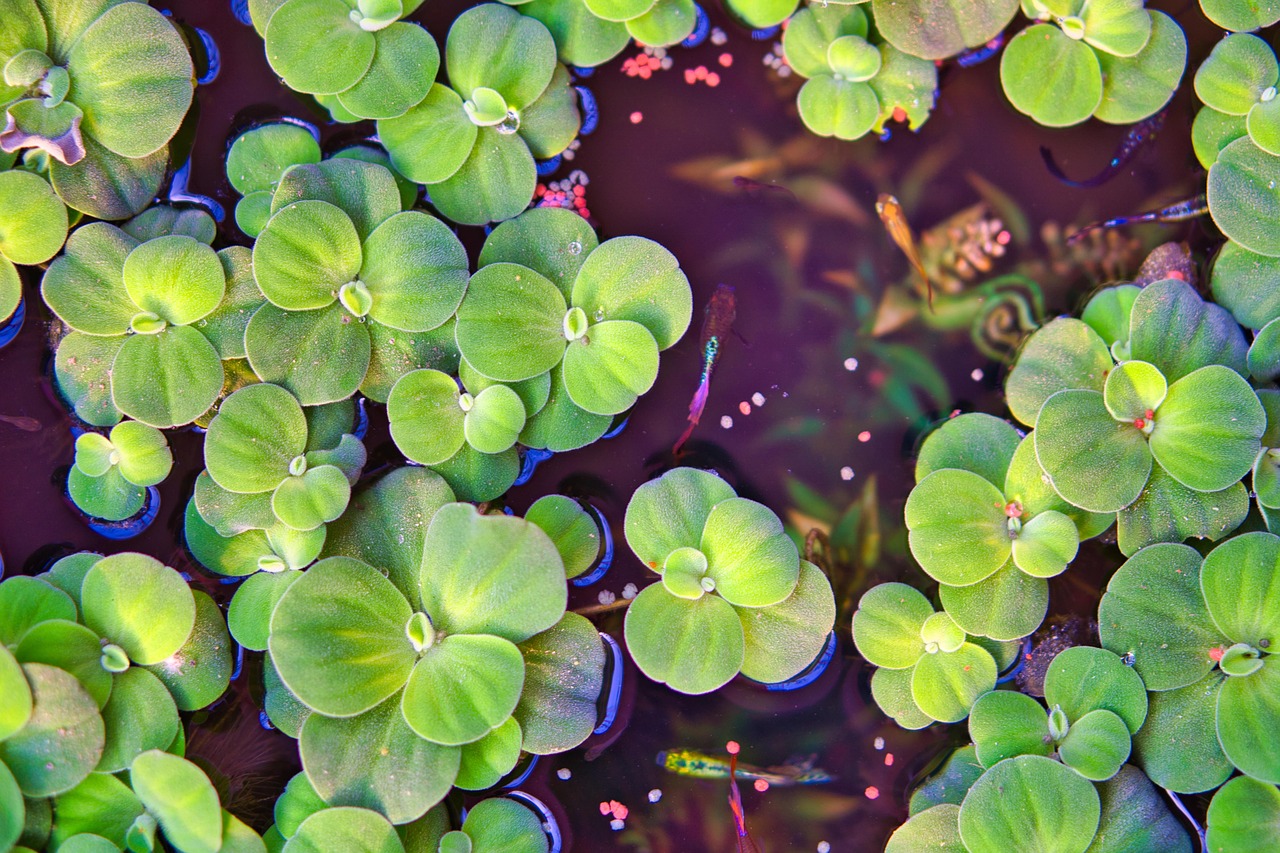
Not every aquascape needs plants rooted in the substrate. An aquascape using only floating and epiphyte plants frees you from nutrient-rich soils, root tabs, and the replanting headaches that come with substrate-dependent species. This approach is ideal for inert substrates like sand or bare-bottom setups, and it works beautifully in shrimp breeding tanks where substrate disturbance must be minimised. Gensou Aquascaping at 5 Everton Park, Singapore, regularly builds substrate-free planted tanks for clients who want greenery without complexity.
What Counts as Epiphyte and Floating
Epiphytes attach to surfaces like driftwood and rock via roots or rhizoids. They draw nutrients from the water column, not the substrate. Key genera include Anubias, Bucephalandra, Microsorum (Java fern), and Bolbitis. Mosses like Taxiphyllum barbieri and Vesicularia montagnei (Christmas moss) also qualify. Floating plants sit on or just below the surface and include Salvinia, Limnobium laevigatum, Phyllanthus fluitans, and Ceratopteris pteridoides (water sprite floater form).
Benefits of Skipping Substrate Planting
Without rooted plants, you can use any substrate purely for aesthetics or skip it entirely. Bare-bottom tanks are easiest to clean, which is why shrimp breeders and quarantine setups favour them. Inert sand stays looking clean far longer than aqua soil, which breaks down over 12-18 months. Epiphytes and floaters also simplify rescaping because nothing needs to be uprooted; you simply detach and reposition.
Hardscape as the Planting Surface
Driftwood and rock become your planting beds. Choose pieces with plenty of texture, crevices, and branches where epiphytes can be tucked or glued. Spiderwood, mopani, and Malaysian driftwood all work well. Attach Anubias and Bucephalandra rhizomes to wood or rock using cyanoacrylate gel. Wedge moss into crevices or tie it with cotton thread. Within weeks, the hardscape transforms into a lush green structure.
Vary the epiphyte species across different areas. Place darker Bucephalandra varieties at the base of the wood, lighter Anubias nana ‘Petite’ along branches, and a generous wrap of moss across the highest points. This layering creates depth without substrate plants.
Floating Plant Arrangement
Floaters occupy the top third of the aquascape. Use a corral or airline tubing ring to contain them to one section of the surface, leaving open water for light penetration and gas exchange. Mix species for texture: the round leaves of Limnobium contrast nicely with the scalloped edges of Salvinia cucullata. Trim floating plants weekly in Singapore’s warm conditions, as they double in coverage rapidly at 28-30 °C.
Lighting Considerations
Epiphytes are generally low to moderate light plants, which makes this style energy-efficient. A standard LED running at 20-40 PAR at mid-tank depth is sufficient for healthy growth without triggering algae on the slow-growing leaves. Floating plants at the surface self-regulate their light exposure. Run lights for 7-8 hours daily.
Be mindful that dense floating cover dims the water column significantly. If your epiphytes below start yellowing or growing spindly, thin the floaters to restore light levels.
Fertilisation Without Substrate
All nutrients must come from the water column. Dose a comprehensive liquid fertiliser two to three times per week. Epiphytes are not heavy feeders, so half the manufacturer’s recommended dose is usually adequate. Floating plants, however, are nutrient sponges and will consume nitrate and phosphate aggressively. Monitor levels and adjust dosing accordingly.
In shrimp tanks where you want minimal chemical input, the fish and shrimp bioload alone often provides enough nutrients for slow-growing epiphytes. Floating plants handle the excess.
CO2: Optional but Helpful
CO2 injection is not required for this style. Epiphytes grow slowly regardless of CO2 levels, and floaters access atmospheric CO2 directly through their aerial leaves. If you do inject CO2, the main beneficiaries are Bolbitis and Microsorum, which respond with noticeably faster frond production.
Maintaining the Balance
The biggest maintenance task is controlling floater growth. Left unchecked, Salvinia and duckweed will cover every square centimetre of surface within a fortnight. Harvest weekly, keeping roughly 30-40% of the surface planted and the rest clear. Prune dead or algae-covered epiphyte leaves with sharp scissors. An aquascape built entirely from floating and epiphyte plants rewards patience: growth is slow but the mature result has a wild, naturalistic beauty that substrate-planted tanks rarely achieve. Gensou Aquascaping in Singapore considers this one of the most underrated approaches in modern aquascaping.
Related Reading
- Aquascaping With Only Local Singapore Plants
- Aquascaping With Air Plants Above the Tank
- Aquascaping With Echinodorus Sword Plants Only: Bold Rosette Tank
- Aquascaping With Red Plants Only: Crimson Underwater Garden
- Aquascaping With Rocks Only: No Plants, Pure Hardscape
Floating and epiphyte plants both let you garden without burying roots in substrate, and you can take that approach further with our epiphyte aquascape guide.



