How to Aquascape for Coworking Lobbies in Singapore: First Impressions
The lobby is where first impressions form. In Singapore’s competitive coworking scene — from Tanjong Pagar shophouses to Raffles Place towers — a living aquascape tells visitors the space values creativity, calm, and attention to detail. This guide on how to aquascape coworking lobby Singapore spaces comes from Gensou Aquascaping, where we have designed commercial installations across the island for over 20 years from our studio at 5 Everton Park.
Why an Aquascape Works in a Coworking Lobby
Research consistently links aquarium viewing with reduced blood pressure and lower anxiety — exactly the mental state members want before sitting down to work. Unlike a painting or a sculpture, an aquascape changes constantly: fish move, plants grow, light shifts through the water. It gives waiting guests something genuinely absorbing to watch, reducing perceived wait times and signalling that this workspace cares about wellbeing.
Choosing Tank Size and Placement
Lobby tanks need visual impact from a distance. A 90–120 cm tank (roughly 150–250 litres) works for most coworking reception areas. Position it where visitors naturally pause — beside the check-in counter, opposite the lift lobby, or along a corridor between meeting rooms. Ensure the stand is level and rated for the filled weight (a 200-litre tank exceeds 250 kg).
In older shophouse conversions, check floor load capacity before installing anything above 150 litres on upper storeys. Modern commercial buildings generally handle the weight without issue, but confirmation from the building manager avoids surprises.
Layout Style: Clean and Contemporary
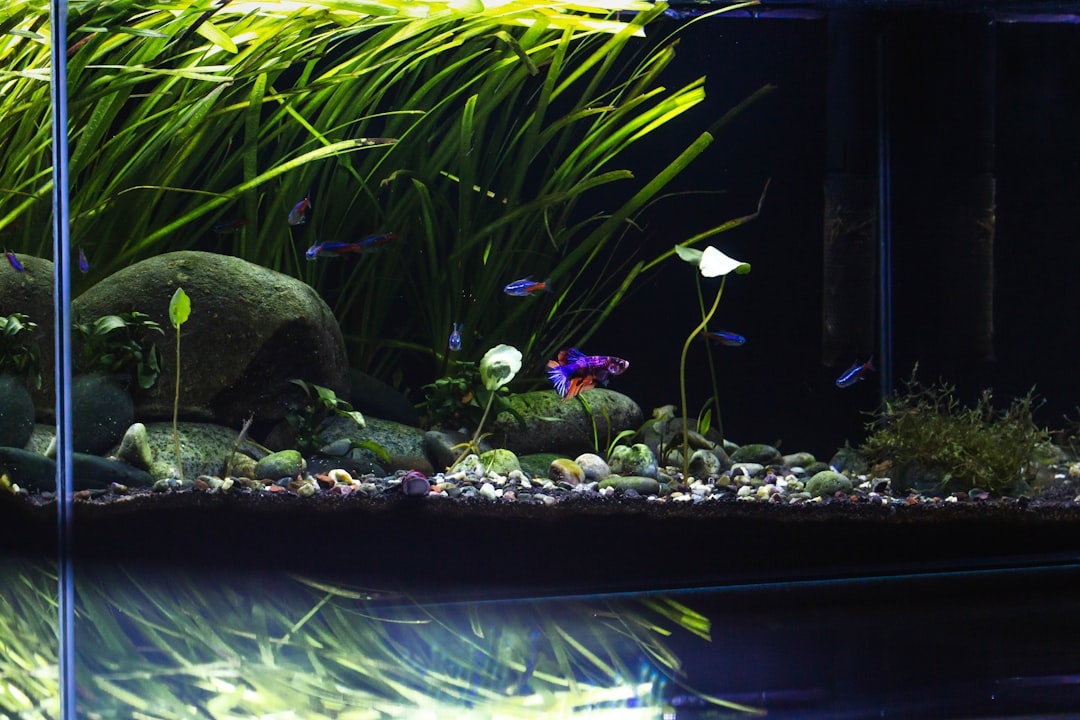
Coworking spaces tend toward modern, minimalist design. Match the aquascape accordingly. A nature-style layout with a single piece of driftwood, a few stone accents, and neatly trimmed plants reads as sophisticated rather than cluttered. Avoid heavily overgrown jungle scapes — they can look untidy in a professional setting if not pruned frequently.
Rimless, low-iron glass tanks without plastic trim align with contemporary interiors. A sleek metal or wood-veneer cabinet conceals equipment and blends with lobby furniture. Consider rear-mounted or inline filtration to keep visible hardware to a minimum.
Plant Selection for Low Maintenance
Commercial tanks need reliability above all. Choose plants that tolerate occasional missed maintenance and do not require CO2 injection:
- Anubias barteri: Slow-growing, resilient, and architecturally clean.
- Java fern (Microsorum pteropus): Hardy and visually interesting in several varieties.
- Bucephalandra: Compact, colourful, and virtually unkillable once established.
- Cryptocoryne wendtii: Fills midground space without demanding attention.
Avoid fast-growing stem plants that need weekly trimming — a commercial maintenance contract should cover fortnightly or monthly visits, not weekly ones.
Fish That Suit a Professional Environment
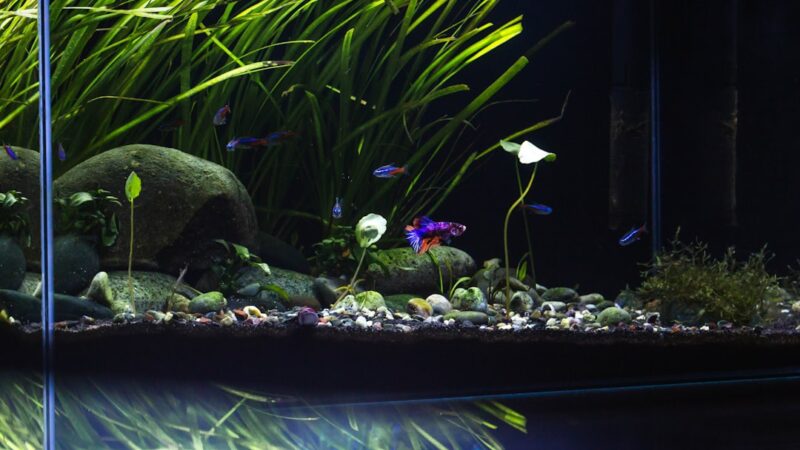
Schooling fish create the most visual impact in a lobby. A group of 20–30 cardinal tetras (Paracheirodon axelrodi) moving in unison against a green backdrop is mesmerising. Rummy-nose tetras offer similar schooling behaviour with a distinctive red-nosed appearance. Add a small cleanup crew — Otocinclus for glass algae, nerite snails for harder surfaces, and a few amano shrimp for general debris.
Avoid aggressive species, fish that outgrow the tank, or anything prone to jumping. Dead or fighting fish in a reception area create exactly the wrong impression.
Equipment for Reliability
Use canister filtration from established brands — Eheim, Oase, or Fluval — rated for 1.5 times your tank volume. Redundancy matters in a commercial setting; a backup air pump on battery keeps oxygen flowing during power outages. LED lighting on a timer ensures consistent photoperiods regardless of staff schedules.
An auto-top-off unit compensates for evaporation between maintenance visits. In Singapore’s air-conditioned offices, evaporation rates are surprisingly high — a 200-litre open-top tank can lose 3–5 litres daily.
Maintenance and Service Contracts
Most coworking operators do not want staff handling aquarium care. A professional maintenance contract — typically $150–$300 per month in Singapore depending on tank size — covers water changes, glass cleaning, filter servicing, and livestock health checks. Gensou Aquascaping offers exactly this service, ensuring the tank always looks its best without burdening your operations team.
A well-maintained aquascape for a coworking lobby in Singapore becomes more than decoration. It becomes a talking point, a stress reducer, and a quiet statement about the kind of space you are building. At Gensou Aquascaping, our commercial installations have anchored lobbies from Orchard Road to therapy offices in the heartlands — every one a living first impression.
Related Reading