
Flowerhorn Cichlid Care Guide: Head Growth, Diet and Tank Size
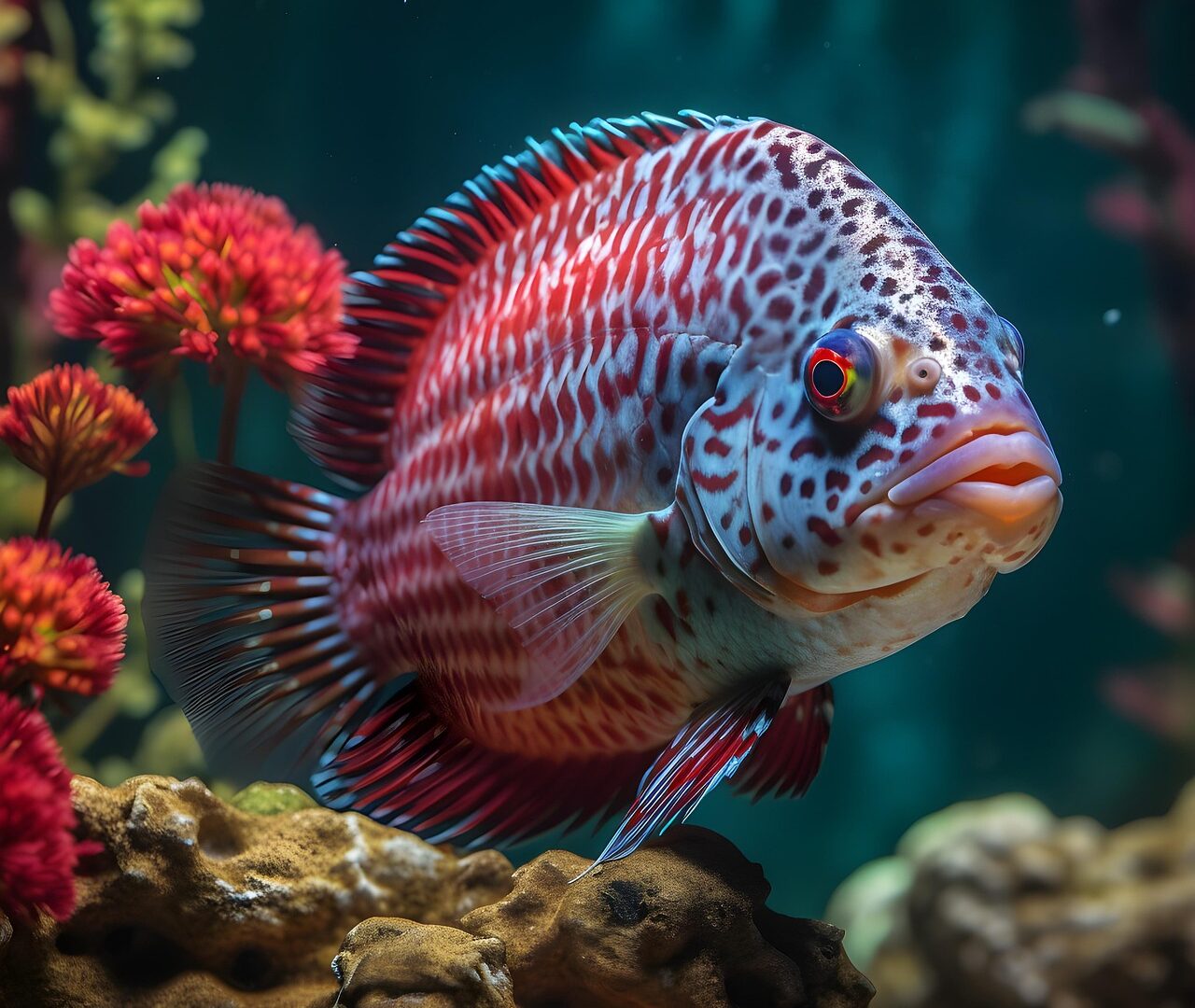
Few fish command a room quite like a flowerhorn — that massive nuchal hump, vivid colouration, and unmistakable personality make it a centrepiece unlike anything else in freshwater fishkeeping. This flowerhorn cichlid care guide from Gensou Aquascaping Singapore, drawing on over 20 years of hands-on experience at 5 Everton Park, covers everything from maximising head growth to managing aggression. Whether you are raising your first flowerhorn or refining your approach, the details here will help you get the most from this extraordinary hybrid.
Origins and Varieties
Flowerhorns are man-made hybrids, originally developed in Malaysia and Taiwan during the late 1990s by crossing Central and South American cichlids. They are not a natural species and have no scientific name. Major varieties include Zhen Zhu (pearl scale), Kamfa (shorter body, prominent head), Golden Monkey, and Thai Silk. Each line has distinct body proportions, colouration, and head growth potential.
In Singapore, flowerhorns remain hugely popular. Prices range from $20 for juveniles at local shops to several thousand dollars for competition-grade adults with exceptional kok (head) development and pearling.
Tank Size and Setup
A single adult flowerhorn requires a minimum of 250 litres — realistically a 120 cm tank. Larger is always better; a 150 cm tank gives the fish room to patrol without constant glass surfing. Bare-bottom setups are most common because flowerhorns rearrange substrate aggressively and bare glass simplifies cleaning.
Minimal decoration works best. A single piece of driftwood or a background image provides visual interest without creating objects that injure the fish during its rearranging episodes. Skip live plants entirely — flowerhorns destroy them within hours.
Maximising Head Growth
The nuchal hump, or kok, is largely genetic — no amount of feeding or water changes creates a massive head on a fish that lacks the genetic blueprint. That said, environmental factors influence how fully a fish expresses its potential. Consistent high-quality nutrition, clean water, and low stress are the three pillars.
Mirrors are sometimes used to stimulate flaring, which some keepers believe encourages head growth through increased blood flow. Evidence is anecdotal at best, and prolonged mirror exposure causes chronic stress. Limit sessions to 10–15 minutes if you experiment with this technique.
Diet for Optimal Colour and Growth
Feed a high-protein pellet as the staple — Okiko Platinum and Grand Sumo are popular choices in Singapore, available at aquarium shops and on Shopee for $10–$25 per tub. Supplement with frozen shrimp, market prawns (shell on for astaxanthin, which enhances red colouration), and earthworms once or twice weekly.
Avoid live feeder fish. The disease risk far outweighs any nutritional benefit. Feed two to three times daily for juveniles under 15 cm, reducing to once or twice daily for adults. Overfeeding leads to bloating and water quality problems — both of which stunt growth rather than promote it.
Water Parameters and Maintenance
Flowerhorns are hardy and tolerate a broad range of conditions: pH 6.5–8.0, GH 6–20 dGH, temperature 26–30 °C. Singapore’s warm climate and soft PUB tap water work fine, though many keepers add a mild remineraliser. The critical factor is consistency — sudden swings in pH or temperature cause stress that manifests as colour fading and appetite loss.
Weekly 30–40 % water changes are essential given the heavy bioload. A canister filter rated for at least twice the tank volume handles waste effectively. Many serious keepers in Singapore opt for sump filtration, which provides superior biological capacity and easier maintenance.
Aggression and Tank Mates
Flowerhorns are among the most aggressive freshwater fish kept in aquaria. Most are best housed alone. Some keepers successfully pair them with large, armoured tank mates — common plecos, large bichirs, or similarly sized cichlids — but success depends entirely on individual temperament. Always have a divider or backup tank ready.
Breeding pairs exhibit extreme aggression, and the male may attack the female if she is not ready to spawn. Divider breeding — where a transparent partition separates male and female until she shows spawning readiness — is the safest approach.
Common Health Issues
Hole-in-the-head disease (HITH) is the most significant concern for flowerhorns. It presents as pitting erosion around the head and lateral line, often linked to poor water quality, vitamin deficiency, or the overuse of activated carbon in filtration. Improving diet with vitamin-enriched foods and maintaining pristine water usually halts progression.
White spot (ich) and bacterial infections are manageable with early intervention. Raising temperature to 30 °C and adding aquarium salt at 3 g per litre treats mild ich effectively. At Gensou Aquascaping, we always recommend quarantining new fish for a minimum of two weeks before introducing them to any established setup.
Related Reading



