How to Aquascape a Cube Tank: Symmetry, Balance and Central Focal Points
Cube tanks challenge aquascapers to think differently. Equal length, width and height create a viewing window where every centimetre is visible from the front, and there is no wide panorama to hide behind. Mastering how to aquascape a cube tank demands an understanding of symmetry, vertical composition and the careful use of a central focal point. At Gensou Aquascaping, 5 Everton Park, Singapore, we have designed countless cube layouts over 20 years, and the principles in this guide will help you turn a simple square tank into a three-dimensional living sculpture. This guide sits inside our broader Aquascaping Styles Design Hub reference.
Understanding Cube Proportions
Popular cube sizes include 25 x 25 x 25 cm for desktop nanos, 30 x 30 x 30 cm for shrimp tanks and 45 x 45 x 45 cm for planted displays. The equal dimensions mean the eye does not naturally travel in any particular direction, which can make layouts feel static if not designed carefully. Unlike long tanks where horizontal flow dominates, cubes reward vertical layering and central compositions. Depth, from front glass to back glass, is identical to width, giving you genuine three-dimensionality to exploit.
Central Focal Point Layouts
The most natural composition for a cube places the main feature dead centre or just off-centre using the golden ratio. A single dramatic stone, a gnarled piece of driftwood or a prominent Anubias specimen anchors the layout. Supporting elements radiate outward and downward from this central point. Think of a tree on a hilltop: the tree is the focal point, and the hill slopes away in all directions. This approach works because the square frame naturally draws attention to the centre, and fighting that tendency usually produces awkward results.
Working With Symmetry
Perfect bilateral symmetry, where the left half mirrors the right, is rarely found in nature and can look artificial in aquascaping. Approximate symmetry is more effective. Place similar-sized stones on either side of centre, but vary their angles and heights slightly. Plant the same species on both flanks but let one side grow slightly taller or denser. This near-symmetry feels balanced and intentional without appearing rigid. For cube tanks displayed in the centre of a room, visible from multiple sides, near-symmetry ensures the layout reads well from any angle.
Hardscape Selection
Rounded stones like river rocks or dragon stone create softer, more organic central features. Angular stones like Seiryu or Ryuoh produce sharper, more dramatic focal points. For driftwood-based cubes, spider wood or small pieces of redmoor root with multiple branches fill the cubic volume effectively. Scale matters enormously in small cubes; a stone that looks modest outside the tank may dominate once placed in a 25 cm cube. Dry-fit your hardscape on a table before committing. Keep the total hardscape weight reasonable, particularly in nano cubes sitting on desks or shelves where load capacity is limited.
Substrate Design
Build a mound of substrate in the centre or rear-centre, sloping down toward all edges. This dome shape adds vertical interest and lifts the focal point above the substrate plane. A substrate depth of 3 cm at the edges rising to 8 to 10 cm at the peak works in a 30 cm cube. Use lava rock or substrate support structures beneath the mound to prevent collapse. Contrasting cosmetic sand around the base of the mound creates a natural shoreline effect and adds visual separation between planted and open zones.
Plant Selection for Cubes
Vertical space is your ally in cube tanks. Tall stem plants like Rotala species and Ludwigia palustris grow upward to fill the upper water column. Mosses like Taxiphyllum barbieri (java moss) and Vesicularia montagnei (Christmas moss) draped over hardscape soften edges and add texture at mid-height. Foreground carpets of Micranthemum Monte Carlo or Marsilea hirsuta provide a clean base layer. Epiphytes like Bucephalandra attached to stones add colour variety without requiring substrate planting. Avoid plants that grow exclusively horizontally, as they waste the cube’s vertical potential.
Lighting a Cube Tank
The equal depth and height of a cube mean light must penetrate further than in a shallow tank. A compact LED light with a focused beam angle of 60 to 90 degrees placed centrally above the tank illuminates the layout evenly. Popular options for 30 cm cubes include the Twinstar S series and the ONF Flat Nano, both available in Singapore for $60 to $120. Mount the light directly above the focal point to create a natural highlight effect, with subtle shadows at the edges that add depth. Avoid overly wide-angle lights that wash out the sense of contrast.
Stocking and Maintenance
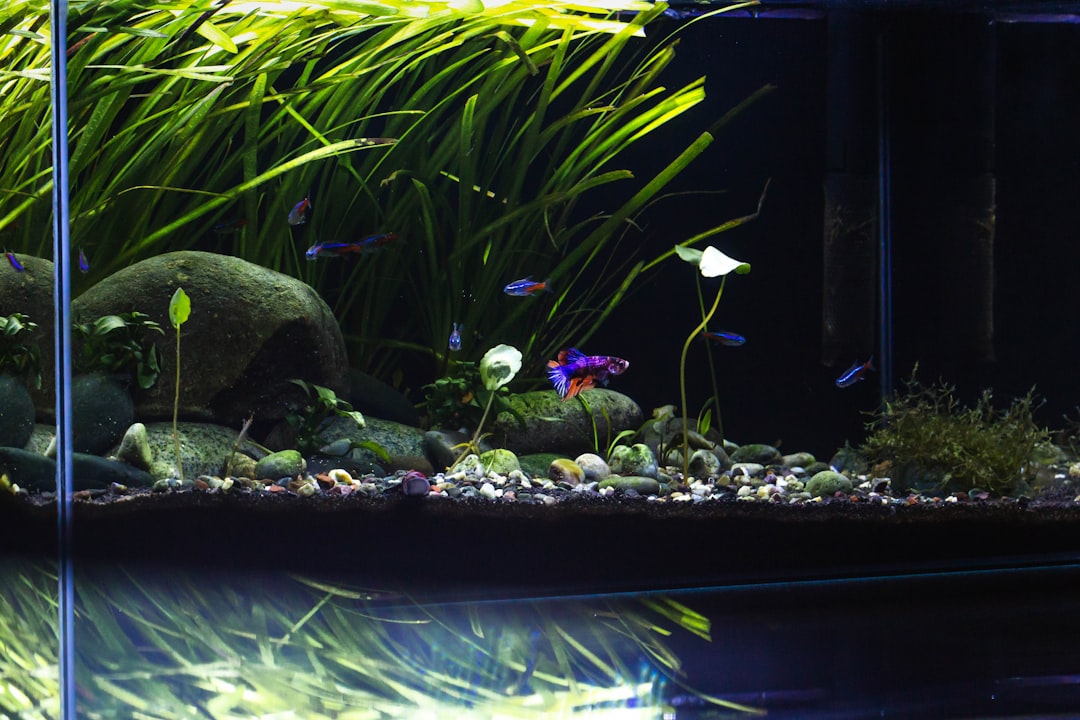
Cube tanks hold less volume than their footprint suggests. A 30 cm cube holds about 27 litres, which limits stocking to a small school of nano fish or a shrimp colony. Chili rasboras, ember tetras or a single betta are popular choices. Weekly 30 per cent water changes maintain stability in the limited volume. Trim stem plants before they hit the surface to maintain the dome silhouette, and thin out mosses every few weeks to prevent them from smothering the hardscape beneath. A well-maintained cube tank is a living sculpture that commands attention precisely because of its compact, intentional design.
Related Reading