
Marble Angelfish Care Guide: Pattern Variety
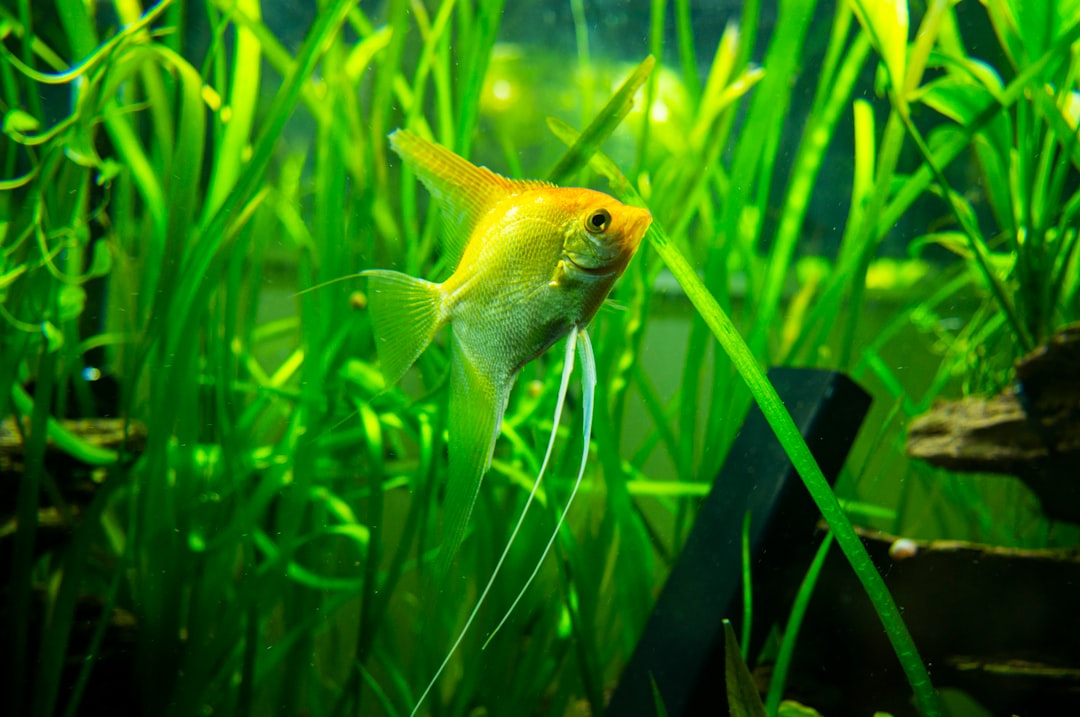
Marble angelfish are one of the oldest fancy colour strains in the hobby, tracing back to the late 1960s when breeders isolated an incomplete-dominant dark allele that broke the wild-type vertical bands into swirled black-on-silver patterns. This marble angelfish care guide from Gensou Aquascaping at 5 Everton Park, Singapore covers water requirements, diet, and the genetics behind why two marble parents produce a mix of silver, marble, and black offspring. Every fancy form discussed here is Pterophyllum scalare — the same species as the wild silver scalare, just selectively bred.
Quick Facts
- Scientific name: Pterophyllum scalare (marble colour form)
- Origin of species: Amazon basin — Peru, Colombia, Brazil
- Adult size: 15 cm body length, 20-25 cm fin-to-fin
- Minimum tank: 200 litres, 50 cm tall
- Water: pH 6.5-7.5, GH 3-10, 26-30 degC
- Genetics: incomplete-dominant Dark (D) allele, heterozygous Marble x Marble = silver, marble, and double-dark offspring
- Diet: omnivore — pellets, bloodworms, brine shrimp, daphnia
Pattern Genetics — Why Marble Patterns Vary
The Dark gene in angelfish is incomplete dominant. A single copy produces marble patterning; two copies produce solid black or near-black fish. Cross marble x marble and you get roughly 25 percent silver, 50 percent marble, and 25 percent double-dark. Pattern intensity also varies with stress hormones and tank colour — the same fish can look dramatically different against a black substrate versus white sand.
Tank Size and Aquascape
Marbles reach a typical adult size smaller than wild scalare — 13-15 cm body length is normal. A 200 litre tank (100 x 45 x 45 cm) houses a pair comfortably; 300 litres suits a group of six. Tall decor matters — vertical driftwood, Amazon sword, and a clear central swimming column. Avoid sharp hardscape that catches trailing fins.
Water Parameters
Unlike altums, captive-bred marbles are tolerant of a wide pH range. Aim for pH 6.5-7.5 and GH 3-10. Singapore PUB tap (pH 7.5-8.0, GH 2-4) works well after dechlorination — no RO mixing needed. Temperature 26-28 degC, with 29-30 degC triggering breeding behaviour in mature pairs.
Diet and Feeding
Omnivorous and eager feeders. A staple pellet such as Hikari Vibra Bites or NLS Thera-A forms the base. Rotate in frozen bloodworms twice a week, frozen brine shrimp, and live daphnia for variety. Overfeeding is the usual cause of bloat — two small feeds a day suffice.
Tank Mates
Marble angels are peaceful outside of breeding but will eat small tetras such as neons. Pair with rummynose tetras, larger rasboras, Corydoras, bristlenose plecos, and calm gouramis. Avoid fin-nippers — tiger barbs and serpae tetras will shred trailing fins within days.
Breeding and Pair Behaviour
Marble angels pair-bond and form strong parental units. A mature pair will defend a 40 cm territory aggressively, so a breeding tank is safer than a community. Spawns of 200-600 eggs are laid on a vertical surface — amazon sword leaves, slate, or PVC. Expect heterozygous parents to throw mixed colour broods; this is where the genetics become visible.
Sourcing and Pricing in Singapore
Local breeders and farms in Malaysia supply consistent marble stock. Expect $8-15 SGD for juveniles and $25-40 SGD for adult specimens at C328 Clementi or Seaview. Look for upright posture, clear fins, and active feeding before buying.
Related Reading



