
Snakeskin Discus Care Guide: Striped Pattern Variety
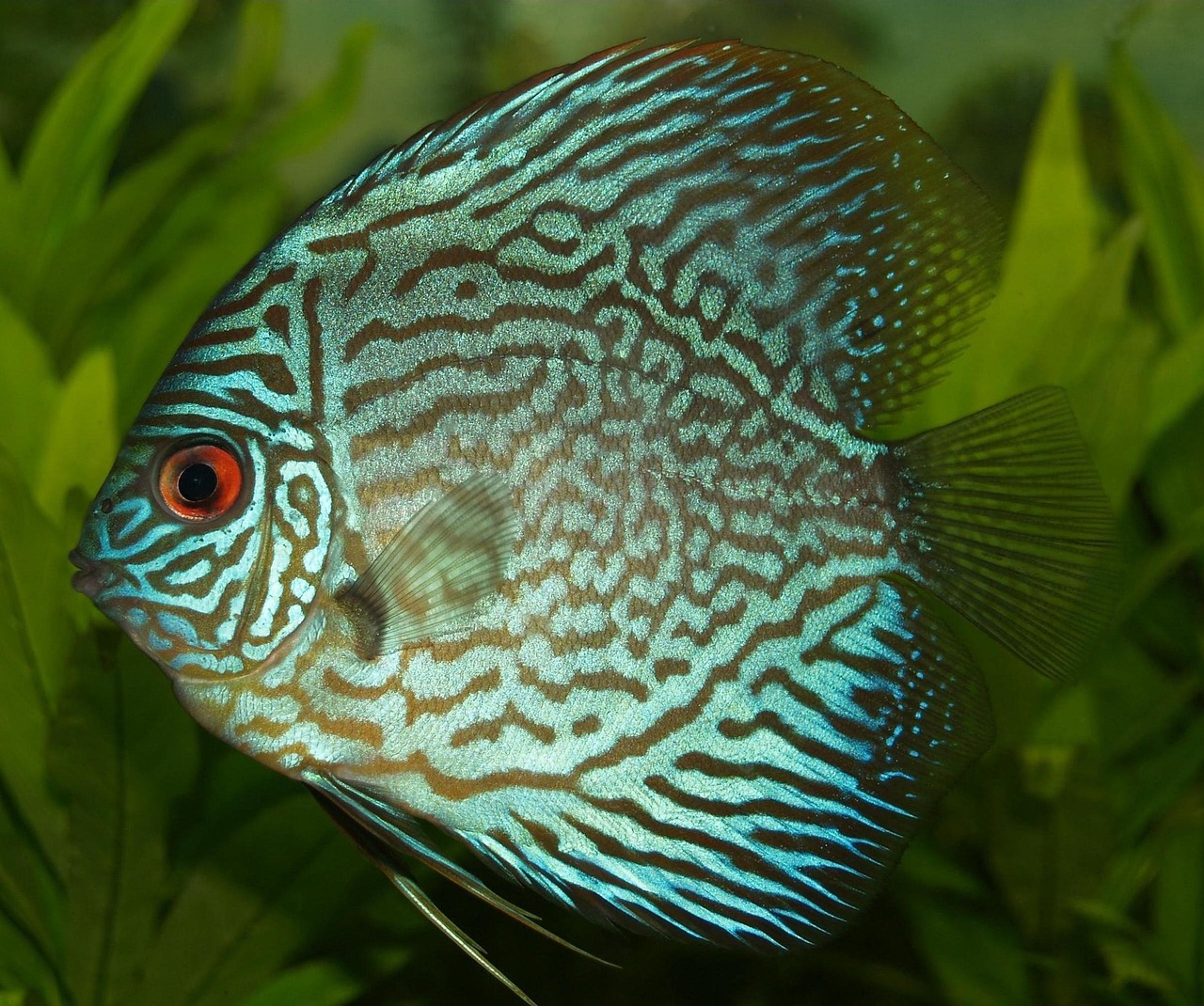
Snakeskin discus carry an extra set of vertical bars that break into fine stripes covering the entire body, giving the strain its serpent-skin appearance. This snakeskin discus care guide from Gensou Aquascaping in Singapore covers the genetics, husbandry and selection that make this pattern stable across generations. The fish is a selectively bred form of Symphysodon aequifasciatus first fixed in Thai farms in the 1990s and now foundational to many modern pattern strains.
Quick Facts
- Species: Symphysodon aequifasciatus, snakeskin selection
- Adult size: 15-18 cm
- Temperature: 28-30°C
- pH: 6.5-7.2
- Pattern: fine vertical stripes across the full body
- Origin: Thai breeding farms, 1990s
- Bar count: typically 14+ bars compared to wild 9
What Defines a Snakeskin
Wild discus carry nine vertical bars. Snakeskins carry 14 or more, bred in over decades of selection. The extra bars split and lace together to form a continuous net of stripes across the flanks and into the fins. A true snakeskin shows the full pattern before 10 cm body size; fish that only develop pattern after grow-out are often mixed-strain crosses with weak genetics.
Sub-strains include red snakeskin (pigeon-derived red body with snakeskin pattern), royal blue snakeskin (turquoise base), and leopard snakeskin, which bridges to the leopard strain.
Selecting Quality Juveniles
Buy at 7-9 cm when pattern is already visible. A solid snakeskin shows even stripes from gill plate to caudal peduncle without obvious gaps. Fins should carry pattern continuation; plain fins indicate weak selection. Watch for round body, clear eyes, active feeding response. Stripes should be crisp, not diffused; diffused stripes worsen with age.
Tank and Filtration
Six adult snakeskins need 300 litres, tall format, with clear flanks to display pattern. Run a canister at six to eight times volume per hour along with a cycled sponge filter. Bare bottom or light sand shows the stripes clearly; dark substrate suppresses visible pattern contrast. Keep decor minimal to avoid bar-up stress that temporarily darkens the snakeskin net.
Water Parameters
Snakeskins are tank-bred across many generations and tolerate PUB tap water after dechlorination. Target 28-30°C, pH 6.5-7.2, GH 2-6, KH 1-3, conductivity 200-500 µS. Stability matters more than specific numbers; wild pH swings stress the fish and temporarily smother pattern. Weekly 40-50 per cent water changes for adults, daily 30 per cent for growing juveniles.
Feeding for Pattern Contrast
Offer frozen bloodworm, mysis, brine shrimp and a quality granulate pellet. Beefheart mixes can be fed sparingly if portioned tightly and rinsed. Spirulina-rich foods keep the base body colour clean, sharpening stripe contrast. Astaxanthin helps red snakeskin sub-strains but does not brighten the stripe pattern itself. Feed juveniles four small meals daily and adults twice daily.
Behaviour and Compatibility
Snakeskins keep the gentle discus temperament with standard loose hierarchy. Compatible tank mates include cardinal tetra, rummy-nose tetra, sterbai corydoras, and Amano shrimp. Avoid fast-moving or nippy fish that cause bar-up responses. Keep angelfish separate at all times because of shared parasites and behavioural overlap.
Common Health Issues
Gill flukes and hexamita affect snakeskins no differently than other discus strains. Quarantine every new fish for four weeks in a bare tank. Praziquantel at 2.5 mg/l over seven days treats flukes; metronidazole at 400 mg per 40 litres every 48 hours for three doses handles hexamita. Pattern appearing to wash out is usually a stress response rather than genetic loss; check parameters first.
Breeding and Pattern Inheritance
Snakeskin pattern is a polygenic trait, meaning crosses produce varied offspring. Snakeskin paired with snakeskin yields 50-70 per cent pattern-positive fry depending on genetic purity. Snakeskin to pigeon crosses produce the leopard discus line. Most commercial Asian farms now select for full-body pattern stability across multiple generations to keep the strain strong.
Pairing From a Group
Six to eight juveniles grow out together. A bonded pair typically emerges by 14 months, cleaning slate and defending a corner. Snakeskin parents are usually attentive and slime-feed fry normally. For breeders, selecting the most heavily patterned parents over multiple spawns strengthens the line.
Singapore Availability
Juvenile snakeskins sit around $35-60 at Clementi and Serangoon shops, with grown-out show fish reaching $150-250. Ask for farm and batch information and observe the fish feeding before purchase. A healthy snakeskin with full pattern recovers quickly after transport if acclimated in stable warm water overnight before feeding.
Related Reading



