
Leopard Discus Care Guide: Spotted Pattern Strain
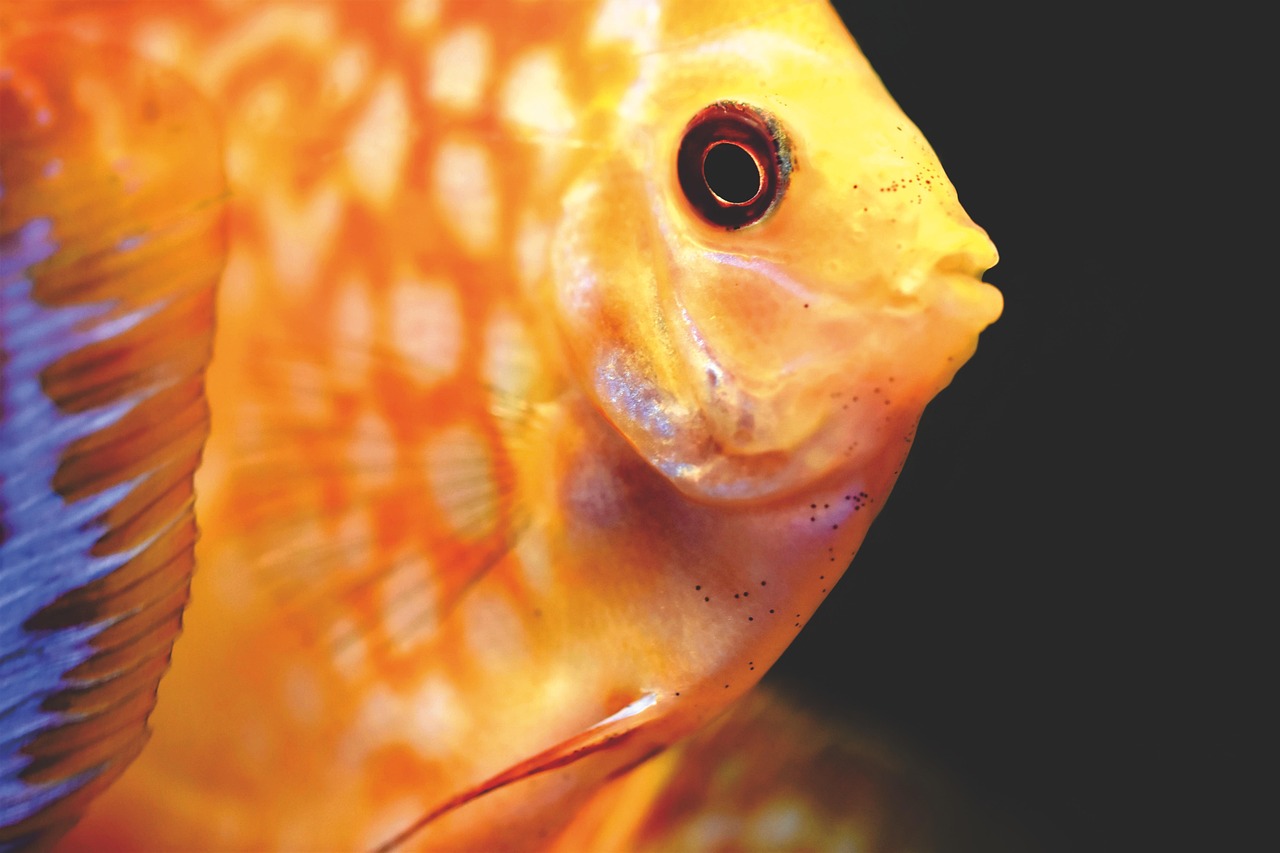
Leopard discus answer the question of what happens when breeders combine snakeskin pattern genes with pigeon blood pigment. This leopard discus care guide from Gensou Aquascaping in Singapore covers the strain’s origin, the husbandry conditions that encourage dense spotting, and how to avoid the pitfalls that cause the pattern to blur with age. Leopards are selectively bred Symphysodon aequifasciatus refined largely by Hong Kong and Thai breeders from the late 1990s onwards.
Quick Facts
- Species: Symphysodon aequifasciatus, leopard pattern selection
- Adult size: 15-18 cm
- Temperature: 28-30°C
- pH: 6.5-7.2
- Pattern: round red-to-black spots on cream body
- Origin: Hong Kong and Thailand, late 1990s
- Minimum group: six juveniles in 300 litres
Strain Origin and Pattern Genetics
The leopard emerged when breeders paired snakeskin discus (carrying extra vertical bar genes) with pigeon blood derivatives. Offspring break the snakeskin lines into discrete spots scattered evenly over a pale body. Sub-strains include leopard snakeskin (finer, denser spots), red leopard (red-tinted spots on cream), and spotted leopard (looser pattern with larger dots).
Pattern is partly heritable and partly environment-driven. Two siblings from the same spawn can develop very different spot densities depending on how they are raised.
Encouraging Dense Spotting
Leopard pattern expresses best on fish raised at warm stable temperatures with clean, well-oxygenated water. Juveniles kept in overcrowded grow-out tanks develop muddier patterns. Keep stocking modest, feed small meals often, and maintain 28-30°C consistently. A bare-bottom tank with bright overhead light helps patterns develop sharply during the first year.
Selecting Good Juveniles
At 6-8 cm, a promising leopard already shows distinct rounded spots rather than fragmented lines. Look for round body shape, clear eyes, and active feeding. A juvenile that appears overly pale with grey haze under the spots often retains that haze into adulthood. Buy from one batch, ideally six fish from the same spawn, to avoid disease mixing.
Tank Environment
Six adults need 300 litres minimum, tall format preferred. Run a canister filter at six to eight times volume per hour along with a cycled sponge filter. Substrate is a choice between aesthetics and bioload: cream-coloured sand provides contrast that emphasises spots, while bare bottom makes siphoning daily faeces easier. Decor should stay minimal; discus show pattern best without heavy plant cover obscuring the flanks.
Water Parameters
Leopards are tank-bred and tolerant. Target 28-30°C, pH 6.5-7.2, GH 2-6, KH 1-3, conductivity 200-500 µS. Singapore tap water dechlorinated with a chloramine-neutralising conditioner sits within this window. Carry out 40-50 per cent weekly water changes for adults; juveniles respond to 30 per cent daily changes with faster growth and sharper pattern.
Feeding Programme
Variety keeps pattern contrast high. Frozen bloodworm, mysis, brine shrimp, cyclops for juveniles, and a quality discus pellet or granulate provide the base. A beefheart mix can be fed two to three times weekly, rinsed and portioned strictly to avoid fouling. Astaxanthin-rich foods support red-leopard sub-strains; spirulina-rich feeds keep the cream body tone bright rather than yellowing.
Behaviour and Tank Mates
Leopards show the usual gentle discus temperament with mild pecking order disputes. Compatible companions include cardinal tetra, rummy-nose tetra, sterbai corydoras, and Amano shrimp. Avoid aggressive or fast-moving tank mates that stress discus into bar-up colour response, which temporarily smothers the spot pattern.
Common Issues
Gill flukes and hexamita remain the standard discus problems and present the same way in leopards as in any other strain. Praziquantel at 2.5 mg/l treats flukes over a week; metronidazole at 400 mg per 40 litres clears hexamita over three alternate-day doses. Pattern fading and body darkening are often the first visible signs of chronic low-grade water quality problems; check nitrate and dissolved oxygen before assuming disease.
Breeding the Leopard Pattern
Leopard-to-leopard pairings produce variable offspring because the pattern gene is polygenic. Roughly half of fry will show respectable leopard pattern, a quarter will drift toward snakeskin, and a quarter will appear pigeon-plain. Culling to retain only well-spotted juveniles is the main breeder task.
Singapore Sourcing and Pricing
Juvenile leopards sit around $40-70 in Clementi and Serangoon North shops depending on pattern quality. Show-size 14 cm specimens from Thai farms reach $200-350. Ask for farm and batch information and quarantine every new fish for four weeks in a bare tank before adding to a group.
Related Reading



