
Heckel Discus Wild Care Guide: Symphysodon Discus
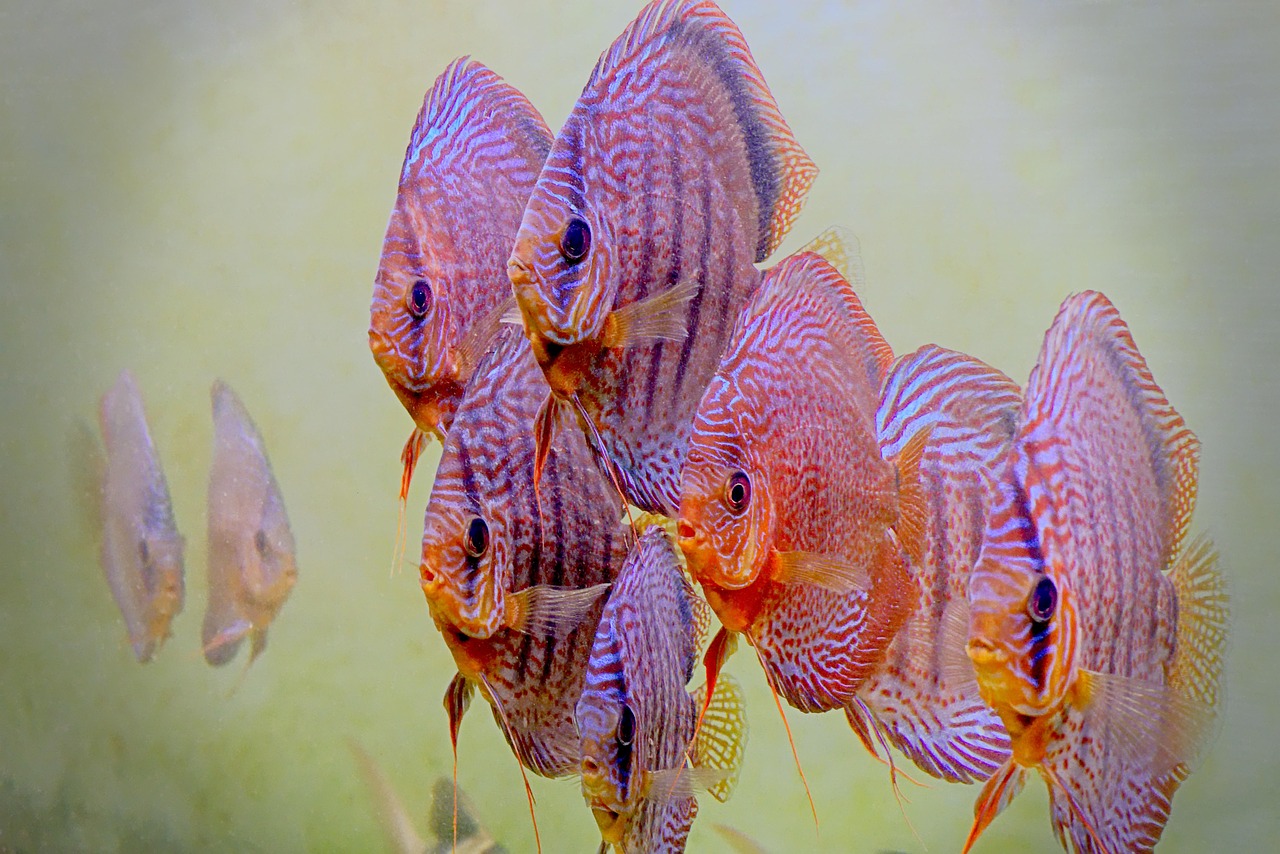
The Heckel discus is the only wild discus species outside the Symphysodon aequifasciatus complex, and it demands water chemistry far removed from anything tap-bred fish will accept. This heckel discus wild care guide from Gensou Aquascaping in Singapore covers the habitat, acclimation and husbandry of Symphysodon discus, named by Heckel in 1840. Its signature fifth central bar, bolder than the others, is the field mark that separates it instantly from the brown, blue and green complex.
Quick Facts
- Species: Symphysodon discus (Heckel)
- Adult size: 15-18 cm
- Temperature: 28-30°C
- pH: 4.5-5.5, blackwater
- Conductivity: 10-50 µS
- Habitat: Rio Negro, Rio Trombetas, Nhamundá tributaries
- Signature: heavy central fifth vertical bar
Habitat and Collection
Heckels inhabit acid blackwater river systems of the central Amazon, most notably the Rio Negro and its tributaries. Water there sits at pH 4.5-5.5, conductivity 10-30 µS, heavily tannin-stained with almost no measurable hardness. Seasonal flooding pushes fish into forest margins where leaf litter and submerged root tangles dominate. Collection occurs in the dry season (September-December) when fish concentrate in shrinking channels.
Acclimation in Singapore
Newly imported Heckels arrive stressed and often carry intestinal parasites and gill flukes. Quarantine in a 200 litre bare tank with prepared RO water adjusted to pH 5.0-5.5 using catappa leaves, alder cones and peat. Temperature should sit at 29-30°C. Drip acclimate over two to three hours, darken the tank, and allow 48 hours before first feeding. Treat prophylactically with praziquantel at 2.5 mg/l for seven days and metronidazole at 400 mg per 40 litres across three alternate-day doses.
Water Parameters for Long-Term Keeping
Unlike tank-bred fish, Heckels cannot survive long on dechlorinated tap water. You need RO or DI water as a base, remineralised lightly to GH 1, KH 0, then acidified with botanicals or peat to pH 4.5-5.5. Conductivity target is 30-80 µS. Heat to 29°C consistently. Maintain this chemistry rigorously; even brief spikes above pH 6.5 break the fish down over weeks through immune suppression.
Tank Setup
Six Heckels need 350-400 litres in a tall format. Use fine dark sand, heavy driftwood, catappa leaves stacked across the base, and submerged root or mopani tangles to recreate the Rio Negro structure. Filter with a canister stocked heavy on biological media plus a mature sponge, running peat or alder cone packs in line to maintain acidity. Lighting should be dim and indirect to mimic blackwater cover.
Diet
Wild Heckels feed on aquatic invertebrates, crustacean larvae and small worms. In captivity, rotate frozen bloodworm, mysis, adult brine shrimp, and glass worms. A beefheart mix is sometimes accepted after weeks of settling but is not natural; wild discus rarely touch terrestrial mammalian protein. Introduce pellets slowly; many imports never fully accept them. Feed small portions twice daily and siphon uneaten food promptly because acid blackwater masks ammonia symptoms that still damage gills.
Tank Mates
Match the biotope. Cardinal tetra, rummy-nose tetra, Apistogramma agassizii, and small Corydoras species from Rio Negro tributaries all suit the low-pH environment and reinforce the visual theme. Avoid barbs, livebearers, and any fish requiring higher pH. Keep stocking light to preserve the near-zero buffering system.
Maintaining Acidity Safely
Low-pH, low-KH blackwater systems are prone to pH crashes. Monitor pH weekly with a calibrated digital meter, not strips. Top up with fresh RO, refresh catappa and alder cones monthly, and change water using matched blackwater prepared 48 hours ahead. Avoid over-reliance on chemical pH-down products; they acidify without providing tannins or stable buffering behaviour.
Behaviour and Breeding
Heckels are noticeably shyer than tank-bred discus. They hold to shadowed corners for weeks after import and bar up easily at sudden light. In properly stable blackwater conditions, pairs will form and spawn on vertical wood or slate, though breeding is rare in captivity compared to S. aequifasciatus. Seasonal water-change regimes simulating the flood pulse (cooler, softer water swaps) sometimes trigger spawning.
Costs and Sourcing
Wild Heckels retail in Singapore between $150 for smaller specimens and $500+ for premium red Heckel and royal Heckel forms. Serangoon North and select Clementi importers carry seasonal shipments. Only buy from shops willing to hold fish in blackwater quarantine for two weeks before sale. Do not mix wild Heckels with tank-bred fish in the same system; pathogen profiles differ and new arrivals devastate mixed groups.
Related Reading



