
PAR Measurement Planted Tank Tutorial Guide
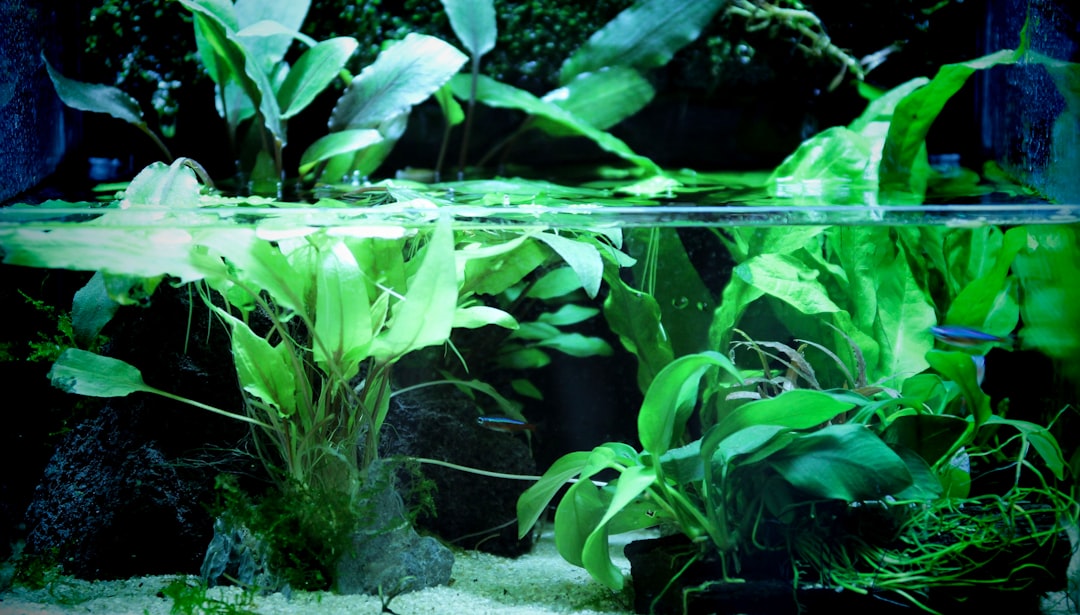
Most Singapore hobbyists guess their lighting by eye, then wonder why carpet plants stall while algae thrives. A proper PAR measurement planted tank tutorial swaps guesswork for a grid of numbers you can actually tune against, and it takes about fifteen minutes once you own or borrow the right meter. This walkthrough from Gensou Aquascaping at 5 Everton Park reflects how we dial in every display tank we build, from 45cm nano cubes to 180cm ADA-style showpieces in Orchard condos. This guide sits inside our broader Planted Tank Complete Hub reference.
What PAR Actually Measures
PAR stands for photosynthetically active radiation, the 400 to 700 nanometre band that drives chlorophyll production. Your meter reports it as PPFD, or photosynthetic photon flux density, in micromoles of photons per square metre per second. Lumen and lux readings from a phone app are nearly useless for aquascaping because they weight the green band that your eye notices but plants mostly ignore. If you want repeatable results, PAR is the only metric that matters.
Choosing a Meter You Can Trust
The Apogee MQ-510 underwater quantum sensor is the reference instrument and costs around $750 delivered to Singapore. For most hobbyists that is overkill. The Seneye Reef, which doubles as an ammonia and pH probe, gives a cheaper PAR-adjacent reading and lives in the tank permanently. For a one-off survey, rent before you buy; see our aquarium PAR meter rental piece for Singapore options. Whatever you choose, check whether it reports underwater PAR or needs the manufacturer’s submersion correction applied.
Preparing the Tank Before You Measure
Do your readings on a clean tank. Wipe the front and back glass, replace any discoloured biofilm on the lens of your light, and top the water up to its normal operating level. Turn off the circulation pump for the duration so the meter is not bobbing against the flow. Switch your fixture to the exact schedule setting you want to characterise; peak midday intensity is usually where limits are set. Allow the light to warm up for ten minutes as LED output drifts slightly in the first few minutes after power-on.
Building a Sampling Grid
Divide the tank footprint into a grid of nine points: four corners at the substrate, the midpoints of each edge, and one at the geometric centre. For longer tanks, add a second row at 30 percent and 70 percent of the length. Record every reading at substrate level first, then repeat at mid-water and just below the surface. The substrate number tells you what your carpet sees; the mid-water reading is what stem plants and corals receive. Our aquascape lighting placement guide shows typical gradient shapes.
Interpreting the Numbers
As a working reference, low-light plants such as Anubias, Java fern and Cryptocoryne thrive at 30 to 50 PAR at substrate level. Medium-demand stems including Rotala rotundifolia and Ludwigia repens want 50 to 100. High-light carpets like Hemianthus callitrichoides and Monte Carlo need 100 to 200, and anything above 250 is reef territory. If your corners read half the centre, your fixture is too narrow or mounted too close; our light and CO2 balance guide covers what to do next.
Correcting Common Measurement Errors
Readings spike falsely near the front glass because the sensor catches reflection off the meniscus. Keep the probe at least 3cm from any glass surface. Hold the sensor horizontal; a 15-degree tilt drops PPFD by around 8 percent. If your tank has a lid, measure with the lid on and off and note both; condensation on coverglass cuts PAR by 15 to 25 percent. Singapore’s humidity makes this more severe than in drier climates, which is why rimless open-top builds read higher at identical fixture height.
Comparing Against Your Fixture Specification
LED manufacturers quote PAR at specific mounting heights, usually 20cm or 30cm above the water surface, at 100 percent output. Chihiros WRGB II, Twinstar E, Week Aqua P and ONF Flat Nano all publish PAR-at-depth charts that are reasonably honest if you read the fine print. Cross-check yours against our reviews for the Chihiros WRGB II, Twinstar E series, Week Aqua P series and ONF Flat Nano. A delta of more than 20 percent between measured and spec usually means the unit is older than you think, or the riser is higher than intended.
Adjusting the Rig Based on Readings
If your central PAR is too high, the cheapest fix is raising the fixture on taller stands rather than dimming, because dimming shifts spectrum on many budget LEDs. If corners are weak, add a secondary narrow-beam unit rather than swapping the main light. For over-driven tanks with green spot algae on the glass, drop the peak PAR by around 20 percent and extend the photoperiod; our lighting duration guide explains why this often works better than shortening hours.
Documenting Your Results
Log the grid with date, fixture model, mounting height, dimmer percentage and water clarity. Repeat the survey every six months, because LED phosphors degrade faster in tropical humidity than in temperate climates. A notebook or a spreadsheet tied to your water parameter log becomes invaluable when a plant species starts declining and you want to know whether the light has drifted.
Singapore-Specific Considerations
Voltage here is 230V at 50Hz, and many imported US-branded meters arrive calibrated for 60Hz environments. It rarely matters, but if your meter is reading wildly low, check the power-supply spec first. Humid flats also condense on sensor windows within minutes of removing a meter from an air-conditioned room; let the probe equilibrate at tank temperature for fifteen minutes before you trust the numbers. Borrowing a meter through local community groups is cheap and common; the Singapore reef community groups guide lists active channels for loans.
When to Re-Measure
Run a fresh survey after any hardware change: new LED, replacement driver, raised or lowered mounting, or a tank move. Measure before and after large trims when canopy shading shifts substantially, and once a year as routine maintenance. Every Gensou customer gets their baseline PAR grid on installation so that three years later we can tell whether a troubled tank is a light problem or, as is more often the case, a CO2 or nutrient problem in disguise.
Related Reading



