
Nature Style Aquascape Guide: Amano Nature Method
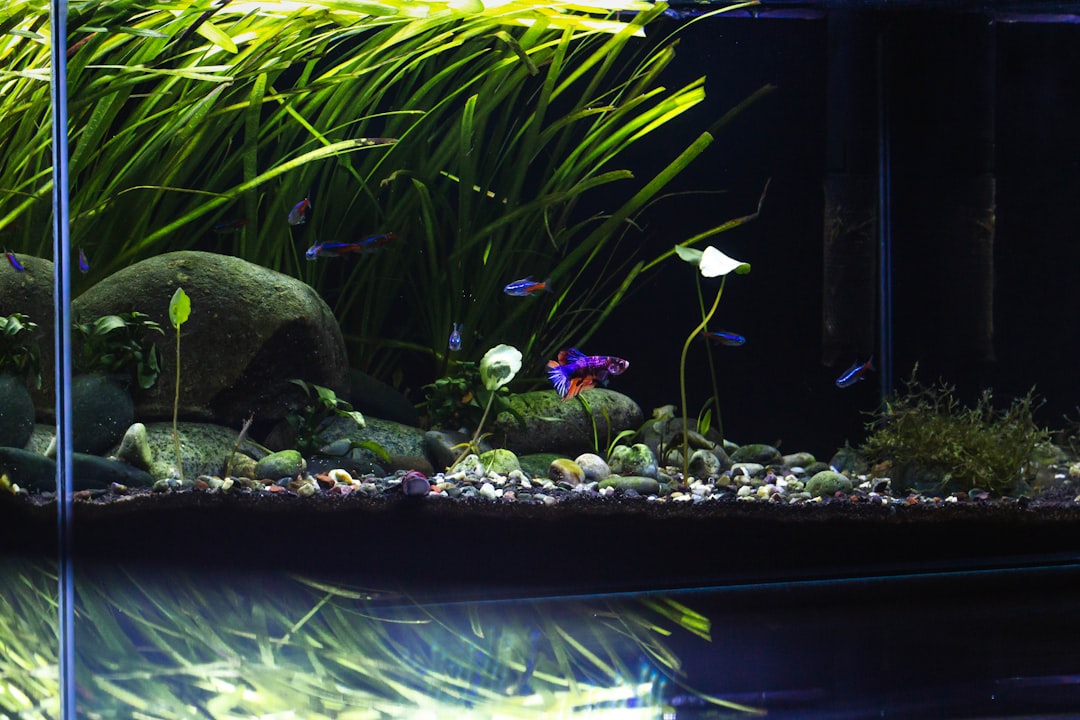
Takashi Amano single-handedly invented the modern planted aquarium. His 1992 book Nature Aquarium World, photographed with 4×5 large-format film and paired with his own Aqua Design Amano (ADA) equipment line, transformed what had been a plant-collector hobby into a design discipline. This nature style aquascape guide from Gensou Aquascaping at 5 Everton Park walks through the composition rules Amano taught — wabi-sabi, the golden ratio, negative space — and explains how to source ADA-equivalent gear in Singapore when true ADA stock at Green Chapter Bedok runs out. This guide sits inside our broader Planted Tank Complete Hub reference.
The Amano Philosophy
Amano borrowed from Japanese landscape painting and garden design — specifically the concepts of wabi (rustic simplicity), sabi (the beauty of age and impermanence), and yuugen (profound subtle grace). A Nature Aquarium depicts a specific natural scene — a mountain stream, a forest floor, a riverbank — rather than an abstract composition. The glass box is a window onto nature, not a canvas for the aquarist’s ego.
Composition Rule One: The Golden Ratio
Place the primary focal point at the golden ratio — roughly one-third from the left or right edge, never centre. In a 60 cm tank, that puts the keystone stone or the main driftwood feature at 20-25 cm from one wall. Secondary focal points follow the same rule at smaller scale. This asymmetric placement produces the tension that feels “alive” to the eye, unlike a symmetric arrangement which feels static and lifeless.
Composition Rule Two: Negative Space
Amano called empty substrate ma — negative space — and it’s equally important as the planted areas. A Nature Aquarium must leave 30-40% of the visible scape as open sand, water or thinly planted low ground. Fill every corner and the eye panics with no resting point. Browse fine-grain substrates at decoration substrate for front-sand zones.
The Three Perspective Zones
Nature scapes divide into foreground (low carpet plants, 1-3 cm), midground (textural mounds 5-10 cm, often featuring Bucephalandra, Anubias or small Cryptocoryne on hardscape) and background (stem plants reaching 15-30 cm). Depth illusion is built by tapering leaf size from largest at front to smallest at rear — the opposite of intuitive, because it forces forced perspective. Shop background plants for suitable stems.
Hardscape — Ishigumi and Ryuboku
Ishigumi (stone composition) uses rocks as the structural backbone — often Seiryu, Ohko or manten rock from manten rock listings. Ryuboku (driftwood scapes) substitutes twisted branches — manzanita, red moor, spider wood — typically 2-3 main pieces anchored to create a V-shape or cascading flow. Mixed compositions combine both, with wood on one side and stone anchoring the opposite third. Carousell and Farmway 13 nurseries carry quality hardscape at half of imported prices.
Substrate Layering
A true ADA-style substrate stack runs: 1 cm Power Sand Special at base for bacterial colonisation and long-term nutrient release; 4-5 cm Amazonia on top as the active planting medium. Green Chapter Bedok stocks authentic ADA. Netlea at C328 Clementi and JUN Aquasoil Brown from aquarium soil sell at roughly 60% the ADA price with comparable results for most aquarists.
Planting for a Mature Look
Use at least seven plant species but cluster them so the scape reads as natural stands rather than a plant catalogue. Riccia fluitans tucked into hardscape crevices, small-leaf Bucephalandra colonies on stone shoulders, Microsorum “trident” on driftwood branches, Cryptocoryne parva in the foreground transition, and Rotala rotundifolia or Ludwigia arcuata stems anchoring the background. Tissue-culture cups from live plants give the cleanest start.
Lighting for Nature Style
Amano himself shot his books under 8000K metal halides; modern LEDs do the job without the 40°C surface heat. A 30 W Chihiros WRGB II or Week Aqua P-series over a 60 cm scape gives the colour rendering needed to photograph reds properly. ADA Solar RGB at SGD 850-1100 is the reference but rare in local retail. Check lighting for budget alternatives. Photoperiod 7-8 hours with a midday siesta option to control algae.
CO2 Is Not Optional
Every published Nature Aquarium in ADA galleries runs pressurised CO2 — typically 25-35 bubbles per minute with an inline diffuser or ceramic disc. Drop checker stays lime-green across photoperiod. Nature style tolerates lower CO2 than Dutch because plant density is lower, but carpet plants like Monte Carlo or HC still need 20-25 ppm dissolved. Start kits from CO2 systems.
Livestock for the Scene
Choose fish that match the depicted biome. A mountain-stream scape wants white cloud minnows or rosy barbs. A forest-floor biotope suits dwarf Neon tetras or gold tetras. Amano-native scapes feature his signature cardinal tetra school at 30-50 fish in larger tanks. Amano shrimp (named for Takashi himself, Caridina multidentata) act as cleaners across every style he produced.
Related Reading



