
Tetra Fish Tank Complete Guide: Setup and Stocking
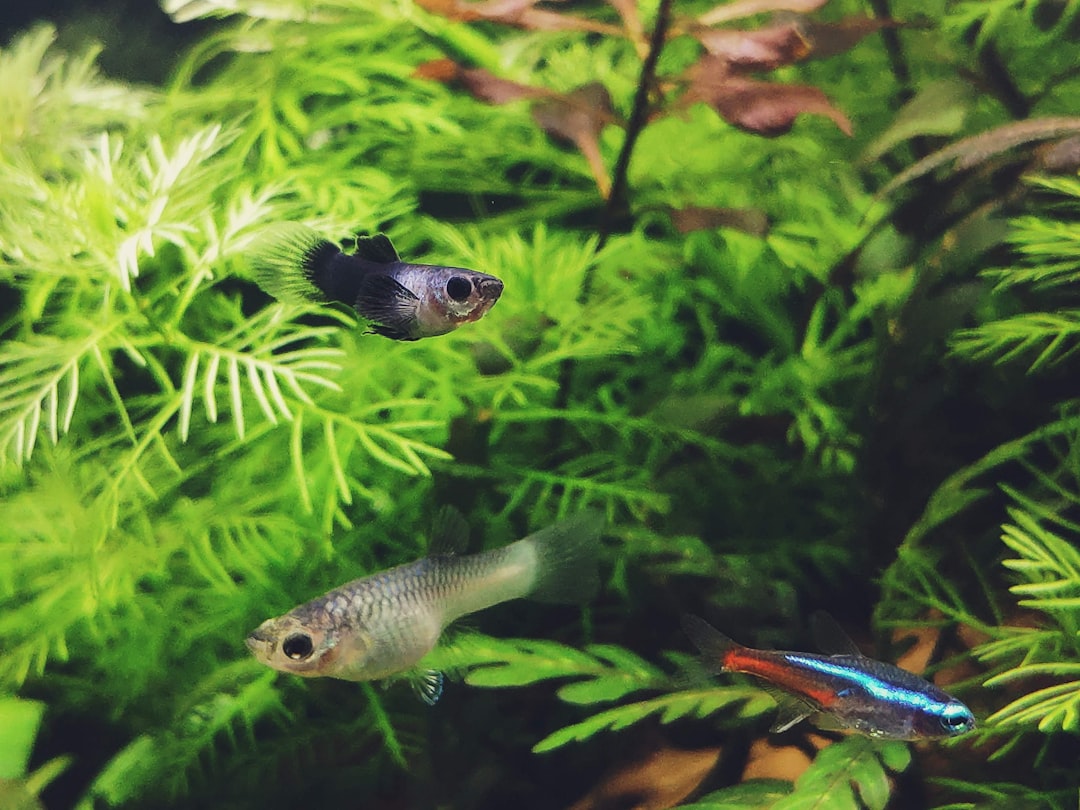
Few fish groups reward patience like tetras — the shimmer of a tight school cutting across a planted tank is the payoff for the months spent stabilising soft, acidic water. This tetra fish tank complete guide walks through tank size, schooling mathematics, blackwater parameters and the stocking ratios that prevent the single biggest tetra-keeping mistake: too-small groups. The team at Gensou Aquascaping, 5 Everton Park, has stocked and rescaped enough tetra biotopes over 20 years of hands-on experience to spot the short-cuts that later undo a setup.
Why Tetras Need Groups of Six Minimum
Tetras are obligate schoolers. Kept as pairs or trios they develop chronic stress, stop colouring up, and pick on the smallest fish in the group until only one remains. Six is the absolute floor for stability; eight to twelve is where the species actually behaves naturally, tightening into a school when the tank lights come on. A 60-litre tank with twelve ember tetras reads as more alive than a 120-litre with four — group size matters more than tank size for this family.
Minimum Tank Sizes by Species
Nano species (ember, green neon, black neon, glowlight) need 45-60 litres for eight fish. Mid-size species (cardinal, rummy-nose, serpae, lemon, von rio flame) need 90-110 litres for eight fish and at least 60 cm of swimming length. Congo tetras and other larger species push to 200 litres and 75-100 cm tank length — they cruise constantly and cramp visibly in shorter tanks. Browse the aquarium tanks and cabinets range for tetra-appropriate footprints.
Blackwater Biotope Basics
Almost every common aquarium tetra originates from Amazon or West African blackwater — tea-coloured, soft, acidic water stained by leaf-litter tannins. Replicating it means pH 5.5-6.8, GH 2-6, KH 0-3, and a substrate dressed with catappa leaves, alder cones and a piece of driftwood. Singapore tap water sits at the softer end of this already, making SG keepers unusually well-placed for tetra biotopes. Skip KH buffers and crushed coral — they push parameters in the wrong direction.
Filtration and Flow
Tetras dislike strong flow. A canister rated 4-5x tank volume per hour, with the outflow baffled by a spray bar or redirected at the rear glass, creates gentle lateral current across the tank. Sponge filters on larger volumes (the Dymax range at SGD 15-25) suit nano tetras perfectly. Avoid small internal power filters that blast the open swimming zone — a school forced to fight current burns calories and colour alike. Choose your filter from the filtration and aquarium equipment range.
Planting for Tetra Display
Tall background stems (Rotala rotundifolia, Ludwigia palustris), midground crypts (Cryptocoryne wendtii, undulata), and a foreground of dwarf hairgrass or Monte Carlo create the staggered backdrop that shows a school at its best. Leave an open swimming zone of at least 25 cm depth along the front glass. Floating plants (frogbit, salvinia, red root floaters) dim the light and add the dappled shade tetras evolved under. Visit the live plants range for stem plants suited to soft-water setups.
Stocking Ratios and Community Mixing
A solid tetra community stocks one species per 45-60 litres of capacity, with 8-12 fish per school. A 110-litre planted tank holds, for example, twelve ember tetras and eight rummy-nose together with ten pygmy corydoras as a bottom layer. Avoid mixing more than three species in tanks under 150 litres — tetras need visible numbers to school properly, and splitting the stocking thin produces shy, washed-out fish. Never mix fin-nippers like serpae with long-finned partners like rams or angelfish.
Feeding the Community
High-quality micro pellets (Hikari Micro Pellets, Tropical D-Allio Plus Micro) form the staple. Supplement two to three times weekly with frozen bloodworm, daphnia or brine shrimp; vary between brands to avoid the nutritional dead-end of a single food. Feed twice daily, tiny pinches the school clears in 30 seconds. Pick up micro pellets and frozen cubes from the fish food and feeding range.
Common Problems
Neon tetra disease (Pleistophora) shows as whitish patches and spinal curvature; it is incurable and infected fish must be removed. Fin nipping by serpae, black widow or black skirt tetras in groups under eight is common — bump the school to twelve and the behaviour usually settles. Faded colour almost always indicates water parameters drifting hard (pH crept to 7.8, nitrate above 30 mg/L, or temperature chronic at 30 degrees Celsius in un-chilled SG tanks during May-September).
Sourcing in Singapore
C328 Clementi stocks ember, glowlight, black neon and cardinal tetras at SGD 0.80-2.50 each depending on species and size. Iwarna carries rummy-nose and less common species (lemon, diamond) at SGD 2-4 each. Carousell sellers breeding rummy-nose and cardinals locally offer SG-bred stock often healthier than imported batches, priced SGD 1.50-3 per fish. Serangoon North and Thomson shops rotate stock weekly; ring ahead for confirmed availability.
Related Reading
- Tetra Fish Aquarium Setup Guide
- Ember Tetra Complete Care Guide
- Rummy Nose Tetra Complete Care Guide
- Glowlight Tetra Complete Care Guide
- Cardinal Tetra Complete Care Guide



