
Ember Tetra Complete Care Guide: Hyphessobrycon amandae
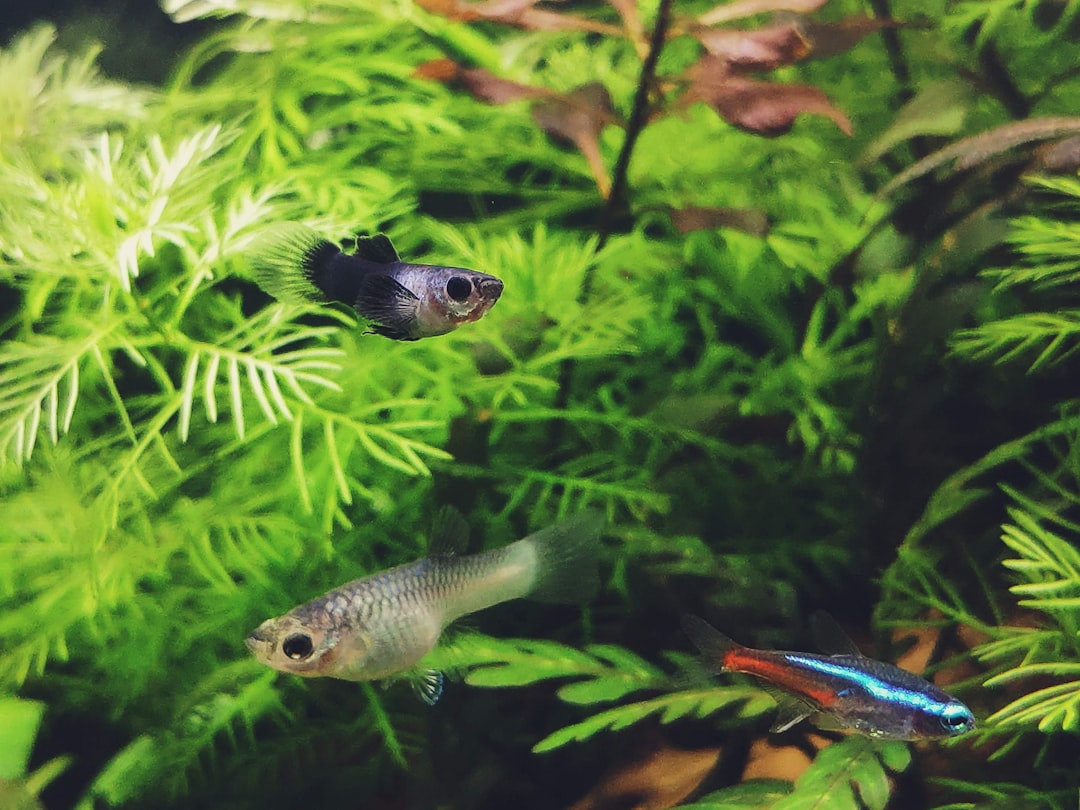
The ember tetra is the rare nano fish that somehow photographs better in person than on camera — a tiny orange ember drifting through dark water, brighter and steadier than its 2 cm length suggests. This ember tetra complete care guide covers Hyphessobrycon amandae from tank size through blackwater parameters, feeding regime, and the sourcing realities in Singapore. Written by the team at Gensou Aquascaping, 5 Everton Park, drawing on over 20 years of hands-on experience with soft-water nano species.
Species Profile
Hyphessobrycon amandae originates from the Rio Araguaia and Mato Grosso region of Brazil — shallow, tannin-stained, slow-flowing streams under rainforest canopy. Adult size is 1.8-2.2 cm, making it one of the smaller commonly-kept tetras. Both sexes show the same matte-orange body, though males run slightly slimmer and a touch deeper in colour when in good condition. Lifespan in a well-maintained tank is three to four years.
Tank Size and Group Numbers
Minimum tank size is 45 litres for a school of eight, though the species truly shines in 60-110 litres with twelve to twenty fish. Ember tetras cram into open swimming zones and look sparse in over-large tanks unless stocked heavily. The tank length matters more than volume — 60 cm minimum, 75 cm ideal — because the school moves laterally rather than vertically. Browse the aquarium tanks and cabinets range for 60-75 cm rimless options.
Water Parameters
Temperature 24-28 degrees Celsius, pH 5.5-6.8, GH 1-5, KH 0-3, nitrate under 15 mg/L. Singapore tap water post-dechlorinator already sits at GH 2-4 — near perfect. Active aquasoil substrate drops pH into the ideal range naturally. Avoid any crushed coral, seiryu stone or dragon stone hardscape — they push KH and pH upward against everything this species prefers. Dose Seachem Prime for every water change to neutralise chloramine in PUB water.
Tank Setup for Best Colour
Dark substrate (ADA Amazonia, Tropica Aquarium Soil) deepens the orange pigmentation dramatically. A piece of Malaysian driftwood in the centre, three to four catappa leaves across the substrate, a clump of java moss for security, and dim lighting filtered through floating plants produce the classic ember display. The contrast between the black biotope backdrop and the orange fish is the whole visual payoff. Source substrate from the decoration and substrate range.
Planting Plan
Background stems of Rotala rotundifolia, Ludwigia palustris or Ammannia pedicellata provide the red-and-green tapestry embers contrast against. Cryptocoryne wendtii and parva work the midground. Frogbit and red root floaters across the surface dim the light as this species prefers — in bright open tanks, embers wash out and hide. Floating plants also provide breeding substrate for occasional fry. Visit the live plants range for stem selections.
Feeding the Nano Mouth
Ember tetras have tiny mouths and cannot manage standard flake. Feed crushed flake ground between fingers, nano micro pellets (Hikari Micro Pellets, Tropical D-Allio Plus Micro), freshly hatched brine shrimp, frozen daphnia and cyclops. Avoid bloodworm — the pieces are usually too long for an adult ember to swallow whole. Two small feedings a day, one fasting day a week. Pick up micro pellets from the fish food and feeding range.
Tank Mates
Compatible community members include pygmy corydoras, Corydoras habrosus, otocinclus catfish, nerite snails, neocaridina shrimp (juveniles may be eaten), chili rasboras and other nano tetras. Avoid all large cichlids, angelfish, gouramis over 8 cm, and any fin-nipper. Ember tetras are completely peaceful and vanish quickly in tanks with aggressive or even mildly boisterous partners. A single-species display of 20 embers in a 60-litre blackwater tank is arguably the best presentation of this species.
Breeding
Ember tetras scatter eggs among fine-leaved plants (java moss, subwassertang) and offer no parental care. A pair conditioned on live daphnia and brine shrimp will spawn in a small 20-litre tank with mature water, dim light and a moss carpet. Remove the adults after 24 hours or the eggs will be eaten. Fry hatch in 36-48 hours, become free-swimming at day five, and need infusoria or vinegar eels for the first fortnight before graduating to microworm and crushed brine shrimp.
Sourcing in Singapore
C328 Clementi carries embers reliably at SGD 1.50-2 each, usually in large batches. Iwarna rotates them regularly at SGD 2-2.50 per fish for slightly larger specimens. Seaview and Thomson shops stock intermittently. Batches sometimes arrive pale and thin — ask when the delivery came in, and ideally buy from fish that have settled in the shop for a week. Avoid any tank showing surface-gasping or fish hanging near the filter output; these are stressed arrivals that rarely survive the move home.
Related Reading
- Tetra Fish Tank Complete Guide
- Tetra Fish Aquarium Setup Guide
- Rummy Nose Tetra Complete Care Guide
- Glowlight Tetra Complete Care Guide
- Cardinal Tetra Complete Care Guide



