
Aquarium Photography RGB Lighting Setup Guide: Strobe and Continuous
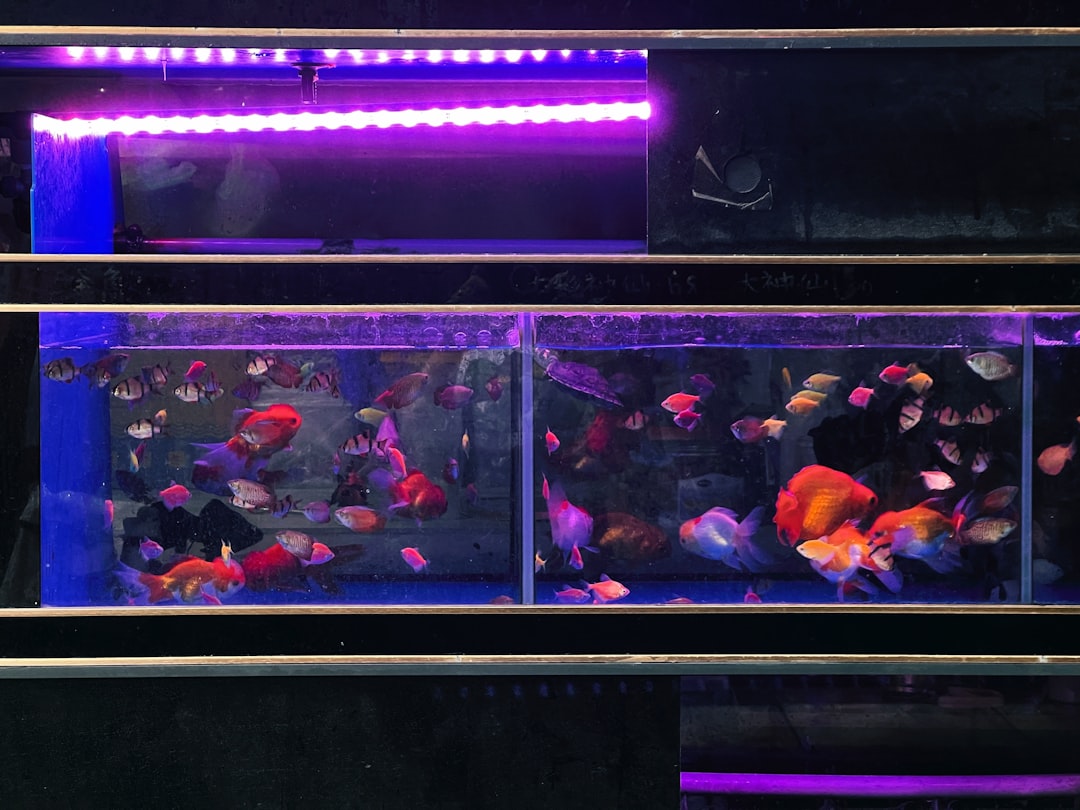
The difference between a flat phone snap of your aquascape and a magazine-grade hero shot usually comes down to one variable: lighting. Aquarium photography RGB lighting separates colour-accurate continuous panels from burst-strobe action capture, and getting the setup right means controlling spectrum, flicker, intensity and angle — not just buying the most expensive light. This setup guide from Gensou Aquascaping at 5 Everton Park covers the panels, strobes and sync settings that produce contest-quality images under typical Singapore HDB conditions.
CRI 95 and Why It Matters
Colour Rendering Index measures how accurately a light source reproduces colours across the visible spectrum compared to natural daylight. Cheap LED panels often run CRI 80, missing red wavelengths and pushing greens toward yellow. Photography-grade RGB panels run CRI 95+ and reproduce the deep reds of Rotala macrandra and the violet hues of royal blue bettas accurately. Aputure 60d, Godox SL-150W II and Nanlite Forza 60 are the workhorse panels in this bracket.
Continuous vs Strobe
Continuous panels light the scape for both eye and camera, allowing slow shutter speeds and large depth-of-field at low ISO. They suit static planted-tank shots beautifully. Strobes — Profoto B10, Godox AD200 — fire a brief high-intensity burst that freezes fish motion at 1/8000 second equivalent. Mix both: continuous as base lighting, strobe to freeze a discus turn or a betta flare.
Panel Placement Geometry
Place panels at a 30-degree downward angle from above the tank’s front edge, with the second key panel at the same angle from the opposite side. This crosslights the scape and eliminates flat shadows. Avoid lighting from directly above only — it produces a flat overhead glow that washes out depth. The aquarium lighting range includes mounting arms that double as photo light stands during shoot sessions.
Flicker Control on 50Hz Mains
Singapore mains run at 50Hz, and many cheaper LED panels strobe at 100Hz (twice mains frequency). Cameras shooting at certain shutter speeds catch the dark phase between strobes, producing horizontal banding. Sync your shutter to a multiple of the flicker period — 1/50s, 1/100s, 1/200s — to capture only full-cycle exposures. Premium panels with proper PWM smoothing eliminate the issue, but most budget panels need workaround.
Camera Settings Baseline
Start with ISO 200, f/8, 1/100s for static planted-tank shots and adjust from there. f/8 gives sharpness across a 60cm tank without diffraction softness; ISO 200 keeps noise minimal; 1/100s syncs cleanly with 50Hz lighting. For fish shots, drop to 1/250s or faster and open to f/5.6, raising ISO to 800-1600 to compensate. The aquarium tank range with optical white glass minimises tint correction in post.
Tank Lighting During the Shoot
Run the tank’s normal scape lighting at full intensity during the shoot. Adding photo lights doubles or triples the total intensity — overexposure becomes the issue, not underexposure. Drop ISO to 100 or close aperture to f/11 if histograms show clipping in the highlights. Shoot RAW so you can recover detail in post-processing.
Black Backdrop and Side Cards
A black foam-board backdrop behind the tank kills background reflections and isolates the scape against pure void. Two white reflector cards on the sides bounce panel light back into the scape and reduce harsh edge shadows. Total backdrop kit costs under SGD 50 from any photography retailer in Sim Lim.
Strobe Sync for Fish Action
Profoto B10 sync at 1/8000s through high-speed sync mode freezes fish motion completely. Set the strobe to one-quarter or one-half power for a faster recycle (0.5-1 second between fires) and shoot in short bursts. Position strobes off-axis to avoid glass reflection back into the lens. Strobe shots of Apistogramma males flaring or shrimp moulting are nearly impossible to capture without flash freeze.
Practical Singapore Setup Budget
A serviceable photography rig: Aputure Amaran 60d (SGD 280), small folding softbox (SGD 80), light stand (SGD 60), two reflector cards (SGD 30), black foam board (SGD 15). Total under SGD 500 produces images strong enough for IAPLC entry. Add a Profoto B10 (SGD 1,800) and the rig handles fish action shots competitively.
Post-Processing as Final Step
Shoot RAW, white-balance-correct in Lightroom against a grey card placed in the tank for the first frame, then apply the same white balance across the shoot. Lift shadows by 20-30 points and pull highlights down by 15-20 to recover plant detail and water surface texture. Avoid heavy saturation pushes — judges spot manipulated colour quickly.
Related Reading



