Aquarium as Room Divider: Design Ideas for HDB and Condo Living

Open-plan living is standard in Singapore homes, and an aquarium positioned between two functional zones creates a partition that is far more captivating than a shelf or curtain. Thoughtful aquarium room divider design balances visual impact with structural reality, especially in HDB flats and condos where floor load and ceiling height set firm limits. At Gensou Aquascaping, 5 Everton Park, Singapore, we have designed and installed divider tanks in residences of every type over the past 20 years and understand the unique constraints of local housing.
Why an Aquarium Works as a Divider
Unlike a solid wall, an aquarium lets light pass through, keeping both sides of the room bright. It provides visual separation between living and dining areas, or between a bedroom and a study nook, without sacrificing the sense of space. The gentle movement of fish and plants adds a living element that no piece of furniture can replicate. Guests invariably gravitate toward a well-maintained divider tank, making it a natural conversation starter.
Sizing for Singapore Homes
A divider tank typically ranges from 90 cm to 150 cm in length, 40-50 cm in width, and 50-60 cm in height. These dimensions create a substantial visual barrier while keeping the total filled weight between 200 and 500 kg. For HDB flats, where the structural live load is roughly 150-200 kg per square metre, positioning the tank along or adjacent to a load-bearing wall is strongly advisable. Consult a professional engineer if the tank exceeds 400 kg and must sit mid-span between walls.
Stand and Cabinet Integration
A divider tank needs to look finished from both sides. Standard cabinets with a back panel will not work here. Commission a four-sided cabinet from a local carpenter or aquarium fabricator, with access doors on one or both long sides. Popular materials include marine plywood clad in white laminate or solid surface veneer to match existing kitchen counters. Build in ventilation slots or grilles for canister filters and CO2 equipment stored inside.
Budget $500-$1,200 for a custom cabinet in Singapore, depending on material and complexity.
Aquascaping a Two-Sided Tank
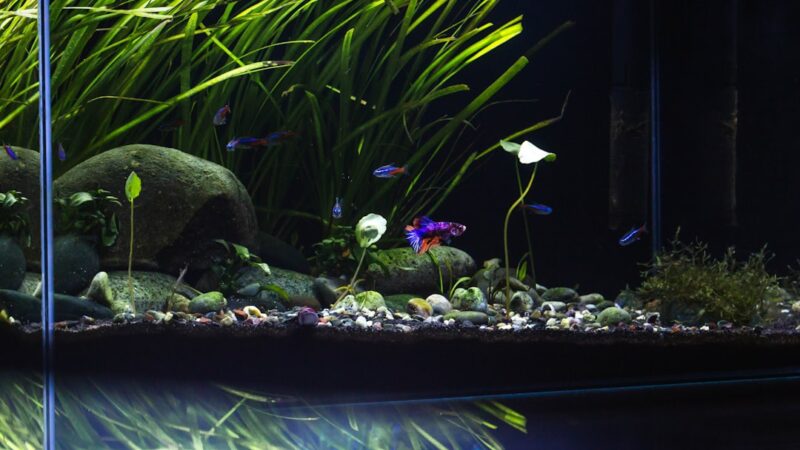
Designing a scape visible from both faces is more challenging than a standard front-only layout. Avoid pressing hardscape against either glass panel; instead, build a central ridge of rock or driftwood that looks compelling from both viewing angles. Island-style and triangular layouts adapt well to this format. Tall stem plants along the back of a conventional tank would block the opposing view, so opt for moderate-height species like Bucephalandra, Anubias barteri var. nana, and shorter Cryptocoryne varieties.
Epiphyte-heavy scapes work beautifully on driftwood centrepieces and require minimal substrate depth, reducing overall weight.
Lighting Considerations
Pendant lights or slim LED bars suspended from the ceiling on adjustable cables suit divider tanks better than conventional hood lights, which would add bulk and look awkward from one side. Choose a fixture with a wide beam angle so both the near and far glass receive adequate illumination. Brands like Twinstar, Chihiros and ONF offer slender units in lengths that match common tank sizes, available from local retailers or Shopee for $80-$350.
Plumbing and Maintenance Access
Plan cable and hose routing before the tank is placed. Run tubing through grommeted holes in the cabinet top and out through the base to an external canister filter. A lily-pipe inlet and outlet set in clear glass keeps the in-tank hardware visually discreet from both sides. Schedule maintenance access from whichever side faces the less formal area of the room, so wet towels and buckets are out of the main living zone during water changes.
Noise and Vibration
A divider tank sits in the heart of the living space, making silence a priority. Canister filters from Eheim and Oase run near-silently. Avoid air pumps with diaphragms unless you mount them on rubber dampening pads inside the cabinet. CO2 solenoids produce a faint click when they open; if this bothers you, relocate the solenoid to a storeroom and run a longer gas line.
Bringing the Concept to Life
Start by measuring the exact footprint available and confirming floor load capacity. A quick site visit from Gensou Aquascaping can clarify structural feasibility and help you visualise tank placement, cabinet style and aquascape concept before committing to a build. The result, when done well, is a living partition that elevates your home’s interior design while providing a deeply rewarding hobby right where you spend your evenings.
Related Reading
- Aquarium Design Ideas for Living Rooms: Statement Tanks at Home
- Indoor Pond Paludarium for Your Living Room: Water Meets Greenery
- Aquascape for Boutique Hotel Rooms in Singapore: In-Room Serenity
- How to Aquascape for Dental Clinic Waiting Rooms in Singapore
- Aquascape for Gym Locker Rooms in Singapore: Unexpected Calm