How to Aquascape for Livebearers: Fry Cover and Open Swimming
Livebearers are among the most popular fish in Singapore — guppies, platies, mollies, endlers and swordtails fill shop tanks from Clementi to Serangoon North. But keeping them in a bare breeding box or unplanted tank wastes their potential. A thoughtfully designed aquascape for a livebearers tank balances dense fry cover with open swimming space, creating a setup where adults display natural behaviour and newborn fry actually survive without constant intervention. Here is how Gensou Aquascaping approaches it.
Understanding Livebearer Behaviour
Livebearers are active, mid-to-top-water swimmers that need horizontal space to patrol and display. Males chase females relentlessly, so sight-line breaks are essential to reduce stress. Females seek dense vegetation when giving birth, and fry instinctively dart into thick plant cover to escape predation from their own parents. Your aquascape must serve both needs simultaneously — open lanes for swimming and dense refuges along the edges and bottom.
Tank Shape and Size
Long, shallow tanks (60-90 cm length, 25-30 cm height) suit livebearers better than tall formats. A 60-litre tank comfortably houses a breeding colony of endlers or guppies; platies and swordtails need 100 litres or more given their larger adult size. Floor space matters more than depth — livebearers rarely venture to the bottom in tall tanks, wasting the lower third of the water column.
Plant Selection for Fry Survival
Dense, fine-leaved plants are the backbone of livebearer aquascaping. Ceratophyllum demersum (hornwort) floats in thick tangles that newborn fry disappear into instantly — it is arguably the single best fry-survival plant, and costs just $2-3 per bunch locally. Najas guadalupensis (guppy grass) forms dense submerged mats. Java moss tied to driftwood or mesh creates low-level refuges. For rooted options, Hygrophila polysperma and Limnophila sessiliflora grow rapidly into thick stands that break sight lines and shelter fry.
Floating plants are equally important. Salvinia minima, Pistia stratiotes (water lettuce) or Amazon frogbit create a surface canopy with dangling roots — fry hide among these roots within seconds of birth.
Layout Structure
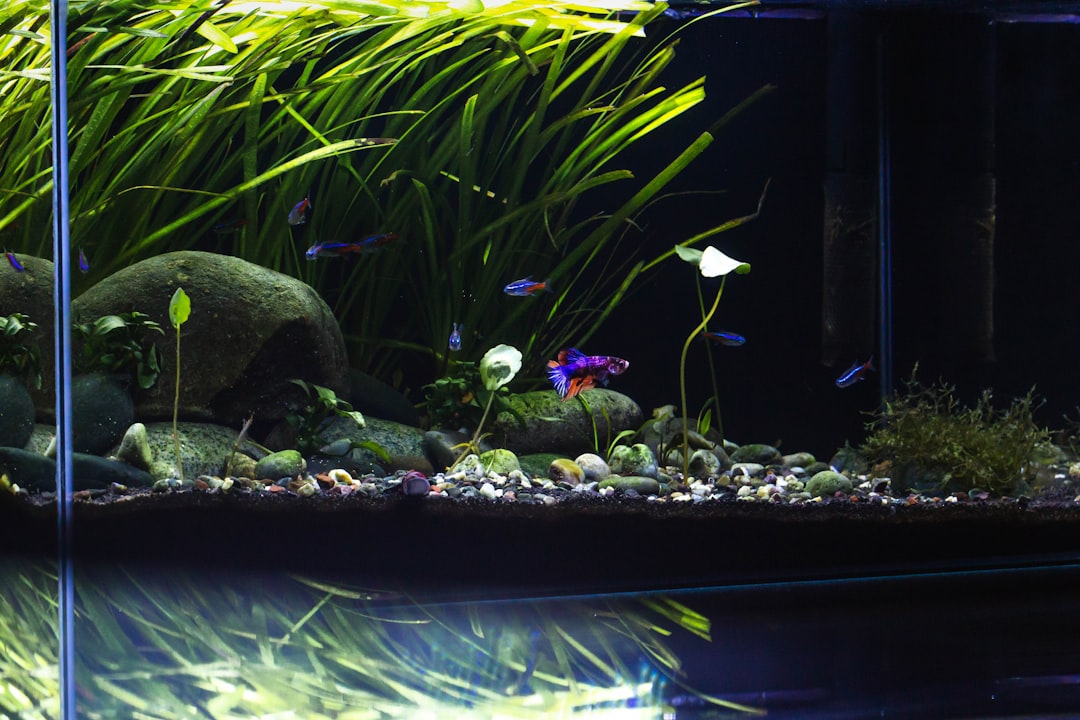
Divide the tank into zones. Plant heavily along the back wall and both sides, leaving the front third and centre open for swimming. Create two or three dense vertical columns of stem plants that break the tank into separate visual territories — this reduces male aggression by limiting line-of-sight chasing. A single piece of branching driftwood in the mid-ground adds natural structure and a secondary attachment surface for moss and ferns. Keep the foreground low with carpeting plants or bare sand so you can easily observe fry.
Hardscape Considerations
Smooth river stones arranged in small clusters give females resting spots near the bottom. Avoid sharp rocks or rough edges — livebearers with long fins (fancy guppies, lyretail swordtails) are prone to fin tears on abrasive hardscape. Driftwood should be well-soaked to prevent excessive tannin leaching; livebearers generally prefer neutral to slightly alkaline, clear water rather than blackwater conditions.
Water Parameters and Local Considerations
Most livebearers thrive at pH 7.0-8.0, GH 8-15 and temperature 24-28°C. Singapore’s soft tap water (GH 2-4) is actually below their ideal range. Adding crushed coral in the filter or a small bag of aragonite substrate buffers GH and KH upward, benefiting mollies especially, which appreciate harder water. Endlers and guppies are more adaptable and do well in local tap water with minimal adjustment. No heater is needed in Singapore’s climate — ambient room temperature sits within their comfort zone year-round.
Managing Fry Without Breeding Boxes
A well-planted livebearers tank with the layout described above naturally preserves enough fry to sustain or grow your colony without plastic breeding boxes. Heavy plant cover gives newborns a survival rate of roughly 20-40% — more than enough when guppies and endlers produce 10-30 fry every 4 weeks. If you want higher survival, add an extra clump of floating plants to the area where a pregnant female tends to rest. Remove adults temporarily only if you need to save every single fry for a specific breeding project.
Maintenance Tips
Fast-growing stem plants and floaters require weekly trimming to prevent them from choking out light and flow. Replant healthy cuttings and discard excess — you will never lack for plant material in a livebearer tank. Perform 20-25% water changes weekly, using a gentle siphon to avoid sucking up tiny fry hidden in the substrate. Feed sparingly — crushed flake once or twice daily suffices for adults, and fry graze on biofilm and microorganisms in the plant mass. Overfeeding is the primary water quality threat in any livebearer setup.
Related Reading