
Bloodfin Tetra Care Guide: Hardy Red Fins for Any Setup
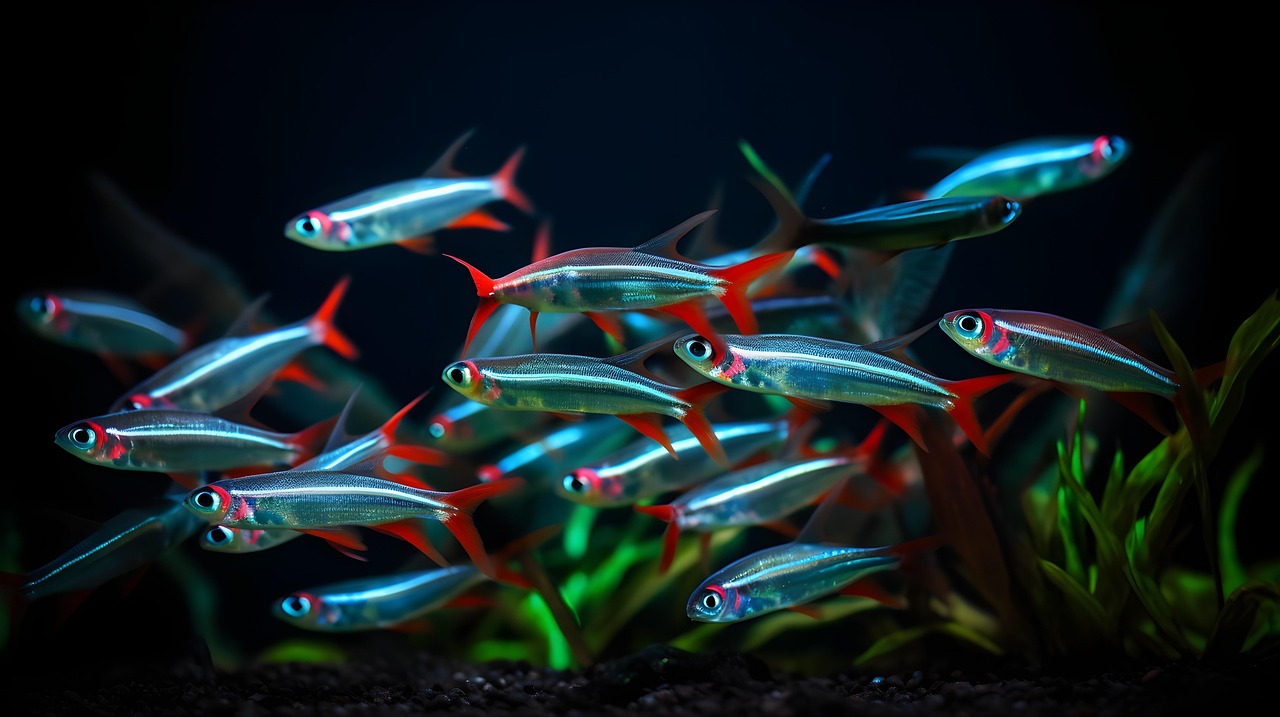
Sometimes the most rewarding fish are the ones that ask the least of you. Aphyocharax anisitsi, the bloodfin tetra, is a prime example — a silvery torpedo with vivid red fins that adapts to nearly any freshwater setup. This bloodfin tetra care guide from Gensou Aquascaping in Singapore explains why these hardy South American tetras deserve a place in your community tank. They tolerate a wide range of conditions, school beautifully, and bring constant motion to the mid-water column.
Species Overview
Bloodfin tetras originate from the Parana River basin in Argentina and have been in the aquarium hobby since the early 1900s. Adults reach 5–6 cm, making them slightly larger than neon tetras. Their body is a translucent silver with a subtle blue-green sheen, contrasted by striking blood-red colouration on the anal, caudal, and pelvic fins. Lifespan is impressive for a small tetra — well-kept specimens regularly reach 7–10 years.
Tank Setup
A school of eight to twelve bloodfins fits comfortably in a 60-litre tank, though 80–100 litres provides better swimming space and a more natural display. They appreciate a planted tank with open swimming areas along the front and middle zones. Hardy plants like Cryptocoryne wendtii, Java fern, and Vallisneria create the kind of dappled background these fish look stunning against. Moderate current from a hang-on-back or small canister filter suits them well.
Water Parameters
Here is where bloodfins truly shine: they tolerate pH 6.0–8.0, GH 3–20, and temperatures from 18–28 °C. Singapore’s tap water — soft, slightly acidic, chloramine-treated — suits them perfectly with just a good dechlorinator. No pH adjustments needed, no expensive buffering salts. In our tropical climate, the ambient temperature of 28–30 °C falls within their tolerance, though slightly cooler water around 24–26 °C brings out more intense fin colour. A small clip-on fan can lower tank temperature by 2–3 °C during the hottest months.
Feeding
Bloodfin tetras are enthusiastic omnivores. Quality micro pellets or tropical flakes form a reliable staple. Frozen daphnia, cyclops, and baby brine shrimp are eagerly accepted and enhance colouration over time. They will also graze on biofilm and soft algae, making them mild supplementary cleaners. Feed once or twice daily in small amounts — what the school consumes within two minutes is the right portion. Overfeeding fouls water quickly in smaller tanks.
Behaviour and Schooling
Bloodfins are active, mid-water swimmers that look best in groups of ten or more. Smaller groups lead to skittish behaviour and the fish scatter rather than school cohesively. A well-sized school moves in coordinated waves across the tank — an effect that transforms a simple setup into something genuinely captivating. They are generally peaceful, though occasional fin-nipping occurs if the school is too small or tankmates have long, trailing fins. Keep them away from slow-moving bettas or fancy guppies.
Compatible Tankmates
Their easygoing nature makes bloodfins compatible with a wide range of community fish. Corydoras catfish, kuhli loaches, and bristlenose plecos make excellent bottom-dwelling companions. Other similarly sized tetras — ember tetras, rummy-nose tetras, and black phantom tetras — create a dynamic multi-species school effect. Dwarf cichlids such as Apistogramma cacatuoides add character without threatening the tetras. Cherry shrimp and amano shrimp are safe alongside adult bloodfins, though tiny shrimplets may occasionally be eaten.
Breeding
Bloodfins scatter eggs among fine-leaved plants or spawning mops. A separate breeding tank of 20–30 litres with slightly cooler water (22–24 °C) and soft, acidic conditions triggers spawning. The pair or small group spawns at dawn, scattering 300–500 adhesive eggs. Remove the adults immediately afterwards, as they readily eat their own eggs. Fry hatch within 24–36 hours and become free-swimming by day three, accepting infusoria and then newly hatched brine shrimp.
Why Bloodfins Belong in More Tanks
Overlooked in favour of flashier tetras, the bloodfin combines hardiness, longevity, and understated beauty in a package that suits beginners and experienced hobbyists alike. At under $2 per fish from most Singapore shops around Serangoon North and C328, assembling a school is affordable. This bloodfin tetra care guide should convince you that sometimes the quieter choices in the hobby deliver the most lasting satisfaction.
Related Reading



