Concave Layout in Aquascaping: The Classic U-Shape
Table of Contents
- What Is a Concave Layout?
- Why the Concave Composition Works
- Hardscape Framing the Open Centre
- Substrate Mounding at the Sides
- Plant Selection for the Concave Layout
- The Importance of Negative Space
- Creating Pathways and River Effects
- Best Tank Sizes for Concave Layouts
- Frequently Asked Questions
What Is a Concave Layout?
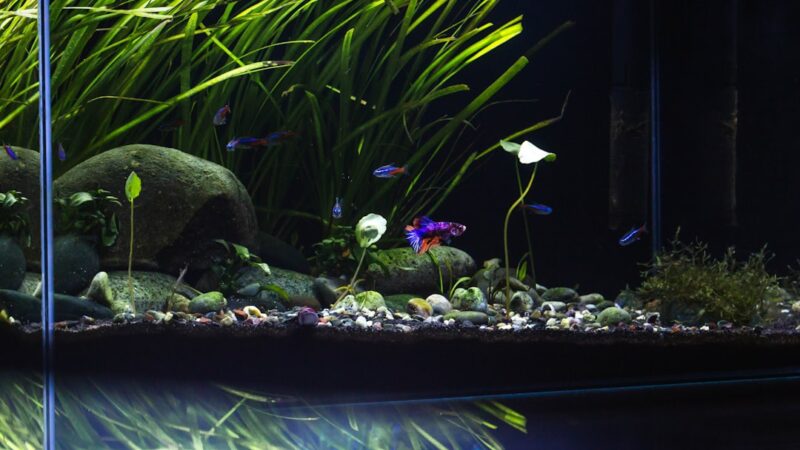
The concave layout — sometimes called the U-shape composition — is one of the three fundamental aquascaping compositions alongside the triangular and convex (island) layouts. It features high points on both the left and right sides of the tank, with a low, open centre that creates a valley, path or corridor effect.
When executed well, the concave layout draws the viewer’s eye directly into the centre of the aquascape and then deep into the background, producing an extraordinary sense of depth that few other layouts can match. It is the composition of choice for aquascapers who want to create the illusion of a landscape far larger than the glass boundaries suggest.
At Gensou, our Everton Park studio has featured concave layouts in numerous display tanks over the past two decades. It remains one of the most impactful compositions we recommend to clients across Singapore, particularly for larger tanks where the valley effect can be fully realised.
Why the Concave Composition Works
The concave layout taps into deeply ingrained visual instincts. Humans are naturally drawn to openings, clearings and paths — our eyes seek out the break in the foliage, the gap between mountains, the trail through the forest. The concave aquascape exploits this tendency by framing an opening with dense, high sides that funnel attention towards the centre.
Several design principles are at work simultaneously:
- Framing — The high sides act as a natural frame, directing focus to the central composition.
- Depth through perspective — When the low centre narrows towards the back of the tank, it creates forced perspective, making the aquascape appear deeper than it physically is.
- Contrast — The juxtaposition of dense, planted sides against an open, bright centre creates visual tension that holds the viewer’s attention.
- Balance — Although the two sides are high, they need not be identical. Slight asymmetry between the left and right mounds prevents the composition from feeling overly formal.
Hardscape Framing the Open Centre
The hardscape in a concave layout serves a dual purpose: it establishes the high points on each side and it frames the central opening. Think of the hardscape as the canyon walls that define the valley.
Rock-Based Concave Layouts
When using stone, place your largest pieces at the outer edges of each side, angling them slightly inward to create a sense of enclosure. Secondary stones should descend in size as they approach the centre, tapering the valley walls naturally.
- Select stones with similar texture and colour for visual cohesion.
- Angle stones inward at 10–15 degrees to suggest the walls are converging towards the background.
- Leave the centre floor completely free of large stones — the open space is the star of this composition.
Driftwood-Based Concave Layouts
Branching driftwood works exceptionally well for concave layouts, particularly when the branches arch over the open centre without filling it. Spider wood and horn wood are excellent choices:
- Place root ends at the outer edges, with branches extending upward and slightly inward.
- Avoid branches that cross the centre at eye level — they break the valley effect.
- Consider two separate pieces of wood, one per side, rather than a single piece spanning the tank.
Substrate Mounding at the Sides
Substrate engineering is critical to the concave layout. The sides must be built up significantly while the centre remains shallow, and this height differential must be maintained over months of water changes and plant maintenance.
Recommended Substrate Depths
| Zone | Front Depth (cm) | Rear Depth (cm) |
|---|---|---|
| Left and right mounds | 6–8 | 12–18 |
| Central valley (front) | 2–3 | 4–6 |
| Central valley (rear) | 3–4 | 6–8 |
To build and retain these mounds, use internal support structures that remain hidden:
- Lava rock fill — Pack lava rock chunks beneath the aquasoil on each side. They add volume cheaply and improve biological filtration.
- Plastic egg crate or mesh — Cut to shape and position vertically at the transition from mound to valley to act as a retaining wall.
- Rock dams — Small stones arranged in a line just inside the visible face of each mound prevent substrate from migrating into the centre during water changes.
In Singapore’s warm climate (28–32°C), aquasoil tends to break down faster than in cooler environments. Expect to top up or replace substrate on the mounds every 12–18 months to maintain the concave profile.
Plant Selection for the Concave Layout
The concave layout demands a deliberate height gradient: tall plants on the sides, low plants (or none) in the centre. Getting this right is essential — mismatched plant heights will obscure the valley effect and flatten the composition.
Plant Placement Guide
| Position | Height | Recommended Species |
|---|---|---|
| Side mounds (rear) | Tall (20–40 cm) | Rotala rotundifolia, Ludwigia repens, Limnophila sessiliflora |
| Side mounds (mid) | Medium (10–20 cm) | Cryptocoryne wendtii, Hygrophila pinnatifida, Staurogyne repens |
| Side mounds (front edge) | Low-medium (5–10 cm) | Anubias nana petite, Bucephalandra, Cryptocoryne parva |
| Central valley | Carpet or bare (<3 cm) | Monte Carlo, Eleocharis parvula, cosmetic sand |
The centre of a concave layout is often where you deploy carpet plants or simply leave bare cosmetic sand. If you choose to carpet, Monte Carlo (Micranthemum tweediei) is an excellent choice for Singapore conditions — it tolerates higher temperatures well and will stay compact without CO2 injection, though it carpets far faster with it.
The Importance of Negative Space
The central opening in a concave layout is not empty space that needs filling — it is the focal point of the entire composition. Negative space is what gives the layout its power, and resisting the urge to plant or decorate the centre is one of the hardest disciplines for beginner aquascapers.
Consider these guidelines for managing negative space:
- Keep the centre at least one-third of the tank width — If the valley is too narrow, the layout reads as two separate islands rather than a unified concave shape.
- Maintain a clear sight line to the back glass — The depth effect depends on the viewer being able to see through the centre to the background.
- Use a contrasting substrate in the centre — If the mounds use dark aquasoil, consider a light cosmetic sand (such as ADA La Plata sand) in the valley to heighten the contrast.
- Let fish be the centrepiece — A school of tetras swimming through the central valley adds movement and life without obstructing the design.
Creating Pathways and River Effects
One of the most striking applications of the concave layout is the pathway or dry riverbed effect — a visual corridor running from the front of the tank to the back, flanked by lush planted sides. This technique is a staple of nature aquarium competitions and produces breathtaking results.
Building a Convincing Pathway
- Taper the path — Make the pathway wider at the front of the tank and narrower at the back. This forced perspective trick dramatically increases the perceived depth.
- Use contrasting material — White or pale cosmetic sand works beautifully against dark aquasoil sides. In Singapore, ADA Colorado sand or La Plata sand are readily available at specialist aquascaping shops.
- Add small accent stones — Scatter a few small pebbles along the path, decreasing in size towards the rear, to reinforce the perspective effect.
- Prevent sand migration — Place small stones or Riccia stones at the boundary between sand and soil to prevent the substrates from mixing during maintenance.
The river effect works particularly well with a slight curve in the path rather than a straight line. An S-curve or gentle arc adds naturalism and prevents the layout from feeling like a motorway cutting through the jungle.
Best Tank Sizes for Concave Layouts
While the concave composition can technically be attempted in any tank, it truly shines in tanks of 90cm and above. The reason is simple: you need sufficient horizontal space to build two convincing mounds with an adequately wide valley between them.
Tank Size Suitability
| Tank Size | Suitability | Notes |
|---|---|---|
| 60cm (2ft) | Challenging | Valley tends to be too narrow; consider triangular layout instead |
| 90cm (3ft) | Ideal starting point | Sufficient width for proportionate mounds and valley |
| 120cm (4ft) | Excellent | Generous proportions; room for detailed planting on both sides |
| 150cm+ (5ft+) | Exceptional | Full creative freedom; competition-grade concave layouts |
For Singapore homes, the 90cm tank is the sweet spot — it fits comfortably on most HDB and condo cabinet units while providing enough canvas for a proper concave layout. We stock a range of 90cm tanks and custom-build larger units through our custom aquarium service.
Frequently Asked Questions
Can I create a concave layout without CO2 injection?
Yes, but you will need to adjust your plant choices. Without CO2, the tall stems that typically form the side mounds will grow more slowly and may not achieve the dense, lush appearance that defines a strong concave layout. Focus on hardy, low-tech plants: Java fern and Bolbitis for the upper sides, Cryptocorynes for the mid-ground, and Marsilea hirsuta or dwarf Sagittaria for the carpet. The result will be less manicured but still effective.
How do I prevent the two sides from looking like separate islands?
Connectivity is key. Ensure some visual elements bridge the two sides — a consistent carpet plant running across the valley floor, matching stone types on both sides, or low-growing plants (like Cryptocoryne parva) that line both edges of the pathway. The substrate colour in the centre should also be consistent. If the sides share common plant species and hardscape material, the eye reads them as two halves of one composition rather than two independent arrangements.
How wide should the centre valley be relative to the tank width?
Aim for the valley to occupy roughly one-third to two-fifths of the total tank width at the front. If the opening is narrower than one-quarter, the valley feels cramped and the layout reads as a wall with a crack in it. If wider than half, the side mounds become too thin to make an impact and the composition loses its framing effect.
What lighting considerations are specific to concave layouts?
The side mounds are typically taller and denser than the centre, which means they can shade the lower plants at their bases. Ensure your light fixture spans the full width of the tank (not a narrow spot) and consider raising the light slightly higher than you would for a flat layout. In Singapore, where we commonly use Chihiros or Twinstar LED units, an elevated mounting at 25–30 cm above the water surface distributes light more evenly across the concave profile.
Build Your Concave Layout With Gensou
The concave layout is among the most visually rewarding compositions in aquascaping — a well-executed valley or pathway effect can stop visitors in their tracks and make them forget they are looking at a glass box. It demands more planning and a larger tank than the triangular layout, but the payoff in depth, drama and sheer visual impact is well worth the effort.
Whether you are planning a 90cm nature aquarium for your Tanjong Pagar apartment or a 150cm showpiece for a commercial lobby, our team at 5 Everton Park can help you design, source and install a concave layout that transforms your space. Explore our maintenance services to keep your aquascape in peak condition month after month.
Related Reading